
What is a basketball scoreboard and how is it used? A basketball scoreboard is a vital piece of equipment that displays essential game information, including the score, time remaining in the period, period number, timeouts available, and possession. It helps players, coaches, fans, and officials keep track of the game’s progress and ensures fair play.
Basketball scoreboards are more than just pretty lights; they are the central nervous system of a basketball game. They tell everyone what’s happening, when, and who has the advantage. Whether you’re a seasoned fan, a new player, or even an aspiring scorekeeper, grasping the ins and outs of a basketball scoreboard is key to appreciating the flow and strategy of the game. This guide will break down everything you need to know about how to use a scoreboard in basketball, from deciphering the displays to operating the clock and timers.
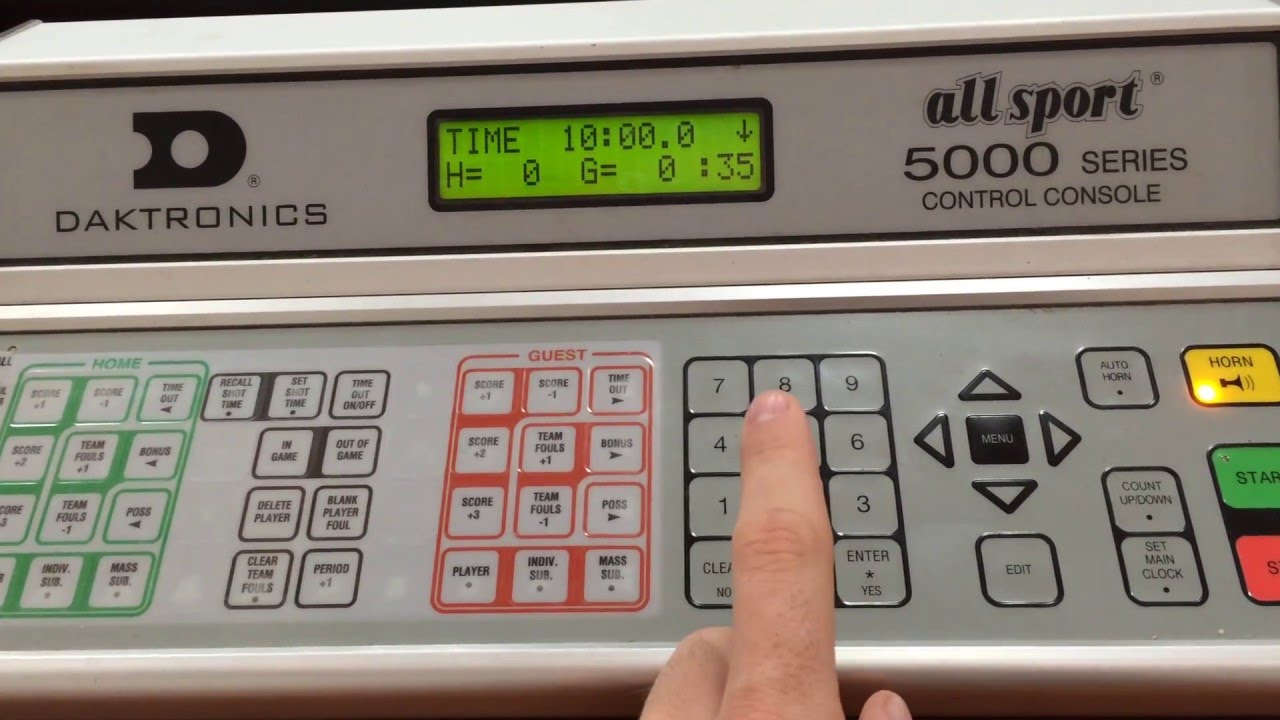
Image Source: i.ytimg.com
Deciphering the Basketball Score Display
At its core, the scoreboard’s main job is to show the score. This might seem straightforward, but there are nuances to how it’s presented and what it means for game flow.
Team Scores: The Heart of the Matter
- Home Team Score: Typically displayed on the left or top, this number represents the points accumulated by the home team.
- Visitor Team Score: Usually shown on the right or bottom, this indicates the points scored by the visiting team.
These numbers are updated in real-time by the scorekeeper as points are made. A field goal is usually 2 points, while a successful free throw adds 1 point. Three-point field goals, made from beyond the three-point arc, add 3 points.
Player Statistics (Optional but Common)
Many modern scoreboards go beyond just team scores and can display individual player statistics like:
- Player Number: The jersey number of the player.
- Points: The total points scored by that individual player.
- Fouls: The number of personal fouls committed by a player. Reaching a certain foul limit (usually five or six, depending on the league) results in disqualification.
Grasping Basketball Game Timing
Timing is everything in basketball. The scoreboard is the guardian of these crucial minutes and seconds.
The Game Clock: The Pulse of the Game
The game clock dictates how long each period or half lasts. It counts down from the start of the period to zero.
- Running Clock: In most basketball games, the clock runs continuously when the ball is in play.
- Stoppage: The clock stops when play is dead. This happens after a foul is called, a timeout is requested, a basket is made in the final minutes of a period, or when the ball goes out of bounds.
Operating the Basketball Clock: The Scorekeeper’s Duty
Operating the game clock is a primary responsibility of the scorekeeper. It requires precision and quick reflexes.
- Starting the Clock: The clock must be started as soon as the ball is legally touched by an offensive player on the court after a throw-in or after a dead ball situation.
- Stopping the Clock: The scorekeeper must be alert to stop the clock immediately when a whistle blows, the ball goes out of bounds, a basket is scored, or any other stoppage occurs.
Understanding the Basketball Quarter Clock
Basketball games are typically divided into quarters or halves. The scoreboard clearly indicates which period is currently being played.
- Quarter 1: The game begins with the first quarter.
- Quarter 2: Follows the first quarter.
- Halftime: A break between the second and third quarters.
- Quarter 3: The second half begins with the third quarter.
- Quarter 4: The final regulation quarter.
- Overtime: If the score is tied at the end of the fourth quarter, overtime periods are played.
The Basketball Shot Clock Use
The shot clock is a separate timer that limits the amount of time an offensive team has to attempt a shot.
- 24-Second Rule: In most professional and collegiate basketball leagues, the offensive team has 24 seconds to shoot the ball.
- Resetting the Clock: The shot clock resets to 24 seconds (or the designated time) if the ball hits the rim and stays in play, or if possession changes. It does not reset if the ball hits the rim on a missed shot or goes out of bounds without a change of possession.
- Displayed Value: The shot clock typically displays the seconds remaining for the current possession. When it reaches zero, it’s a shot clock violation, and possession is awarded to the opposing team.
Key Indicators on a Basketball Scoreboard
Beyond the score and clock, other indicators provide vital game information.
Timeouts Available
- Indicator: Usually shown with small lights or numbers next to each team’s name.
- Meaning: This shows how many timeouts each team has remaining in the current half or period. Coaches use timeouts to strategize, stop the opponent’s momentum, or make substitutions.
Basketball Possession Arrow
- Indicator: A small arrow, often illuminated, pointing towards the basket defended by the team that will have possession in a jump ball situation.
- Function: This arrow helps determine which team gets the ball next when a jump ball occurs during the game. The arrow alternates after each jump ball, so the team that did not get possession the last time will get it next. It’s a crucial tool for scorekeepers to manage who throws the ball inbounds.
Basketball Scorekeeping Basics: The Scorekeeper’s Role
The scorekeeper is the official record-keeper of the game. Their responsibilities are critical to the integrity of the game.
Recording Points
- Accurate Updates: Every point scored must be accurately reflected on the scoreboard.
- Fouls: The scorekeeper also tracks player fouls and team fouls. Team fouls are important because once a team exceeds a certain number of fouls in a period, the opposing team is awarded free throws on subsequent fouls.
Tracking Timeouts
- Decrementing: When a team calls a timeout, the scorekeeper must decrement their available timeout count on the scoreboard.
- Correct Count: It’s vital to maintain an accurate count of timeouts used by each team.
Managing the Shot Clock
- Starting and Stopping: The scorekeeper operates the shot clock, starting and stopping it according to the rules.
- Violations: Announcing and signaling shot clock violations if they occur.
Possession Arrow Management
- Flipping the Arrow: After a jump ball that isn’t initiated by a tip-off, the scorekeeper flips the possession arrow to indicate which team will receive the next jump ball.
The Basketball Score Display: A Closer Look
Modern scoreboards offer a wealth of information, and knowing how to read each element is important.
How to Read a Basketball Scoreboard
When you look at a basketball scoreboard, you’ll typically see:
- Team Names or Logos: Clearly identifying the home and visiting teams.
- Score: Large, prominent numbers showing the current points for each team.
- Period/Quarter: A number indicating the current period (e.g., 1, 2, 3, 4, OT1).
- Game Clock: The countdown timer for the current period.
- Shot Clock: The timer for the offensive team’s possession.
- Timeouts Remaining: Indicators for each team’s timeouts.
- Possession Arrow: The directional arrow.
- Player Stats (if applicable): Often displayed on a separate panel or a larger main screen.
Advanced Scoreboard Features
Many modern scoreboards also include:
- Team Fouls: Displaying the total number of fouls committed by each team in the current period.
- Player Fouls: Showing individual player foul counts.
- Period Clock: A separate clock that counts down the time remaining in a specific period, which is often the same as the game clock but can be used to highlight the end of a period.
- Scoreboard Buzzer: An audible signal to indicate the end of a period or a violation.
Fathoming Basketball Clock Operation
The precision of basketball clock operation is paramount. Even a few seconds off can significantly impact a game’s outcome.
Starting the Clock Correctly
- The Key Moment: The clock starts when the ball is legally touched by an offensive player on the court after a throw-in or after the ball has been made dead.
- Common Errors: Failing to start the clock promptly or starting it before the ball is touched are common mistakes scorekeepers must avoid.
Stopping the Clock Accurately
- Whistle Awareness: The scorekeeper must be attuned to the referees’ whistles.
- Ball Out of Bounds: When the ball goes out of bounds, the clock stops.
- Scoring: For the last two minutes of each half and overtime, the clock stops automatically when a field goal is made.
The 3-Second Violation
While not directly operated by the scorekeeper, the scoreboard often indirectly relates to the 3-second violation. An offensive player cannot remain in the opponent’s restricted area (the “paint”) for more than three consecutive seconds while their team is in control of the ball. While the referee calls this, awareness of it is part of comprehending game flow.
Interpreting the Basketball Possession Arrow
The possession arrow is a simple yet crucial visual cue.
How the Possession Arrow Works
- Initial Possession: At the start of the game, the arrow is set by the referee to indicate which team gets the ball first after the opening tip-off.
- Alternating Possession: After the initial jump ball, whenever the ball becomes dead and possession is disputed (e.g., a loose ball tie-up), the arrow dictates which team gets the ball. The arrow is then flipped by the scorekeeper to show the next team that will receive the ball in such a situation.
Importance of the Arrow
- Fairness: Ensures that possession in tie-up situations is distributed fairly between the two teams.
- Scorekeeper’s Responsibility: The scorekeeper’s primary role concerning the arrow is to flip it correctly after each disputed possession.
Frequently Asked Questions (FAQ)
Q1: What happens if the scoreboard malfunctions during a game?
A1: If the scoreboard malfunctions, the referees typically consult with the scorekeeper and timer operator to determine the correct score and time. In most cases, manual records kept by the scorekeeper and timer are used to continue the game until the scoreboard can be repaired or replaced. The integrity of the game relies on accurate record-keeping.
Q2: How do you know which number is for which team on the scoreboard?
A2: Typically, the scoreboard will clearly label each team’s score, often with the home team on the left and the visiting team on the right, or with team names/logos displayed alongside their respective scores.
Q3: Can a player be disqualified based on scoreboard information?
A3: Yes, the scoreboard displays a player’s foul count. Once a player accumulates the maximum number of personal fouls allowed by the league rules, they are disqualified from further participation in that game. The scorekeeper is responsible for tracking this accurately.
Q4: What is the purpose of the basketball clock operation in relation to timeouts?
A4: When a team calls a timeout, the game clock is stopped, and the scorekeeper reduces the number of available timeouts for that team on the scoreboard. This ensures that both teams are aware of their remaining timeouts and that they are used according to the rules.
Q5: How is the basketball shot clock use different from the game clock?
A5: The game clock tracks the overall duration of a period or half, while the shot clock tracks the time a specific team has to make a shot attempt once they gain possession. The game clock runs when play is live, and stops during dead ball situations, whereas the shot clock begins its countdown when a player gains possession and resets upon certain events like the ball hitting the rim.
By mastering the basics of how to use a scoreboard in basketball, you gain a deeper appreciation for the game’s intricacies. From the constant battle against the clock to the strategic use of timeouts, the scoreboard is an indispensable tool that keeps the game fair, exciting, and easy to follow for everyone involved.