
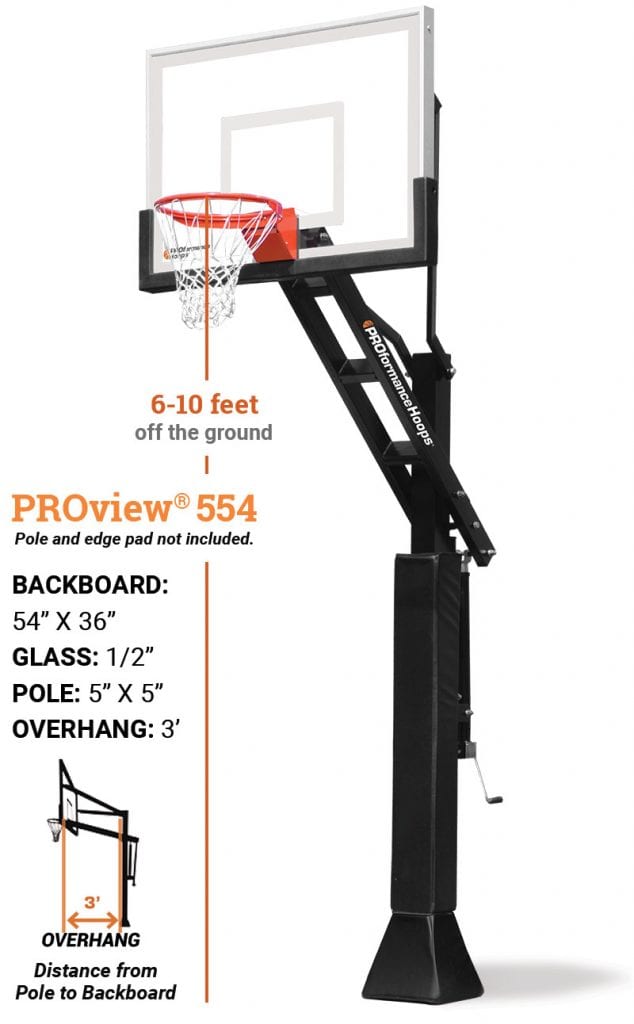
Image Source: superiorplay.com
How Tall Is A Standard Basketball Goal: Get the Facts
A standard basketball goal is 10 feet high from the court surface to the rim.
For anyone stepping onto a basketball court, whether it’s a gleaming professional arena, a dusty park court, or your own driveway, the height of the basketball hoop is a fundamental element of the game. It’s the barrier every player strives to overcome with a soaring jump shot or a powerful dunk. But just how tall is this iconic sporting fixture? The answer, surprisingly, is both simple and complex, varying slightly based on the level of play and the age of the participants. This guide aims to provide a comprehensive and well-researched look at the standard basketball hoop height, offering clarity for players, coaches, parents, and enthusiasts alike.
The Universal Standard: 10 Feet
Across most organized basketball, the regulation basketball rim height is universally set at 10 feet (3.05 meters). This height is not arbitrary; it’s a carefully considered dimension that has evolved over the sport’s history to create a challenging yet achievable target for players of varying skill levels. The official basketball goal height of 10 feet forms the backbone of the game as we know it, influencing shooting mechanics, defensive strategies, and the overall spectacle of basketball.
This 10-foot standard applies to:
- NBA hoop height: Professional NBA games are played with hoops set at the 10-foot mark.
- FIBA basketball hoop height: The International Basketball Federation (FIBA), which governs international basketball, also mandates a 10-foot rim height for its competitions.
- NCAA (College) basketball hoop height: Collegiate basketball follows the same 10-foot standard.
- High School and most organized youth leagues: While there are adjustments for younger players, by the time players reach high school, they are playing on 10-foot goals.
Why 10 Feet? The History and Rationale
The journey to the 10-foot standard is an interesting one. When James Naismith invented basketball in 1891, he initially used peach baskets as goals, which were nailed to the gymnasium balcony. The height of these baskets was, naturally, dependent on the balcony’s height, which varied. However, as the game evolved and dedicated courts were built, a standard height began to emerge.
The progression towards the 10-foot mark was gradual, driven by the need for consistency and a desire to balance the challenge of scoring with the developing athletic abilities of players. Early on, goals were often mounted on poles or walls, and the height could be somewhat variable. However, as organized play became more prevalent, the 10-foot height was established to ensure a level playing field and to foster specific skill development.
The 10-foot height was chosen for several key reasons:
- Skill Development: It’s high enough to encourage proper shooting form and jumping ability, but not so high that it becomes insurmountable for most players.
- Strategic Play: The height influences the effectiveness of jump shots, layups, and dunks, contributing to the dynamic nature of offensive and defensive strategies.
- Spectator Appeal: The visual of players reaching for a 10-foot rim adds to the excitement and athleticism of the game.
Variations for Younger Players: Adapting the Game
While 10 feet is the benchmark for adult and older youth play, the youth basketball hoop height is often adjusted to accommodate the physical development of younger children. This is crucial for fostering proper technique, building confidence, and ensuring the game remains enjoyable. If the hoop is too high for a young player, they may develop bad habits, such as shooting with two hands pushing the ball from below or relying on a flick of the wrist without proper follow-through.
Here’s a general breakdown of common youth hoop heights:
- Ages 5-7: Many experts recommend a hoop height of 6 feet (1.83 meters). At this age, children are still developing coordination and strength. A lower hoop allows them to experience success with shooting and feel more engaged in the game.
- Ages 8-9: A height of 7 feet (2.13 meters) is often suitable. This provides a slight increase in challenge as their skills and physical capabilities grow.
- Ages 10-12: A common adjustment is to 8 feet (2.44 meters). This brings them closer to the regulation height and prepares them for higher levels of play.
- Ages 13 and Up: Players in this age group, particularly those in competitive leagues, are typically transitioning to the 10-foot standard.
It’s important to note that these are general guidelines. Some children develop physically at different rates. The goal is to provide a height that allows for successful shooting and enjoyment, gradually increasing the challenge as they mature. Many adjustable basketball hoops are designed to grow with a child, making them a popular choice for families.
Deconstructing the Standard Basketball Hoop Size
Beyond the height, the standard basketball hoop size also encompasses other critical dimensions that contribute to fair play and consistent gameplay. These specifications ensure that the equipment used at all levels of competition meets a certain standard.
The Rim
- Diameter: The inner diameter of the rim is 18 inches (45.7 cm). This is the exact size of the basketball that will pass through it.
- Material: Regulation rims are typically made of steel for durability and consistent rebound. They are usually painted orange or red.
- Support: The rim must be securely attached to the backboard. The distance from the front edge of the backboard to the outer edge of the rim is typically 6 inches (15.2 cm).
The Backboard
The backboard serves as a surface for bank shots and provides a stable mounting point for the rim.
- Dimensions: The standard basketball hoop size for the backboard, particularly in professional and collegiate play, is 6 feet wide by 3.5 feet high (1.83 meters x 1.07 meters). Smaller backboards, often found in recreational settings or for home use, can be around 5 feet wide by 3 feet high (1.52 meters x 0.91 meters) or even smaller.
- Material: Backboards are commonly made from tempered glass, acrylic, or polycarbonate.
- Tempered Glass: Offers the best rebound characteristics, similar to professional courts, but is more prone to breaking if subjected to excessive force.
- Acrylic/Polycarbonate: Are more durable and shatter-resistant, making them ideal for outdoor or recreational use. They offer good rebound but may not be as consistent as glass.
- Offset: The backboard is offset from the front support pole. This offset is typically 4 feet (1.22 meters) on professional courts. This space is important for player safety, preventing collisions with the pole and allowing for plays beneath the basket.
Indoor vs. Outdoor: Considerations for Your Hoop
The basketball hoop height remains the same whether you’re playing indoors or outdoors, but the type of hoop and its installation might differ.
Indoor Basketball Hoop Height
In gyms, whether at a school, community center, or professional arena, the hoops are almost universally set at the regulation basketball rim height of 10 feet. These are typically:
- Ceiling-mounted or Wall-mounted Systems: These are permanent fixtures, offering maximum stability and a true-to-life playing experience. The backboard is securely attached to the ceiling or a sturdy wall.
- Portable Systems (Gym Use): Some gyms might have portable hoops that can be moved around. However, these are also designed to meet the official 10-foot height and provide robust stability.
Backyard and Driveway Basketball Hoop Height
For those with a backyard basketball hoop or a driveway basketball hoop, the considerations can be slightly different.
- Adjustable Height: Many home basketball systems offer adjustable heights, allowing parents to lower the rim for younger children and raise it to the standard basketball hoop height of 10 feet as they grow. This is a significant advantage for families with multiple children or those who want a hoop that can adapt over time.
- Portability: Some backyard hoops are portable, mounted on a wheeled base. While convenient for repositioning, it’s crucial to ensure these are filled with sand or water for stability, especially when the hoop is set at the full 10 feet and subjected to vigorous play.
- In-Ground Systems: For a more permanent and stable setup in your backyard or driveway, in-ground systems are a popular choice. These are anchored directly into the ground, providing the most secure and consistent playing experience at the official basketball goal height.
- Wall-mounted Systems (Home): Some homeowners opt for wall-mounted systems attached to a garage or exterior wall. These offer a clean look but require a very strong wall structure to support the forces exerted on the hoop. The standard basketball hoop height of 10 feet is the target, but ensuring proper installation is paramount.
Key Considerations for Backyard/Driveway Hoops:
- Durability: Outdoor hoops need to withstand various weather conditions. Look for rust-resistant materials and UV-protected backboards.
- Stability: A hoop that is too wobbly can be frustrating and even dangerous. Ensure it’s properly assembled and anchored.
- Clearance: Make sure there’s adequate space around the hoop, especially in front of the backboard, for players to drive to the basket.
Hoop Height Around the World: FIBA vs. Other Standards
As mentioned, FIBA basketball hoop height is consistent with the NBA and NCAA at 10 feet. However, it’s worth noting that basketball is played globally, and while 10 feet is the dominant standard, some minor variations or historical differences might exist in very localized or recreational settings. The extensive reach of international federations like FIBA has largely standardized the game’s core dimensions.
The Impact of Hoop Height on Gameplay
The 10-foot regulation basketball rim height significantly influences how the game is played:
- Shooting: Players must develop the strength and technique to shoot the ball with an arc that allows it to fall into the 18-inch diameter rim from a distance. This encourages the development of jump shots and layups with proper form.
- Rebounding: The height of the hoop affects the trajectory of missed shots, influencing the importance of positioning and timing for rebounds.
- Dunking: The ability to dunk is a direct result of the 10-foot height, showcasing incredible athleticism and adding an exciting element to the game.
- Defense: Defensive strategies, such as shot-blocking and contesting shots, are directly influenced by the rim’s height. Players need to jump high and time their movements effectively.
- Accessibility: While 10 feet is standard for most, the availability of adjustable hoops allows for a more inclusive experience, enabling younger or less experienced players to participate and develop their skills at an appropriate level.
Choosing the Right Hoop: Factors to Consider
When purchasing a basketball hoop, whether for a home court or a community facility, several factors beyond just the height of the standard basketball hoop size are important:
- Age and Skill Level of Players: As discussed, this is paramount for youth basketball.
- Intended Use: Will it be for casual shooting, competitive practice, or serious games?
- Durability and Material: Consider how long you expect the hoop to last and its exposure to the elements.
- Budget: Prices can range significantly based on the quality and features.
- Installation: Some hoops require professional installation, especially in-ground systems.
- Backboard Size and Material: A larger, better-quality backboard can enhance the playing experience.
Frequently Asked Questions (FAQ)
Q1: What is the official height of a basketball hoop?
A1: The official height of a basketball hoop, also known as the regulation basketball rim height, is 10 feet (3.05 meters) from the court surface to the top of the rim.
Q2: Can I adjust my basketball hoop to a height other than 10 feet?
A2: Yes, many residential basketball hoops, especially those designed for backyard basketball hoop or driveway basketball hoop use, are adjustable. This allows you to lower the rim for younger players and raise it to the standard basketball hoop height of 10 feet as they grow.
Q3: Is the NBA hoop height different from FIBA?
A3: No, both the NBA (National Basketball Association) and FIBA (International Basketball Federation) adhere to the standard basketball hoop height of 10 feet.
Q4: What is a good height for a youth basketball hoop?
A4: For younger children (ages 5-7), a youth basketball hoop height of around 6 feet is recommended. This can be gradually increased to 7 feet for ages 8-9, and 8 feet for ages 10-12, before transitioning to the official basketball goal height of 10 feet.
Q5: What are the standard dimensions of a basketball backboard?
A5: The standard basketball hoop size for a backboard in professional play is 6 feet wide by 3.5 feet high. Smaller backboards, often seen in home settings, can be around 5 feet wide by 3 feet high.
Q6: Does indoor basketball hoop height differ from outdoor?
A6: No, the basketball hoop height remains consistent at 10 feet for both indoor and outdoor courts used for competitive play. The differences lie more in the type of installation and durability of materials for outdoor use.
Q7: Why is the rim 10 feet high?
A7: The 10-foot height was established historically to provide a challenging yet attainable target that promotes skill development, strategic play, and athletic performance in basketball.
Q8: What is the diameter of a regulation basketball rim?
A8: The inner diameter of a regulation basketball rim height is 18 inches.
By grasping the nuances of basketball hoop height, from the unwavering NBA hoop height to the adaptable youth basketball hoop height, players and enthusiasts can better appreciate the sport’s design and the specific requirements for enjoying it at any level. Whether on a professional court or a neighborhood driveway, the 10-foot goal stands as a constant, a symbol of the game’s enduring appeal and the athletic pursuit it inspires.