
What is basketball plus-minus, and how can I calculate it? Basketball plus-minus is a statistic that measures a player’s impact on the game when they are on the court by looking at the score difference. If you’re curious about how to calculate it, this guide will break it down simply. We’ll explore what it means, how to figure it out, and why it’s a vital part of basketball analytics.
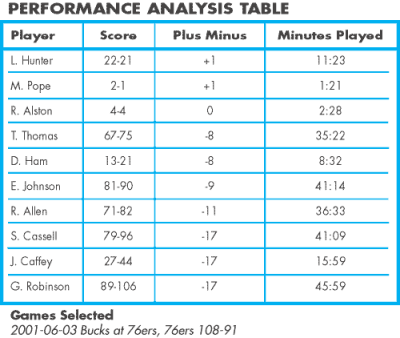
Image Source: coachad.com
Deciphering the Plus-Minus Concept
At its core, plus-minus tracks how many points your team outscores the opponent by when a specific player is on the floor. It’s a way to measure on-court impact. If a player has a positive plus-minus, it means their team scored more points than the opposition when they were playing. Conversely, a negative plus-minus suggests the team was outscored when that player was in the game.
This simple concept helps fans and analysts alike gauge a player’s contribution beyond just their individual player statistics like points, rebounds, and assists. It hints at their ability to help the team win.
The Basic Plus-Minus Formula
The most straightforward way to calculate a player’s plus-minus is by looking at the score differential for their team while they are on the court.
Plus-Minus = Team’s Points Scored – Opponent’s Points Scored (while player is on court)
Let’s break this down with an example.
Imagine a player, Alex, is on the court for 10 minutes. During those 10 minutes:
- Alex’s team scores 25 points.
- The opposing team scores 20 points.
Using the plus-minus formula:
Plus-Minus for Alex = 25 (Team Points) – 20 (Opponent Points) = +5
This means that when Alex was on the court, his team outscored the opponent by 5 points.
Now, consider another scenario for the same player, Alex, in a different stretch of the game.
- Alex is on the court for 8 minutes.
- Alex’s team scores 18 points.
- The opposing team scores 22 points.
Plus-Minus for Alex = 18 (Team Points) – 22 (Opponent Points) = -4
In this period, Alex’s team was outscored by 4 points when he was playing.
To get a player’s total plus-minus for an entire game, you would sum up all these individual stretches. However, most often, you’ll see the overall game plus-minus, which is calculated simply:
Game Plus-Minus = Team’s Total Points – Opponent’s Total Points (when player played)
This simpler calculation only considers the total points scored and allowed while the player was on the floor for the entire game.
Limitations of Basic Plus-Minus
While the basic plus-minus is easy to calculate and provides a quick snapshot, it has significant limitations. It doesn’t account for:
- Who else is on the court: A player might have a negative plus-minus because their teammates are playing poorly, not necessarily because they are playing badly themselves.
- The score of the game: A player might get many “garbage time” minutes when the game is already decided, which can skew their plus-minus.
- Specific plays: It doesn’t differentiate between a great defensive play and a lucky offensive rebound that led to points.
This is where more advanced advanced basketball metrics come into play.
Exploring Advanced Basketball Metrics: Adjusted Plus-Minus
To overcome the flaws of basic plus-minus, analysts developed more sophisticated versions. The most notable is Adjusted Plus-Minus (APM).
APM attempts to isolate a player’s individual contribution by accounting for the quality of teammates and opponents on the court at the same time.
How APM Works (Simplified)
APM uses statistical regression. It analyzes every player’s on-court performance across many games and tries to determine how much each player contributes to the team’s net rating (point differential per 100 possessions) while controlling for the other players on the court.
Imagine a player, Sarah, has a high plus-minus. Basic plus-minus would say she’s great. But APM might say that while her overall plus-minus is good, a significant portion of it is due to the fact she often plays with the team’s star players. APM tries to strip away that influence and see Sarah’s actual impact.
APM is calculated using complex statistical models and requires a large dataset of game information. It’s not something most fans can calculate by hand, but understanding the concept is key to appreciating advanced basketball analytics.
Regularized Adjusted Plus-Minus (RAPM)
A further refinement is Regularized Adjusted Plus-Minus (RAPM). This method further improves APM by “regularizing” the results, meaning it shrinks extreme values towards the average. This helps prevent overestimating the impact of players with very small sample sizes or players who only play in very specific lineups. RAPM is considered one of the most robust metrics for evaluating player value calculation and basketball efficiency rating.
Tracking Plus-Minus Over a Season
While calculating plus-minus for a single game is straightforward, tracking it over an entire season provides a more reliable picture of a player’s overall game performance.
To calculate a player’s season-long plus-minus, you would simply sum up their plus-minus from every game they played in.
Season Plus-Minus = Sum of (Game Plus-Minus) for all games played.
However, it’s often more insightful to look at the average plus-minus per game or, even better, per 100 possessions.
Plus-Minus Per 100 Possessions
Basketball is a game of possessions. A player who plays more minutes or plays in games with fewer possessions might have a skewed total plus-minus. Calculating plus-minus per 100 possessions helps normalize this.
Plus-Minus Per 100 Possessions = (Total Plus-Minus / Total Team Possessions) * 100
To get the “Total Team Possessions” while a player is on the court, you would count all possessions for both their team and the opponent during their playing time.
This metric gives a clearer comparison between players who play different amounts of minutes. A player with a high plus-minus per 100 possessions suggests they consistently make a positive impact on the team’s scoring margin whenever they are playing.
Metrics Related to Plus-Minus
Several other advanced statistics build upon or are related to the concept of plus-minus, offering different angles on a player’s impact.
Net Rating
Net Rating is a more direct cousin of plus-minus, often expressed per 100 possessions.
- Offensive Rating: Points scored by the team per 100 possessions while the player is on the court.
- Defensive Rating: Points allowed by the team per 100 possessions while the player is on the court.
Net Rating = Offensive Rating – Defensive Rating
A player’s Net Rating shows how many more points their team scores than it allows per 100 possessions when that player is playing. This is a very common way to evaluate basketball efficiency rating in modern analytics.
Example:
If a player’s team scores 115 points per 100 possessions when they are on the court, and allows 105 points per 100 possessions when they are on the court:
Net Rating = 115 – 105 = +10
This means their team outscores opponents by 10 points per 100 possessions when this player is in the game.
Real Plus-Minus (RPM)
RPM is another advanced metric that aims to isolate a player’s individual contribution. Developed by ESPN, it builds on APM principles but also incorporates box score statistics to provide a more comprehensive and predictive measure of a player’s impact. RPM tries to account for both offensive and defensive impact, adjusting for the quality of teammates and opponents. It’s a highly regarded metric for player value calculation.
Box Plus-Minus (BPM)
Box Plus-Minus (BPM) is a box score-based statistic that attempts to estimate a player’s contribution per 100 possessions relative to a league-average player. It uses a regression analysis of traditional box score stats (points, rebounds, assists, steals, blocks, turnovers, etc.) to predict a player’s RAPM. BPM is a good proxy for understanding a player’s overall impact based on easily available data, contributing to the suite of advanced basketball metrics.
BPM = (Offensive BPM) + (Defensive BPM)
A BPM of +5.0, for instance, suggests a player is contributing 5.0 points per 100 possessions more than a league-average player.
Why is Plus-Minus Important?
Plus-minus, especially in its adjusted forms, is crucial for several reasons:
- Measuring Overall Impact: It goes beyond scoring and provides a holistic view of how a player affects the team’s success when they are on the floor.
- Identifying Complementary Players: It can highlight players who might not have eye-popping individual stats but make their teammates better and contribute to winning.
- Lineup Analysis: Coaches and analysts use plus-minus data to understand which combinations of players are most effective together.
- Player Evaluation: For player value calculation, plus-minus is a key component in determining a player’s worth to a team, especially when looking at their on-court impact.
Assessing Game Performance
When you’re watching a game or reviewing a player’s game performance, looking at their plus-minus can offer additional insights.
- Positive Plus-Minus: Often indicates the player had a good game, contributing positively to the team’s scoring margin.
- Negative Plus-Minus: Might suggest the player struggled, or perhaps their teammates had a particularly rough stretch while they were on the court. It’s important not to jump to conclusions with just this number.
Basketball Efficiency Rating
While not a direct measure of efficiency in terms of scoring attempts, plus-minus contributes to a broader understanding of a player’s basketball efficiency rating. A player who consistently has a high plus-minus is, in effect, being efficient with their time on the court by helping the team score more than the opponent.
Calculating Plus-Minus: A Step-by-Step Example (Basic)
Let’s walk through calculating basic plus-minus for a fictional player, “Jordan,” over a few game segments.
Scenario 1: First Quarter
- Jordan is on the court.
- Team scores: 20 points
- Opponent scores: 18 points
- Jordan’s plus-minus for Q1: 20 – 18 = +2
Scenario 2: Second Quarter
- Jordan is on the court.
- Team scores: 25 points
- Opponent scores: 30 points
- Jordan’s plus-minus for Q2: 25 – 30 = -5
Scenario 3: Third Quarter
- Jordan is on the court.
- Team scores: 15 points
- Opponent scores: 15 points
- Jordan’s plus-minus for Q3: 15 – 15 = 0
Scenario 4: Fourth Quarter
- Jordan is on the court.
- Team scores: 28 points
- Opponent scores: 22 points
- Jordan’s plus-minus for Q4: 28 – 22 = +6
Total Game Plus-Minus for Jordan:
Total Plus-Minus = (+2) + (-5) + (0) + (+6) = +3
So, over the entire game, Jordan’s team outscored their opponent by 3 points when he was on the court.
Advanced Concepts: Box Score Adjustments
Some advanced metrics go a step further by using box score data to “adjust” or predict a player’s plus-minus. This is because the raw plus-minus can be heavily influenced by factors outside a player’s direct control.
For example, a player might be an excellent defender but rarely registers steals or blocks. Their defensive impact might not show up in traditional defensive stats. However, if their team’s defense improves significantly when they are on the court (as measured by plus-minus), these adjusted metrics try to attribute that improvement to the player.
This is the foundation of metrics like Box Plus-Minus (BPM), where the calculation attempts to infer a player’s contribution based on their statistical outputs.
How to Find Plus-Minus Data
Most major sports websites and basketball statistics providers offer plus-minus data for players. Websites like:
- Basketball-Reference.com
- NBA.com (official stats)
- ESPN
These sites typically provide:
- Game-by-game plus-minus
- Season-long total plus-minus
- Plus-minus per 100 possessions
- Advanced metrics like RPM and BPM
Interpreting Tables
When you look at player data tables, you’ll often see a column labeled “+/-“. This is the basic plus-minus for that particular game or season.
Example Table: Player Plus-Minus (Hypothetical)
| Player | Team | Date | Opponent | Plus-Minus |
|---|---|---|---|---|
| LeBron James | Lakers | 2023-11-15 | Celtics | +8 |
| LeBron James | Lakers | 2023-11-17 | Suns | -3 |
| LeBron James | Lakers | 2023-11-19 | Clippers | +12 |
In this small sample, LeBron James had a net positive impact in two of the three games. To get his season average, you’d need to sum these up and divide by the number of games, or look at a season summary on a stats site.
The Role of Plus-Minus in Basketball Analytics
Plus-minus and its derivatives are cornerstones of modern basketball analytics. They provide a quantitative way to measure a player’s contribution to winning that goes beyond subjective observation or basic statistical categories.
- Player Value Calculation: Analytics teams use plus-minus data to help assess a player’s true market value. A player who consistently delivers a high positive impact on the court, regardless of their scoring average, can be incredibly valuable.
- Lineup Optimization: Understanding the plus-minus of different player combinations is crucial for coaches to build effective starting lineups and rotations.
- Predictive Modeling: Advanced metrics that incorporate plus-minus can be used in predictive models to forecast game outcomes or player performance.
Frequently Asked Questions (FAQ)
Q1: Is plus-minus the only stat that matters?
A1: No, plus-minus is just one piece of the puzzle. It’s essential to consider it alongside traditional player statistics (points, rebounds, assists, etc.) and other advanced metrics for a complete evaluation of a player’s game performance and on-court impact.
Q2: Can a player have a negative plus-minus and still play well?
A2: Yes, absolutely. As mentioned, a player’s plus-minus can be affected by the performance of their teammates or the overall game situation. A strong defensive player might have a lower plus-minus if their offensive teammates are struggling to score.
Q3: How do I calculate plus-minus per 100 possessions?
A3: You need the player’s total plus-minus and the total number of possessions their team played while that player was on the court. The formula is: (Total Plus-Minus / Total Possessions) * 100. You can find possession data on most advanced basketball stats websites.
Q4: What’s the difference between Plus-Minus and Net Rating?
A4: They are very similar. Plus-minus is the raw score differential while a player is on the court. Net Rating is usually expressed per 100 possessions and is calculated as Offensive Rating minus Defensive Rating. Both measure a team’s performance when a player is playing.
Q5: Are advanced metrics like RPM and BPM more accurate than basic plus-minus?
A5: Generally, yes. Advanced metrics like RPM (Real Plus-Minus) and BPM (Box Plus-Minus) attempt to control for the influence of teammates and opponents, providing a more isolated measure of a player’s individual contribution. They are often considered better for player value calculation and assessing true basketball efficiency rating.
In conclusion, calculating and comprehending basketball plus-minus provides a vital lens through which to view a player’s true contribution to their team’s success. While basic plus-minus is a simple concept, its advanced iterations offer deeper insights into player performance and are indispensable tools in modern basketball analytics.