
What is a basketball scoreboard, and how do you work it? A basketball scoreboard is a vital piece of equipment that displays the score, game time, and other important information during a basketball game. Working it involves accurately updating the score, managing the game clock, and operating the shot clock according to the rules of basketball.
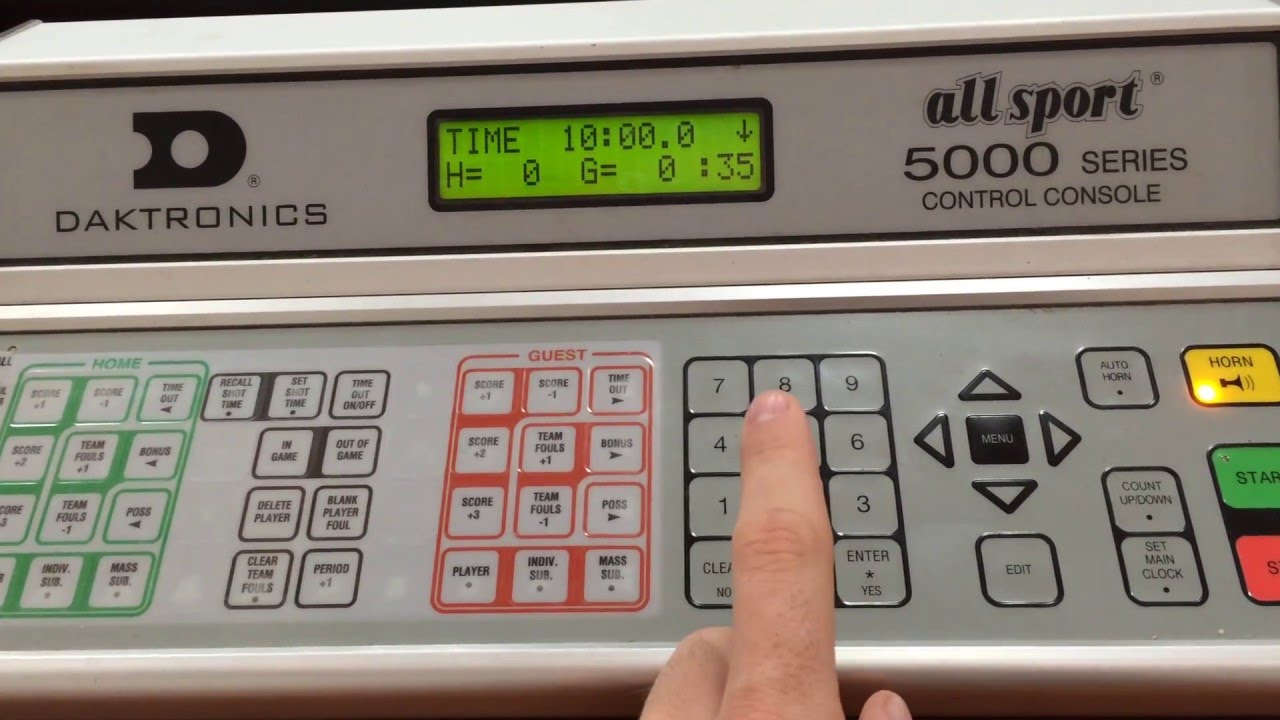
Image Source: i.ytimg.com
Grasping the Basics of Basketball Scoreboard Operation
Working a basketball scoreboard might seem daunting at first, but it’s a skill that anyone can learn with a little practice. This guide will break down everything you need to know, from deciphering the numbers to smoothly managing the game’s pace. Whether you’re helping out at a local league or aspiring to be an official scorer at higher levels, this complete guide will equip you with the knowledge to operate a basketball scoreboard effectively.
Essential Components of a Basketball Scoreboard
Most modern basketball scoreboards are electronic and feature several key displays. Familiarizing yourself with these components is the first step in proper basketball scoreboard operation.
- Score Displays: These are typically two sets of digits, one for each team, showing their current points.
- Game Clock: This display shows the remaining time in the current quarter or half, as well as the period number.
- Shot Clock: This specialized timer counts down the allotted time a team has to attempt a shot after gaining possession.
- Fouls Display: This section usually shows the team fouls for each team, often indicated by a series of lights or numbers.
- Possession Arrow: This indicates which team has possession of the ball at the start of a jump ball situation or after a stoppage.
The Role of the Scorekeeper
The scorekeeper is the official responsible for accurately recording the game’s progress. This role is crucial for fair play and provides the foundation for understanding basketball stats. The scorekeeper works closely with the game clock operator, and sometimes these roles are combined. Their primary duties include:
- Recording Points: Noting down every basket scored (2-pointers, 3-pointers, free throws).
- Tracking Fouls: Keeping a record of personal and team fouls for each player and the team as a whole.
- Timing: Managing the basketball game clock and the basketball shot clock.
- Notifying Officials: Alerting referees to player disqualifications (fouling out) or bonus situations.
- Maintaining Score Accuracy: Ensuring the scoreboard displays are correct at all times.
Mastering the Basketball Game Clock
The basketball game clock is the heartbeat of the game, dictating the flow and urgency of play. Accurately managing this timer is paramount for proper basketball scoreboard operation.
How to Use a Basketball Timer
Most basketball timers are digital and operated by a control panel. Here’s a breakdown of common functions:
- Starting the Clock: The clock starts when the ball is legally touched by an offensive player on the court after a throw-in or when it’s tapped by a player on the jump ball.
- Stopping the Clock: The clock stops for timeouts, fouls, violations, substitutions, out-of-bounds plays, and when a basket is made in the final minute of each period.
- Resetting the Clock: After a stoppage, the clock is reset to the appropriate time before restarting.
- Period/Quarter Control: The operator needs to advance to the next period when the current one ends.
- Half-time and Intermissions: The operator also manages the time for breaks between periods and halves.
Common Timings and Rules
- Game Time: In professional and college basketball, periods are typically 10 or 12 minutes long. High school games usually have four 8-minute quarters.
- Stoppages: Knowing precisely when to stop the clock is key. For example, a whistle for a foul stops the clock immediately. A made basket also stops the clock, but only in the final minute of the first half and the last two minutes of the second half (or the last two minutes of overtime periods).
- Timeouts: Coaches call timeouts, and the scorekeeper is responsible for starting and stopping the clock accordingly.
- Bonus Situations: As teams accumulate fouls, they enter a “bonus” situation, where the opposing team shoots free throws on subsequent fouls. The scoreboard might indicate this, or the scorekeeper must be aware.
Operating the Basketball Shot Clock
The basketball shot clock is a critical element in preventing stalling and maintaining an exciting pace of play. Understanding its operation is vital for accurate basketball scoreboard operation.
Understanding the Shot Clock Rules
- Standard Time: The most common shot clock duration is 24 seconds. This means a team must attempt a shot that hits the rim within 24 seconds of gaining possession.
- Resetting the Shot Clock: The shot clock resets to 24 seconds under several circumstances:
- After a shot attempt that hits the rim and the offensive team retains possession (e.g., offensive rebound).
- After a foul or violation that results in the offensive team retaining possession.
- After a change of possession.
- Partial Reset: In some cases, if a foul or violation occurs against the offensive team and the offensive team retains possession, the shot clock may be reset to 14 seconds if it was at 14 seconds or above, or kept at its current time if it was below 14 seconds. This rule can vary by league.
- End of Period: The shot clock is automatically cleared and turned off when the game clock horn sounds to end a period.
Scoreboard Controls for the Shot Clock
The control panel will have dedicated buttons for the shot clock:
- Start/Stop: To manually start or stop the shot clock if the automatic triggers don’t work correctly.
- Reset: To set the shot clock back to 24 seconds (or the relevant time).
- Clear/Off: To clear the display or turn it off when it’s no longer relevant.
Accurate Basketball Scoring System
The basketball scoring system is the foundation of basketball scorekeeping. It involves accurately awarding points and ensuring the score reflects the game’s events.
How Points are Awarded
- Free Throw: 1 point (awarded after fouls).
- Field Goal (inside the 3-point line): 2 points.
- Field Goal (outside the 3-point line): 3 points.
Keeping Track of Points
The scorekeeper must be vigilant and know which player scored and from where. This information is crucial for understanding basketball stats.
- Visual Confirmation: Watch the ball go through the hoop.
- Official Signals: Pay attention to referees’ signals for 2-point or 3-point baskets.
- Player Identification: Know which player is responsible for the score. This is important for basketball player stats.
Recording Player and Team Fouls
Properly tracking fouls is a critical part of managing a basketball game and ensuring fair play. This information is often displayed on the scoreboard and is vital for understanding basketball stats.
Personal Fouls
Each player has a limit on the number of personal fouls they can commit before being disqualified (usually 5 or 6, depending on the league).
- Recording: When a foul is called on a player, the scorekeeper notes it down and adds a tally mark to that player’s foul count. This is often done on a separate scoresheet or directly on the scoreboard if it has player foul tracking.
- Alerting Officials: The scorekeeper must inform the referee when a player reaches their foul limit.
Team Fouls
These are the total number of fouls committed by a team in a quarter or half.
- Indicating Bonus: As mentioned earlier, accumulating a certain number of team fouls (usually 5 or 6 per period) triggers the bonus situation, where the opposing team gets free throws for shooting fouls. The scoreboard may have indicators for team fouls.
- Scoreboard Display: Many scoreboards will display the number of team fouls either numerically or with a series of lights. The scorekeeper needs to update this as fouls are called.
Working the Scoreboard: Step-by-Step
Here’s a practical approach to working the scoreboard, ensuring smooth basketball scoreboard operation.
Before the Game
- Familiarize Yourself: Get to know the specific controls of the scoreboard you’ll be using. Most have a manual and some have practice modes.
- Test Equipment: Ensure all displays are working correctly. Check the game clock, shot clock, score, and foul indicators.
- Gather Information: Get the team names and player numbers. This is essential for accurate basketball scorekeeping and basketball player stats.
- Confirm Game Timing: Know the length of quarters/halves and any specific rules for that league.
During the Game
- Start the Game Clock: Accurately start the clock as per the rules.
- Update the Score: Every time a basket is made, immediately update the score display for the correct team. For free throws, add points one at a time.
- Manage the Game Clock: Stop the clock on every whistle that requires it, and restart it at the correct moment.
- Operate the Shot Clock: Start, stop, and reset the shot clock as dictated by the play. This is a key aspect of how to use a basketball timer in conjunction with the game clock.
- Track Fouls: Accurately record personal and team fouls. Update the foul indicators on the scoreboard and alert officials when necessary.
- Possession Arrow: Ensure the possession arrow is correctly set after jump balls or changes of possession.
- Timeouts: When a timeout is called, stop the game clock and start the timeout clock. Announce the remaining timeout time if necessary.
- Substitutions: Ensure the scoreboard accurately reflects any changes related to player eligibility (e.g., fouls).
After the Game
- Final Score: Verify the final score displayed matches your scorekeeping records.
- Report Scores: Submit the official game report if required.
- Turn Off Equipment: Safely turn off the scoreboard and any associated timers.
Advanced Scorekeeping Techniques and Tips
To excel at basketball scorekeeping, consider these advanced tips.
Communication is Key
- With Officials: Maintain clear communication with referees, especially regarding fouls and time-related situations.
- With Timer Operator (if separate): If you have a separate timer operator, constant communication is vital to ensure both functions are synchronized.
Using a Scoresheet
While electronic scoreboards are common, a physical scoresheet is often used as a backup and for detailed record-keeping. This is essential for detailed understanding basketball stats.
- Player Stats: Record points, assists, rebounds, steals, blocks, and turnovers for each player.
- Team Stats: Track team fouls, timeouts used, and scoring by period.
- Foul Situations: Mark down when a player commits a personal foul and when a team enters the bonus.
Anticipating the Flow of Play
- Know the Rules: Deeply knowing the rules of basketball, especially timing and fouling, allows you to anticipate when the clock needs to stop or when a shot clock reset is imminent.
- Watch the Players: Pay attention to player fatigue and potential fouls.
Deciphering Basketball Stats
Beyond just the score, understanding basketball stats provides valuable insights into a game’s performance.
Common Basketball Stats
- Points: Total points scored.
- Rebounds: Grabbing the ball after a missed shot.
- Assists: A pass that leads directly to a made basket.
- Steals: Taking the ball away from an opponent.
- Blocks: Deflecting an opponent’s shot.
- Turnovers: Losing possession of the ball to the opposing team.
- Field Goal Percentage (FG%): Made field goals divided by total field goal attempts.
- Free Throw Percentage (FT%): Made free throws divided by total free throw attempts.
How Scoreboards Aid Stat Tracking
While the primary function of a scoreboard is to show the current score and time, its components can indirectly help with stat tracking. For instance, knowing when a player scored (by observing the score update) and how they scored (a 2 or 3-pointer, or free throws) contributes to their individual statistics.
Managing a Basketball Game Effectively
Working the scoreboard is a crucial part of managing a basketball game. A well-operated scoreboard contributes to a fair and enjoyable experience for players, coaches, and spectators.
Impact of Accurate Scorekeeping
- Fairness: Ensures teams are credited with all their points and that fouls are tracked correctly.
- Player Eligibility: Prevents players from playing when they have fouled out.
- Game Pace: The timely operation of the game clock and shot clock directly influences the tempo and excitement of the game.
- Record Keeping: Accurate records are essential for official statistics and historical data.
Common Pitfalls to Avoid
- Late Clock Stoppages: Failing to stop the clock when required can unfairly penalize a team.
- Incorrect Score Updates: Miscrediting points or entering the wrong score leads to confusion and disputes.
- Shot Clock Violations: Not resetting or starting the shot clock correctly can lead to avoidable turnovers.
- Foul Tracking Errors: Incorrectly tracking fouls can result in players staying in the game longer than they should or being wrongly disqualified.
Frequently Asked Questions (FAQ)
Q1: What is the difference between a game clock and a shot clock?
A1: The game clock tracks the overall playing time of a quarter or half. The shot clock is a separate timer that measures how long a team has to attempt a shot after gaining possession, usually 24 seconds.
Q2: Can I operate a basketball scoreboard without a manual?
A2: While it’s best to consult the manual, most scoreboards have intuitive controls. Familiarizing yourself with common functions like starting/stopping the clock, updating scores, and operating the shot clock will help.
Q3: Who is responsible for signaling fouls and violations?
A3: Referees are responsible for signaling fouls and violations. The scorekeeper’s job is to accurately record these signals and update the scoreboard accordingly.
Q4: How do I know when to reset the shot clock?
A4: The shot clock typically resets to 24 seconds when a team gains possession after a stoppage, or when a shot attempt hits the rim and the offensive team retains possession. Some violations may lead to a partial reset. Always follow the specific league rules.
Q5: What if I make a mistake on the scoreboard?
A5: If you realize a mistake, immediately inform the nearest referee. They will consult with other officials and your scoresheet to determine the correct action. It’s better to correct a mistake promptly.
Q6: How do I learn more about basketball stats?
A6: You can learn more about basketball stats by observing professional games, reading sports websites, or taking online courses on sports analytics. Paying attention to how stats are presented during broadcasts is also helpful for understanding basketball stats.
By following this comprehensive guide, you’ll be well-equipped to confidently and accurately work a basketball scoreboard, contributing to a smoother and more enjoyable basketball experience for everyone involved.