
In basketball, taking two steps and stopping is generally legal, provided it’s done correctly according to the established footwork rules. The legality hinges on what happens before and after those two steps, specifically concerning dribbling, gathering the ball, and establishing a pivot foot.
Basketball is a game of rhythm, finesse, and quick decisions. At the heart of many offensive moves are the steps a player takes. But what constitutes a fair sequence of movements, and what crosses the line into a traveling violation? Many players, from beginners to seasoned veterans, find themselves pondering the nuances of taking two steps and stopping. Is it a clever way to create space, or an illegal maneuver? Let’s dive deep into the world of basketball fundamentals and explore the rules governing this common basketball action.
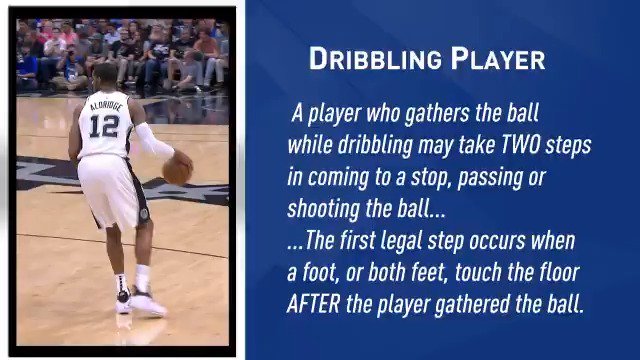
Image Source: pbs.twimg.com
Deciphering the “Two Steps and Stop” Rule
The core of the “two steps and stop” question lies in how a player receives the ball, dribbles, and lands. It’s not just about counting steps; it’s about the context of those steps.
The Role of the Dribble
A player can take an unlimited number of steps while dribbling. The moment the dribble ceases, or the player has possession of the ball without dribbling, a specific set of rules regarding steps comes into play.
Establishing Possession
When a player receives the ball while in motion, they are allowed a gathering step. This is essentially a transitional step that allows them to secure the ball and prepare for their next move.
- Receiving the Ball: Imagine a player cutting to the basket and receiving a pass. They can take a step to catch the ball, and then a second step to stop or continue their movement.
- The “Gather”: This gathering step isn’t counted as one of the two allowed steps for stopping if the player is already in motion when they receive the ball. It’s part of the process of gaining full control.
The “Zero Step” and One-and-One Rule
In many leagues, particularly those influenced by FIBA rules (which have become increasingly adopted), there’s a concept often referred to as the “zero step” or “gathering step.” This means that when a player begins their gather (the act of catching the ball and starting to move with it), they can take an initial step before they are considered to have started their “legal dribble” or their “stop” steps.
So, if a player is dribbling, they can pick up their dribble (stop dribbling). After they pick up their dribble, they are allowed two additional steps. This is often misinterpreted. The critical distinction is when the dribble ends.
- Example 1 (Legal): A player dribbles, takes a gathering step as they scoop up the ball, then takes two more steps to stop or shoot. This is legal.
- Example 2 (Traveling Violation): A player catches the ball already stationary, takes one step, then a second step, and then begins to dribble. This would likely be a traveling violation.
Key Differences: FIBA vs. NBA (Historically)
While rules are converging, there have been historical differences that often cause confusion.
- FIBA: Traditionally more lenient with the gathering step, allowing a player to effectively take three steps under certain circumstances (gather, step one, step two).
- NBA: Historically stricter, where the first step after gaining possession was the “start” of the two-step count. However, the NBA has also evolved its interpretation of the gather to be more aligned with international standards.
Today, the interpretation of the gather step is largely consistent across major rule sets, focusing on the act of gaining control of the ball.
Common Scenarios and Their Legality
Let’s break down some common basketball actions that involve taking two steps and stopping.
The Step-Back Jumper
A step-back jumper is a quintessential offensive move. It involves a player creating space from their defender by pushing off one foot and stepping backward, then jumping to shoot.
- The Process: A player might be dribbling, take a few dribbles, stop their dribble, take a plant step, then take a backward “step-back” step, and then jump.
- Legality:
- If the player is dribbling, they can establish a pivot foot after ending their dribble.
- They can then take one step, followed by a second step (which could be the step-back) before releasing the ball for a shot.
- The key is that the dribble must have ended before the first of the two permitted steps is taken. If the dribble continues during these steps, it’s a double dribble.
- The step-back itself is legal as long as it’s part of the allowed two steps after the dribble is terminated.
Eurostep
The Eurostep is a popular move where a player drives to the basket, takes one step laterally in one direction, and then a second step laterally in the other direction before finishing.
- The Process: A player dribbles, picks up the dribble, takes a step to the side, then another step to the opposite side.
- Legality: This is a prime example of the two-step rule in action.
- The player picks up their dribble.
- They are allowed two steps. The Eurostep utilizes these two steps for its characteristic lateral movement.
- As long as the dribble is secured before the first lateral step, and the player doesn’t take a third step before shooting or passing, the Eurostep is legal.
Catch and Shoot
When a player receives a pass and immediately shoots, the sequence of steps is crucial.
- The Process: A player is moving, receives a pass, and shoots.
- Legality:
- If the player is moving when they receive the ball, they get a gathering step to control the ball.
- After the gather, they are allowed two additional steps. If they shoot on the first or second step after the gather, it’s legal. If they take a third step, it’s a traveling violation.
- If the player is stationary when they receive the ball, the first step they take is counted as step one, and the second step as step two. A shot must be released on or before the second step.
Post Moves and Pivoting
In the post, pivot foot rules are paramount.
- The Process: A player receives the ball in the post, establishes a pivot foot, and then uses footwork to create an offensive opportunity.
- Legality:
- Once a player establishes a pivot foot (the foot that remains in place while the other foot moves), they can lift the non-pivot foot but cannot bring it back down to the floor before dribbling or shooting.
- Taking two steps while pivoting usually involves lifting the non-pivot foot, stepping with the pivot foot (step one), then stepping with the non-pivot foot again (step two) and shooting or passing. This is generally legal.
- However, if the player lifts their pivot foot and then puts it back down, it’s a traveling violation. This is a common mistake when attempting two steps or more in post play.
Differentiating Traveling Violations
Understanding what is traveling is as important as knowing what isn’t. Traveling is a broad term for illegally moving one’s feet while in possession of the ball.
Common Traveling Infractions
- Too Many Steps: Taking more than the allowed two steps after gaining possession without dribbling.
- Moving the Pivot Foot: Lifting and then returning the pivot foot to the floor.
- Starting a Dribble After Stopping: Taking steps after ending a dribble and then starting a new dribble (a double dribble).
- Carrying the Ball: The act of “carrying” the ball occurs when the player’s hand is under the ball and they move their hand from the side to the bottom of the ball during a dribble. This is not a footwork violation but is often confused with traveling. However, some interpretations of the gather step can resemble carrying if not executed cleanly.
- Taking Steps Before Gaining Control: Taking steps before the ball is fully secured and controlled, especially when receiving a pass.
The “Gather” and Its Nuances
The gathering step is a critical concept that often causes debate. It’s the step taken to gain control of the ball after it has been passed or when picking up a dribble.
- Legal Gather: A player can take one step while gathering the ball. This step is not counted against the two-step limit for stopping or shooting.
- Illegal Gather: If a player takes two steps during the gathering process, or if they take a gather step and then a third step before shooting, it’s a traveling violation.
Table 1: Legal vs. Illegal Steps After Receiving the Ball (No Dribble)
| Scenario | Steps Allowed (after initial catch) | Legality |
|---|---|---|
| Receiving while stationary | 2 | Legal if shot/pass on 1st/2nd step |
| Receiving while moving (gather step) | 1 (gather) + 2 | Legal if shot/pass on 1st/2nd step after gather |
| Receiving while moving, takes 3 steps | N/A (more than 2 allowed) | Traveling Violation |
What About the “Double Dribble”?
A double dribble occurs when a player dribbles the ball with two hands simultaneously, or when they stop dribbling and then start dribbling again. This is separate from traveling, but often occurs in similar transition moments. If a player attempts their two steps after stopping their dribble, but then continues dribbling, they’ve committed a double dribble.
The Importance of Footwork in Basketball
Mastering footwork is fundamental to all offensive and defensive basketball fundamentals. It dictates stability, balance, and the ability to execute various offensive moves.
Developing Proper Footwork
- Practice Drills: Incorporate drills that focus on stopping, starting, pivoting, and changing direction.
- Stationary Drills: Practice receiving the ball while stationary, taking two steps, and shooting. Focus on a clean pickup and a balanced shot.
- Moving Drills: Practice catching passes on the move, executing the gather step, and then taking two legal steps.
- Coach Feedback: Seek guidance from coaches to correct any habits that might lead to traveling.
Footwork Rules and Consistency
The interpretation of footwork rules, particularly the gather step, can sometimes vary slightly between officials. However, the core principles remain consistent: secure possession, don’t move your established pivot foot illegally, and adhere to the two-step limit after ending a dribble.
Frequently Asked Questions (FAQ)
Q1: Can I take three steps after dribbling?
A1: No, after you stop dribbling, you are generally allowed two steps. The gather step is a crucial exception if you are receiving the ball while in motion.
Q2: What is a pivot foot?
A2: A pivot foot is the foot that remains planted on the ground while a player turns or steps with their other foot. Once established, it cannot be lifted and then put back down without dribbling or shooting.
Q3: Is the Eurostep legal?
A3: Yes, the Eurostep is legal as long as it is executed within the two-step limit after the dribble has been secured and the pivot foot rules are followed.
Q4: What’s the difference between traveling and a double dribble?
A4: Traveling involves illegally moving your feet while holding the ball. A double dribble involves dribbling the ball twice in succession or starting a new dribble after stopping.
Q5: How do I avoid traveling when doing a step-back jumper?
A5: Ensure you stop your dribble before you take your first step (which may include a gather step if you were moving). Then, you have two steps to execute the step-back and shoot. Do not continue dribbling during these steps.
Q6: Is there a “zero step” in basketball?
A6: While not officially termed a “zero step” in all rulebooks, the concept of a “gather step” allows a player to take an initial step to gain control of the ball without it counting as one of their two allowed steps when they are in motion when receiving the ball.
By internalizing these principles and practicing diligently, players can confidently execute offensive moves like the two-step stop, the step-back jumper, and the Eurostep without fear of a traveling violation. Mastering these basketball fundamentals is key to becoming a more effective and dynamic player.