
A standard basketball hoop’s rim is 18 inches in diameter, and the hoop itself is positioned 10 feet above the ground. This measurement applies to professional leagues like the NBA, as well as most adult and even many youth leagues.
Basketball is a game of precision, skill, and, of course, height. While the ball itself has a standardized size, the structure that players strive to shoot it through – the hoop – also adheres to strict dimensions. Knowing these measurements is crucial for players of all ages, from backyard enthusiasts to aspiring professionals. This post delves into the specifics of basketball hoop dimensions, explaining the standard sizes you’ll encounter on courts everywhere.
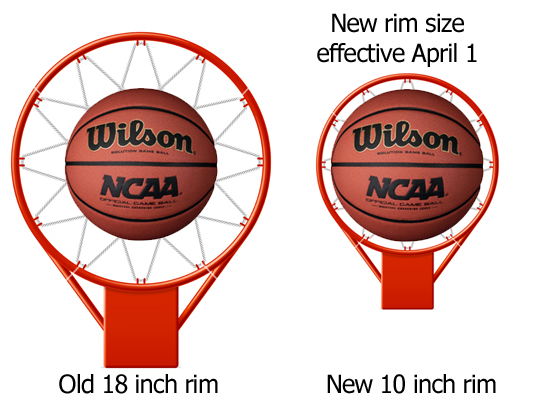
Image Source: blogger.googleusercontent.com
Deciphering Regulation Hoop Size
The term “regulation” implies a set of rules and measurements that govern how the game is played. When it comes to basketball hoops, this means adhering to specific height and diameter standards to ensure fair play and consistency across different venues.
The Immovable Height: Hoop Rim Height
The most universally recognized dimension of a basketball hoop is its height. The hoop rim height for all official, adult basketball games is set at 10 feet from the playing surface. This height is not arbitrary; it’s a carefully chosen distance that challenges players, requiring a good combination of strength, technique, and touch to score.
- Historical Context: While 10 feet has been the standard for a long time, early versions of the game sometimes used lower hoops, reflecting the game’s evolution. However, the 10-foot height became firmly established as the sport gained popularity and professionalized.
- Impact on Gameplay: This specific height dictates the arc of a shot, the force needed to jump and shoot, and the defensive strategies employed by players. It’s a cornerstone of the sport’s challenge.
The Circular Target: Standard Basketball Hoop Diameter
Beyond height, the size of the hoop’s opening is equally important. The standard basketball hoop diameter is 18 inches. This measurement refers to the inner diameter of the rim.
- Rim Thickness: The rim itself has a thickness, typically around 5/8 inches for professional play, but this isn’t part of the 18-inch opening measurement.
- Ball Fit: An 18-inch diameter is designed to accommodate a regulation basketball comfortably, yet still offer a challenge. A standard men’s basketball has a circumference of about 29.5 inches, which translates to a diameter of approximately 9.4 inches. This leaves a little over 4 inches of clearance on either side of the ball when it passes through the hoop, demanding accuracy.
NBA Hoop Dimensions: The Pinnacle of the Game
When you watch the National Basketball Association (NBA), you’re witnessing play on hoops that adhere to the strictest regulations. The NBA hoop dimensions are the benchmark for professional basketball worldwide.
Height in the Pros
Just like all regulation hoops, the basketball hoop height in the NBA is precisely 10 feet. This consistency ensures that the skill and athleticism of players are tested equally, regardless of whether they are playing in Boston or Los Angeles.
Rim Size in the League
The NBA hoop dimensions for the rim’s diameter are also the standard 18 inches. This consistent size is critical for players who have trained for years to master their shooting form for this specific target.
- Backboard Dimensions: While not part of the hoop itself, the backboard is an integral part of the system. In the NBA, backboards are typically rectangular, measuring 72 inches wide by 42 inches high. The rim is centered horizontally and is 4 feet from the nearest sideline.
- Net Material: The net is also standardized, usually made of nylon or chain, and is designed to slow the ball down as it passes through, making the “swish” sound that fans love. The net should hang 15 to 18 inches from the bottom of the rim and should have 12 loops.
Youth Basketball Hoop Height: Growing the Game
Introducing basketball to younger players requires adjustments to ensure they can develop their skills and enjoy the game. This is where youth basketball hoop height comes into play.
Age-Appropriate Heights
The 10-foot standard is often too challenging for young children. Therefore, youth leagues and recreational programs commonly use lower hoop heights.
- Ages 6-8: Typically play with hoops set at 6 feet.
- Ages 9-10: May use hoops set at 8 feet.
- Ages 11-12: Often transition to 9 feet.
- Ages 13 and Up: Generally move to the regulation 10-foot height.
The goal of these adjusted heights is to allow young players to practice shooting without constant frustration, to develop proper shooting form, and to build confidence. As they grow and develop their strength and skills, they gradually move up to the regulation height.
Adjustable Basketball Hoop Height
For home use, schools, and recreational centers, adjustable basketball hoop height systems are incredibly popular. These systems allow the hoop to be raised or lowered, accommodating players of different ages and skill levels.
- Benefits:
- Scalability: Can grow with a child.
- Versatility: Allows multiple users with different needs to play on the same court.
- Fun Factor: Makes the game more accessible and enjoyable for younger or less experienced players.
- Mechanism Types:
- Telescoping: The pole extends or retracts to change height.
- Crank Systems: A hand crank is used to raise or lower the backboard and rim.
- Hydraulic/Gas Shock: A gas-powered cylinder assists in adjusting the height.
Backyard Basketball Hoop Size: Fun for Everyone
The backyard basketball hoop size can vary greatly depending on the space available and the intended use. While many homeowners opt for systems that mimic regulation sizes, there’s more flexibility.
Home Court Standards
Many backyard setups aim for a regulation basketball hoop size for a more authentic experience. This means a 10-foot height and an 18-inch rim diameter. However, the size of the backboard can vary.
- Backboard Size:
- Regulation: 72 inches wide x 42 inches high.
- Shorter/More Compact: Many residential systems use backboards that are 44 inches, 48 inches, 54 inches, or 60 inches wide. These are more manageable for smaller spaces and easier to install.
- Rim Diameter: Even with smaller backboards, the standard basketball hoop diameter of 18 inches is typically maintained for shooting practice.
Types of Backyard Hoops
- In-Ground Systems: These are the most durable and stable, with the pole directly anchored in the ground. They often offer the most adjustment options.
- Portable Hoops: These have a base that can be filled with water or sand. They are movable and convenient but can be less stable in high winds or during aggressive play. Their outdoor basketball hoop dimensions might be more compact.
- Wall-Mounted Hoops: Attached directly to a wall or garage, these save space but offer limited adjustability and placement options.
Indoor Basketball Hoop Size: Controlled Environments
The indoor basketball hoop size typically mirrors the outdoor, regulation standards, especially in gymnasiums for schools and professional facilities.
Gymnasium Dimensions
In a typical gymnasium, you’ll find hoops set at the regulation basketball hoop size of 10 feet high with an 18-inch rim diameter. The backboards here are usually large, often 72 inches wide, providing a generous surface for bank shots.
- Adjustable Systems Indoors: Many indoor facilities also utilize adjustable basketball hoop height systems for training younger players or for different recreational activities. These are often the crank or hydraulic types.
Smaller Indoor Hoops
For recreational use in homes or playrooms, smaller, more manageable indoor basketball hoop size options are common.
- Over-the-Door Hoops: These are very popular for children. They feature a small backboard (often around 18 inches wide) and an 8- to 9-inch diameter rim. The basketball hoop height on these is often not adjustable in the traditional sense but depends on the height of the door.
- Tabletop Hoops: Even smaller, these are designed for desk or table play and have very miniature hoops and balls.
Outdoor Basketball Hoop Dimensions: Weathering the Elements
When considering outdoor basketball hoop dimensions, durability and weather resistance are key factors. The underlying measurements, however, remain consistent with regulation standards.
Durability and Materials
- Rim: Outdoor rims are typically made of steel and are often thicker and more robust than indoor rims to withstand outdoor conditions. The standard basketball hoop diameter of 18 inches is maintained.
- Backboard: Outdoor backboards can be made from acrylic, polycarbonate, or fiberglass. Acrylic is often preferred for its shatter resistance and good rebound, while polycarbonate is very durable. Fiberglass offers a good balance of rebound and durability.
- Pole: The pole is usually made of steel and needs to be protected against rust, often with powder coating or galvanization.
Placement and Spacing
When setting up an outdoor basketball hoop dimensions consideration also includes the surrounding play area.
- Court Size: While not a part of the hoop itself, the size of the court is important. A full-size basketball court is 94 feet long by 50 feet wide for NBA and NCAA, and 91 feet 10 inches by 49 feet 2 1/2 inches for FIBA. Backyard courts are often smaller.
- Clearance: Adequate space around the hoop is crucial for safe play. This includes clearance behind the backboard for the player and sufficient space for driving to the basket.
Fathoming Hoop Adjustments and Variations
While the 10-foot height and 18-inch diameter are the gold standard, there are nuances and variations to consider.
The Net’s Role
The net, while not dictating the basketball hoop height or diameter, plays a role in the feel of the game. A good net helps slow the ball down after it passes through the rim, providing that satisfying “swish” and making it easier to track the ball’s trajectory. The net’s length and number of loops are also standardized.
Hoop Material Matters
The material of the rim can influence its durability and how the ball reacts off it.
- Steel: Most common and durable for regulation play.
- Aluminum: Lighter and more resistant to rust but can be more expensive.
- Breakaway Rims: Found in professional and high-level play, these rims are designed to flex downwards when a player dunks with force. This protects the player, the backboard, and the rim itself. They still adhere to the regulation basketball hoop size.
Frequently Asked Questions About Basketball Hoop Sizes
Q1: What is the standard height for a basketball hoop?
A1: The standard basketball hoop height for adult and professional play is 10 feet from the playing surface to the rim.
Q2: What is the diameter of a basketball hoop rim?
A2: The standard basketball hoop diameter is 18 inches (inner diameter).
Q3: Can I adjust the height of my basketball hoop?
A3: Yes, many adjustable basketball hoop height systems are available for home use, allowing you to change the hoop rim height to suit different players or for practice.
Q4: Are NBA hoop dimensions different from other leagues?
A4: No, the NBA hoop dimensions (10-foot height, 18-inch rim diameter) are the standard for most professional and competitive basketball leagues worldwide.
Q5: What is the youth basketball hoop height?
A5: Youth basketball hoop height varies by age. Typically, younger children (6-8) use 6 feet, while older children (9-12) might use 8 or 9 feet before moving to the 10-foot regulation height.
Q6: What are typical backyard basketball hoop size considerations?
A6: For backyards, you can choose between full regulation basketball hoop size (10 ft height, 18-inch rim) or opt for systems with smaller backboards (e.g., 44-60 inches wide) for space-saving.
Q7: Is there a difference between indoor basketball hoop size and outdoor basketball hoop dimensions?
A7: The fundamental measurements of height and rim diameter are the same. The primary differences lie in the materials used for durability and weather resistance in outdoor hoops.
By familiarizing yourself with these dimensions, you can better appreciate the game and set up your own playing space for maximum enjoyment and skill development. Whether you’re playing on a professional court or in your driveway, the iconic 10-foot hoop with its 18-inch rim remains the ultimate target.