
An NBA basketball hoop is 10 feet high, measured from the floor to the top of the rim. The regulation basketball hoop size is a standardized measurement that ensures fair play across all professional games.
Have you ever watched an NBA game and wondered exactly how high that bouncing ball has to travel to go through the hoop? The precise measurements of an NBA basketball hoop are crucial to the sport, dictating everything from a player’s jump shot to the strategic placement of every player on the court. This article will delve into the specific dimensions that make up an NBA basketball hoop, from the height of the rim to the diameter of the hoop itself, and how these standards impact the game. We’ll also explore some related measurements that paint a complete picture of the basketball playing environment.
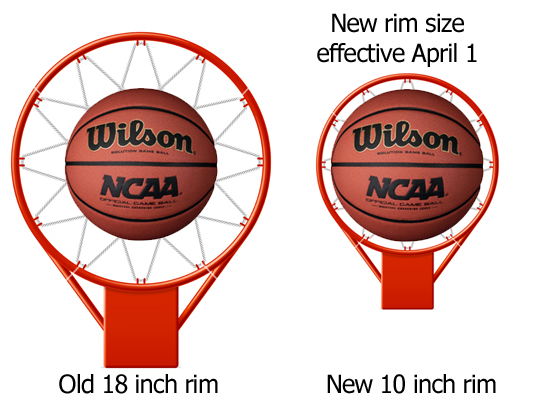
Image Source: blogger.googleusercontent.com
The Core Measurement: NBA Hoop Height
The most talked-about dimension of any basketball hoop is its height. In the NBA, and indeed in most organized basketball leagues worldwide, the NBA hoop height is set at a consistent 10 feet. This measurement is taken from the surface of the court to the very top edge of the rim.
Standard Basketball Rim Height
This 10-foot mark isn’t just an arbitrary number; it’s a standard basketball rim height that has been in place for a long time. It’s designed to challenge players, requiring a significant amount of skill, strength, and coordination to score. Imagine if the hoop were much lower; scoring would be incredibly easy, and the game would lose much of its competitive edge. Conversely, if it were too high, it might become nearly impossible to score, making the game frustrating and less engaging.
Regulation Basketball Hoop Size and Player Performance
The regulation basketball hoop size plays a direct role in how players develop their skills. The height demands powerful jumps, accurate shooting arcs, and effective rebounding techniques. Players train rigorously to achieve the vertical leap necessary to reach and score on a 10-foot rim. Slam dunks, a thrilling aspect of the game, require incredible athleticism to get the ball above the rim and force it through.
The NBA Rim Diameter: A Precise Opening
Beyond the height, the physical size of the hoop itself is also standardized. The basketball hoop diameter for an NBA rim is 18 inches. This means that the inside opening of the ring is precisely 18 inches across.
NBA Rim Diameter: The Target
The NBA rim diameter is intentionally sized to be just a bit larger than the basketball itself. An NBA basketball has a circumference of approximately 29.5 inches, which translates to a diameter of roughly 9.4 inches. This difference of a little over 8.5 inches provides a reasonable margin for error for shooters, but it’s small enough that accuracy is still paramount. A slightly larger opening might make scoring too easy, while a smaller one would dramatically increase the difficulty and potentially lead to more rim-outs and fewer successful shots.
Basketball Net Length: More Than Just Aesthetics
The net attached to the rim serves a practical purpose beyond just looking good. The basketball net length is typically between 15 and 18 inches. This length is designed to slow the ball down as it passes through the hoop, providing a clear indication to the officials and spectators that a basket has been scored. A net that’s too short might allow the ball to bounce out too quickly, while a net that’s too long could obscure the view of the score. The material is usually nylon or a similar synthetic fiber, designed to be durable and weather-resistant.
Beyond the Hoop: Related Basketball Specifications
While the hoop itself is the focal point, other dimensions on the court contribute to the overall game and are essential to consider when discussing basketball hoop specifications.
Basketball Backboard Dimensions: The Secondary Surface
The backboard is the rectangular or fan-shaped surface behind the rim. While the hoop is the ultimate target, the backboard plays a significant role in play. The basketball backboard dimensions are also standardized in the NBA. The rectangular backboard measures 6 feet wide by 3.5 feet high. This provides a large surface area for bank shots and rebound opportunities.
Distance from Rim to Backboard: The Critical Gap
The distance from rim to backboard is another crucial measurement. The front of the rim is precisely 4 feet in from the front face of the backboard. This distance ensures that players can shoot off the backboard without the rim being directly flush against it, allowing for controlled bank shots and preventing the ball from getting stuck.
Official NBA Court Measurements: The Playing Field
To fully appreciate the context of the NBA hoop size, it’s important to consider the official NBA court measurements. The entire court is a rectangle measuring 94 feet long by 50 feet wide. The hoops are positioned at the center of each baseline, 4 feet in from the sideline. The three-point line, a key element of offensive strategy, is an arc that extends 23 feet, 9 inches from the center of the hoop at the top of the key, and 22 feet from the baseline in the corners. The free-throw line is 15 feet from the front of the backboard.
Table: Key NBA Basketball Hoop Specifications
| Specification | Measurement |
|---|---|
| NBA Hoop Height | 10 feet (3.05 meters) |
| NBA Rim Diameter (Inner) | 18 inches (45.72 cm) |
| Basketball Net Length | 15-18 inches (38-46 cm) |
| Backboard Width | 6 feet (1.83 meters) |
| Backboard Height | 3.5 feet (1.07 meters) |
| Distance from Rim to Backboard | 4 feet (1.22 meters) |
| NBA Court Length | 94 feet (28.65 meters) |
| NBA Court Width | 50 feet (15.24 meters) |
The Impact of Standardized Hoop Size on the Game
The meticulous standardization of these dimensions contributes significantly to the skill, strategy, and excitement of professional basketball.
Skill Development and Fair Competition
The standard basketball rim height of 10 feet is a primary factor in developing the fundamental skills of basketball. Players must master shooting arcs, vertical jumping ability, and hand-eye coordination to consistently score. This consistent height ensures fair competition. Every player, regardless of the arena they play in, faces the same physical challenge when aiming for the basket.
Strategic Play and Tactics
The regulation basketball hoop size also influences strategic play. The distance of the three-point line, for example, is set with the 10-foot rim height in mind. Teams develop offensive plays that exploit the spacing created by the three-point threat and the threat of drives to the basket. The backboard’s dimensions and its distance from the rim encourage different types of shots and rebound strategies.
Historical Context and Evolution
While the 10-foot height has been a constant in professional basketball for a long time, the game has evolved. Players are bigger, stronger, and more athletic than ever before. This evolution has led to changes in strategy and an increase in high-flying dunks and spectacular plays, all occurring within the framework of the established NBA hoop specifications.
Evolution of the Backboard
Interestingly, the backboard wasn’t always standard. Early basketball was played without backboards, and then they were introduced primarily to prevent spectators from interfering with shots. Over time, the backboard’s material and dimensions became standardized, with the introduction of clear glass backboards in the NBA in the 1970s greatly enhancing the visual appeal of the game and allowing for more strategic bank shots.
International Variations
It’s worth noting that while the NBA has its specific standards, international basketball, governed by FIBA (International Basketball Federation), also adheres to similar measurements for hoop height and rim diameter. The standard basketball rim height is also 10 feet (3.05 meters) internationally, and the rim diameter is 18 inches (45 centimeters). This global consistency allows for a unified understanding of the game and facilitates international competition.
Fathoming the Finer Points of Hoop Design
Let’s break down some of the less obvious, yet important, aspects of the hoop’s construction and how they contribute to the game.
The Rim Itself: Strength and Flexibility
The rim isn’t just a simple metal ring. NBA rims are designed to be strong enough to withstand the impact of powerful dunks, yet they also have a degree of flexibility. Many modern NBA rims are breakaway rims. These rims are engineered to flex or bend slightly under pressure, absorbing some of the force of a dunk.
Benefits of Breakaway Rims
This breakaway feature offers several advantages:
- Player Safety: It reduces the stress on a player’s arms and wrists during a dunk, potentially preventing injuries.
- Backboard Protection: It helps to prevent damage to the backboard and the rim itself from excessive force.
- Aesthetics: It allows players to hang on the rim momentarily without bending or breaking it, which is often part of the celebration of a powerful dunk.
The Net’s Material and Weave
The type of net used also has subtle effects. A thicker, heavier net will slow the ball down more noticeably, giving a clearer “swish” sound and visual confirmation of a made basket. Conversely, a lighter net might allow the ball to pass through more quickly. The pattern of the weave also affects how the ball interacts with the net.
Maintaining the Standards
Ensuring that every NBA court adheres to these precise basketball hoop specifications is critical for maintaining the integrity of the game. Officials and facility managers are responsible for regular checks and maintenance to guarantee that the hoops are at the correct height, the rims are the proper diameter, and the backboards are securely mounted and free of damage.
Frequently Asked Questions About NBA Hoop Size
Here are some common questions people have about the dimensions of an NBA basketball hoop:
Q1: What is the exact height of an NBA basketball hoop?
A1: The NBA hoop height is precisely 10 feet from the court surface to the top of the rim.
Q2: Can I buy an NBA-regulation hoop for my backyard?
A2: Yes, many sporting goods stores sell basketball hoops that meet NBA specifications for height and rim diameter, though professional-grade equipment can be quite an investment.
Q3: Who sets the NBA basketball hoop size standards?
A3: The National Basketball Association (NBA) sets and enforces these standards for all its games and arenas.
Q4: Is the basketball hoop size the same in college and high school basketball?
A4: Yes, for the most part. Both NCAA (college) and NFHS (high school) basketball use the same 10-foot hoop height and 18-inch rim diameter as the NBA.
Q5: Why is the NBA rim diameter 18 inches?
A5: The 18-inch NBA rim diameter is designed to be large enough to allow a basketball (about 9.4 inches in diameter) to pass through with a reasonable margin for error, while still requiring significant shooting accuracy.
Q6: What are the dimensions of a standard NBA basketball?
A6: An NBA basketball has a circumference of 29.5 inches, which equates to a diameter of approximately 9.4 inches.
Q7: Does the net affect how a shot goes in?
A7: Yes, the basketball net length and material can affect the sound and visual indication of a made basket, slowing the ball down after it passes through the hoop.
Q8: How far is the free-throw line from the hoop?
A8: The free-throw line is 15 feet from the front of the backboard.
Q9: What are the measurements for the key or the paint?
A9: The “key” or “paint” area under the basket is a rectangle that is 19 feet long and 12 feet wide in the NBA. The free-throw line is the top line of this area.
Q10: Is the backboard always rectangular?
A10: In the NBA, backboards are typically rectangular, measuring 6 feet wide by 3.5 feet high. Some recreational hoops use fan-shaped backboards, but these are not regulation for professional play.
In conclusion, the seemingly simple act of shooting a basketball through a hoop is governed by a precise set of basketball hoop specifications. The 10-foot NBA hoop height, the 18-inch basketball hoop diameter, and all the related dimensions of the court and equipment are meticulously maintained to ensure a consistent, challenging, and thrilling game of basketball. These standards are not just arbitrary rules; they are fundamental elements that shape the skills players develop, the strategies teams employ, and the very nature of the sport we love.