
The hoop in wheelchair basketball is the same height as in able-bodied basketball: 10 feet (3.05 meters) from the floor to the rim.
Wheelchair basketball, a dynamic and exhilarating sport, captivates audiences worldwide with its speed, skill, and incredible athleticism. At the heart of this adaptive game lies a fundamental question for many spectators and aspiring players: how high is the hoop in wheelchair basketball? The answer is straightforward yet profoundly significant: the basketball hoop height remains consistent with its able-bodied counterpart. The basketball rim height wheelchair players aim for is exactly 10 feet (3.05 meters) from the playing surface. This uniformity is a cornerstone of the sport, ensuring that the fundamental challenge of scoring remains the same, regardless of whether players are on their feet or in their chairs.
The sport, often referred to as para-basketball, is governed by international rules that meticulously detail every aspect of play, including equipment. These rules are designed to ensure fair competition and a standardized experience for athletes. While the physical mechanics of shooting change dramatically due to the seated position and the use of specialized sports wheelchairs, the ultimate objective—getting the ball through the hoop—is achieved with the same regulation height. This dedication to maintaining the standard basketball goal height adapted for wheelchair play underscores the sport’s commitment to inclusivity and its roots in traditional basketball.
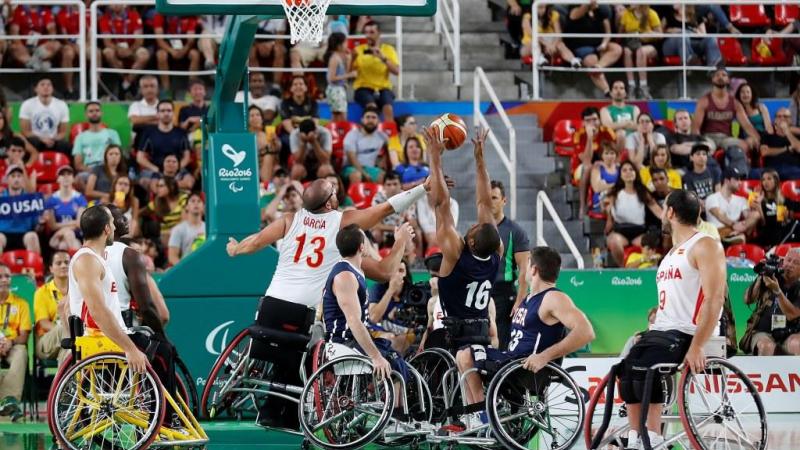
Image Source: www.paralympic.org
The Shared Standard: Why the Consistency?
The decision to maintain the standard basketball hoop height in wheelchair basketball is rooted in several key principles that define adaptive sports. Firstly, it allows for direct comparison and competition with able-bodied basketball, fostering a sense of continuity and shared sporting heritage. Athletes in wheelchair basketball train rigorously, developing incredible strength, precision, and strategy to overcome the inherent challenges of their classification. The 10-foot hoop is a constant reminder that while the method of play is adapted, the pursuit of excellence remains universal.
The standardization also simplifies the integration of wheelchair basketball into multi-sport events, such as the Paralympics. The Paralympic basketball hoop height is therefore identical to that used in any other official basketball competition. This consistency eliminates the need for specialized adjustments to venues or equipment, making it easier to host events and for athletes to compete across different levels and formats of the sport.
Adapting the Game, Not the Goal
The brilliance of wheelchair basketball lies in its adaptations that make the game accessible and competitive for individuals with lower limb impairments. These adaptations primarily revolve around the equipment used by the athletes and the rules of engagement.
The Sports Wheelchair: An Extension of the Athlete
The specialized sports wheelchair hoop height is not directly affected by the chair itself, but the chair’s design is crucial to how players interact with the hoop. Unlike everyday wheelchairs, sports wheelchairs are designed for agility, speed, and stability. They typically feature:
- Low-profile design: The seat is low to the ground, allowing players to get closer to the court for better balance and leverage when shooting or defending.
- Cambered wheels: The wheels are angled outwards, increasing stability during sharp turns and providing a wider base of support.
- Anti-tip wheels: Small wheels at the rear prevent the chair from tipping backward during aggressive play.
- Reinforced frames: Built to withstand the demands of intense competition.
These features are critical for players to maneuver effectively, protect the ball, and position themselves for shots at the 10-foot basketball rim height wheelchair players must conquer. The agility and responsiveness of the chair are as much a part of a player’s skill set as their shooting arm.
Gameplay Adaptations
While the hoop’s height is fixed, other rules are adapted to suit the unique nature of wheelchair basketball:
- Dribbling: Players must dribble the ball every time they propel their chair forward. This means pushing the chair with one hand while dribbling with the other, or bouncing the ball against the floor while pushing. A player can take two pushes of the chair between dribbles. Exceeding this is a “traveling” violation.
- Shooting: Players use a combination of upper body strength and chair positioning to get the ball to the hoop. Many players develop unique shooting styles, often using a two-handed shot for more stability from their seated position. The angle and trajectory of the shot are paramount given the consistent sports wheelchair hoop height.
- Classification: Players are classified into different categories based on their functional ability. This ensures that teams are balanced, with players who have a greater degree of impairment playing alongside those with less. This system is a complex but vital part of para-basketball fairness.
Fathoming the Shooting Mechanics
The physical act of shooting in wheelchair basketball is a testament to the athletes’ adaptability and strength. Without the ability to jump and leverage their legs, players must rely on different techniques:
- Core Strength: A strong core is essential for stability and generating power from a seated position.
- Arm and Shoulder Strength: These are paramount for propelling the ball the distance required to reach the 10-foot basketball rim height wheelchair athletes face.
- Chair Positioning: Players often use their chairs to gain leverage, leaning into the shot or using the chair’s momentum. The angle of the chair relative to the basket can significantly influence the shot’s trajectory.
- Shooting Styles: Unlike able-bodied basketball where a dominant one-handed shot is common, many wheelchair basketball players utilize a two-handed shot, finding it offers greater control and power. Some players also employ a “push shot” or a technique that involves snapping the ball from their fingertips.
The visual spectacle of a wheelchair basketball game often includes impressive displays of athleticism, with players propelling themselves with incredible speed, passing with pinpoint accuracy, and launching shots that arc beautifully towards the seemingly distant Paralympic basketball hoop.
Equipment Specifications: A Closer Look
Beyond the hoop itself, other equipment plays a vital role in the game and adheres to strict regulations:
- The Ball: The ball used is the same size and weight as a standard basketball (size 7). This means that the force required to shoot it is consistent across both versions of the sport.
- The Court: While the hoop height is the same, wheelchair basketball court dimensions are also identical to those of able-bodied basketball courts (28 meters long by 15 meters wide). This ensures that the spatial dynamics of the game, including court coverage, defensive strategies, and offensive plays, are consistent.
- Adjustable Basketball Hoops: While official competition requires a fixed 10-foot height, in training environments or for recreational play, adjustable basketball hoop wheelchair setups can be useful. These allow for varying the hoop height to cater to different skill levels or for drills. However, for official games, the hoop is always set at the regulation 10 feet.
The Impact of Height on Strategy
The consistent 10-foot basketball hoop height has a significant impact on game strategy in wheelchair basketball. Players must develop an accurate shooting touch from a lower vantage point. This often means a different arc on their shots compared to standing players.
- Rebounding: Rebounding is a different game in wheelchairs. Players use their chairs to block opponents, and the ability to quickly maneuver to the basket after a missed shot is crucial. The height of the hoop means that tip-ins and offensive rebounds require precise positioning and quick reactions.
- Defense: Defending near the basket involves using the chair to prevent opponents from getting to the optimal shooting position. Players must be adept at blocking shots with their hands or even their chairs, though intentional contact with the chair is regulated.
- Fast Breaks: The speed of sports wheelchairs allows for exciting fast breaks. Players must be able to dribble and shoot accurately while moving at high speeds, making the 10-foot target a constant challenge.
Historical Context and Evolution
Wheelchair basketball has a rich history, evolving from informal games played by injured veterans of World War II. As the sport grew, standardization of rules and equipment became essential for its development and international recognition. The decision to maintain the standard basketball hoop height was a logical step in this evolution, ensuring that wheelchair basketball could be seen as a legitimate and challenging sport in its own right, directly linked to the global popularity of basketball.
The International Wheelchair Basketball Federation (IWBF) is the governing body responsible for setting and maintaining these rules. Their commitment to global standards ensures that the wheelchair basketball height remains a constant across continents and competitions.
Can Players Dunk in Wheelchair Basketball?
While the hoop is the same height, the dynamics of the wheelchair present unique challenges for dunking. Dunking in wheelchair basketball is extremely rare, though not entirely impossible for exceptionally skilled and powerful athletes with specific classifications. It requires an extraordinary combination of upper body strength, chair control, and the ability to generate enough upward momentum from a seated position. Most players rely on shooting techniques rather than dunking to score.
The Spectacle of Skill and Adaptation
Watching a wheelchair basketball game is an inspiring experience. It showcases the incredible resilience, determination, and skill of the athletes. The familiar sight of the 10-foot hoop serves as a reminder that the core challenge of basketball remains, but the journey to reach and score on that hoop is a testament to human adaptability and the power of sport. The para-basketball hoop size is not an obstacle; it is a benchmark of athletic achievement.
The sports wheelchair hoop height is a crucial element that defines the game’s challenges and strategies. Every shot, every layup, every defensive play is executed with this universal standard in mind. The skill set required to master shooting at this height from a seated position is immense, highlighting the dedication and athleticism of wheelchair basketball players.
When people ask, “How high is the hoop in wheelchair basketball?”, they are often curious about how this adaptive sport modifies the fundamental rules. The answer, consistently, is that it doesn’t modify the hoop’s height. This steadfast adherence to the 10-foot standard is what makes wheelchair basketball such a compelling and respected sport. It’s a celebration of what athletes can achieve when presented with a challenge and provided with the right adaptations to meet it.
Frequently Asked Questions (FAQ)
Q1: Is the basketball hoop height different for wheelchair basketball than for able-bodied basketball?
A1: No, the basketball hoop height is the same for both able-bodied and wheelchair basketball. It is set at 10 feet (3.05 meters) from the floor to the rim.Q2: What are the standard wheelchair basketball court dimensions?
A2: The wheelchair basketball court dimensions are identical to those used in able-bodied basketball, measuring 28 meters (91.86 feet) long and 15 meters (49.21 feet) wide.Q3: Are there any special rules about shooting in wheelchair basketball due to the hoop height?
A3: While the hoop height is the same, players must adhere to dribbling rules (two pushes of the chair between dribbles) and utilize their upper body strength and chair positioning to shoot effectively. Shooting techniques often differ, with many players using a two-handed shot for stability.Q4: What is the purpose of classification in wheelchair basketball?
A4: Classification in wheelchair basketball is designed to ensure fair competition by grouping players with similar functional abilities. This allows athletes with different levels of impairment to compete on a level playing field.Q5: Can you dunk in wheelchair basketball?
A5: Dunking is extremely rare in wheelchair basketball due to the mechanics of propelling a chair and generating enough upward force. While not impossible, it is not a common scoring method.Q6: What type of equipment is used in wheelchair basketball?
A6: Players use specialized sports wheelchairs designed for agility and stability. The basketball used is the same size and weight as in standard basketball. The hoop itself is a standard 10-foot regulation hoop.Q7: Where can I find information on Paralympic basketball hoop size?
A7: The Paralympic basketball hoop size is identical to the standard basketball hoop height of 10 feet (3.05 meters). Information can be found through the International Paralympic Committee (IPC) or the International Wheelchair Basketball Federation (IWBF).Q8: Are there adjustable basketball hoop wheelchair options for practice?
A8: Yes, adjustable basketball hoops are available for practice and recreational use, allowing for varied hoop heights. However, official competitions always use the fixed 10-foot height.