
A standard NBA basketball game is divided into four periods, known as quarters.
The structure of an NBA game is designed to create exciting contests with clear segments of play. These segments, the NBA quarters, are crucial to understanding the flow and strategy of professional basketball. Each NBA quarter has a set duration, and the clock management within these periods is a vital aspect of the game. This detailed exploration will cover the NBA game structure, basketball game timing, how long is an NBA quarter, and how many quarters in an NBA game, encompassing both NBA regular season periods and NBA playoff periods. We will also look at the overall basketball game duration.
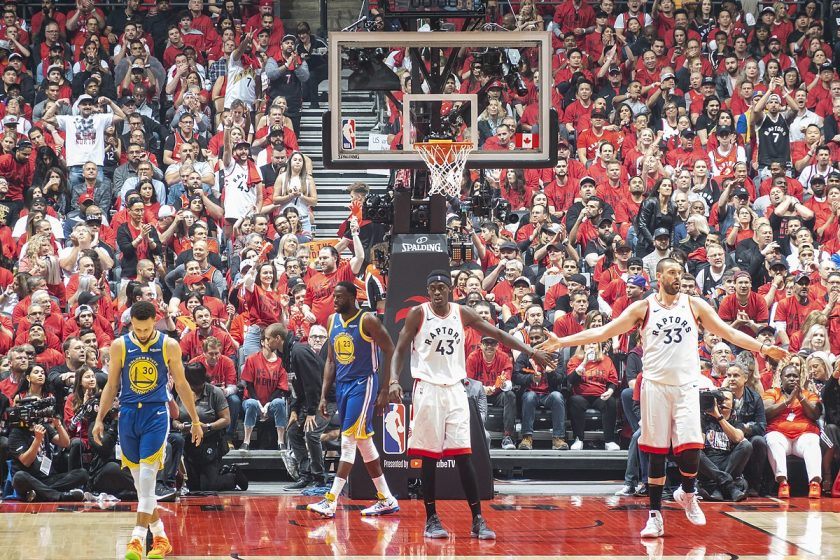
Image Source: www.casino.org
The Four Pillars: NBA Quarters
The most fundamental answer to “how many periods in basketball NBA game?” is four. These four periods are the building blocks of every NBA game. Each quarter represents a distinct segment of play, allowing for strategic adjustments, player rotations, and the ebb and flow of competition.
- First Quarter: This is where the game begins. Teams often use this period to establish their offensive and defensive schemes, test their opponents, and gain an early advantage.
- Second Quarter: The game continues, building on the momentum from the first quarter. Coaching adjustments become more apparent, and player fatigue can start to play a role.
- Third Quarter: Often referred to as the “championship quarter,” the third quarter is where many games are won or lost. Teams typically come out of halftime with renewed energy and strategic adjustments.
- Fourth Quarter: This is the final period, where the pressure is highest. Close games are often decided in these crucial minutes, with clutch shots, defensive stops, and smart decision-making being paramount.
Basketball Game Timing: A Closer Look at NBA Quarters
When discussing basketball game timing, it’s essential to break down the duration of each NBA quarter. This specific timing is what defines the pace and rhythm of an NBA game.
How Long Is an NBA Quarter?
Each NBA quarter lasts for 12 minutes of actual playing time. However, it’s crucial to understand that this is “game clock” time. The clock does not run continuously. It stops frequently due to various situations, significantly extending the overall basketball game duration beyond the 48 minutes of game clock time.
Here’s when the game clock stops:
- Fouls: When a foul is called, the clock stops. Play only resumes once the ball is inbounded.
- Out of Bounds: If the ball goes out of bounds, the clock stops until possession is established and the ball is inbounded.
- Timeouts: Both teams and officials can call timeouts, which stops the clock.
- Jump Balls: While less frequent as the game progresses, jump balls stop the clock.
- Substitutions: The clock stops when a player is being substituted.
- Violations: Certain violations, like traveling or carrying the ball, stop the clock.
- Injuries: If a player is injured and needs attention, the clock is stopped.
- End of Period: The clock automatically stops at the end of each quarter.
This stopping of the clock is a fundamental aspect of basketball game timing and explains why a 48-minute game can often take around two to two-and-a-half hours to complete.
The NBA Game Structure: More Than Just Quarters
While the four NBA quarters are the primary division, the NBA game structure includes other important elements that contribute to the overall experience and strategic depth.
Halftime and Between Quarters
Between quarters, there are short breaks.
- Between Quarters 1 and 2: A brief break, usually around 2 minutes, allows teams to regroup and make minor adjustments.
- Halftime (Between Quarters 2 and 3): This is a more extended break, typically 15 minutes. Halftime is a significant part of the basketball game duration and often features entertainment and analysis. Teams use this time for more in-depth strategic discussions and to rest their players.
- Between Quarters 3 and 4: Another short break, similar to the one between the first two quarters, lasting about 2 minutes.
Overtime Periods
If a basketball game is tied at the end of the fourth quarter, it goes into overtime.
- Overtime Duration: Each overtime period is 5 minutes of game clock time.
- Multiple Overtime Periods: If the game remains tied after the first overtime period, subsequent 5-minute overtime periods are played until a winner is determined.
This overtime structure ensures that a winner is always decided, adding another layer of excitement and drama to the NBA game structure.
NBA Regular Season Periods vs. NBA Playoff Periods
The fundamental structure of four 12-minute quarters remains consistent for both the NBA regular season periods and NBA playoff periods. However, the intensity, stakes, and strategic nuances can differ significantly.
- NBA Regular Season: The regular season involves a long schedule of games. While each game has its importance, the focus is often on building team chemistry, developing players, and securing a favorable playoff seeding. The pace might vary, and teams might experiment more with strategies.
- NBA Playoffs: The playoffs are where the true test of a team’s mettle occurs. Every game is critical, and the intensity is dialed up significantly. Coaches are more likely to stick to their primary rotations, and defensive intensity tends to be higher. Strategic adjustments become even more crucial as teams face familiar opponents repeatedly in a best-of-seven series. The basketball game duration might feel longer due to the heightened stakes and extended timeouts often taken in close playoff games.
Deciphering Basketball Game Segments and NBA Game Time Limits
To fully grasp “how many periods in basketball NBA game?”, it’s helpful to think of the game as a series of basketball game segments, with the NBA game time limits governing each.
| Segment | Duration (Game Clock) | Typical Real-Time Duration | Notes |
|---|---|---|---|
| 1st Quarter | 12 minutes | ~25-30 minutes | Clock stops frequently for fouls, out-of-bounds, timeouts, etc. |
| Break (1st-2nd) | ~2 minutes | ~2 minutes | Short break between quarters. |
| 2nd Quarter | 12 minutes | ~25-30 minutes | Continues the game flow. |
| Halftime | 15 minutes | ~15-20 minutes | Extended break for rest, strategy, and entertainment. |
| 3rd Quarter | 12 minutes | ~25-30 minutes | Often a critical quarter for momentum. |
| Break (3rd-4th) | ~2 minutes | ~2 minutes | Short break before the final push. |
| 4th Quarter | 12 minutes | ~25-30 minutes | Climax of the game, often with close scores and high pressure. |
| Total Game Clock | 48 minutes | This is the actual playing time. | |
| Total Real Time | ~2 to 2.5 hours | Includes all breaks, timeouts, and clock stoppages. | |
| Overtime (if tied) | 5 minutes (each) | ~8-10 minutes (each) | Additional 5-minute periods played until a winner is determined. |
This table illustrates how the 48 minutes of game clock time translate into a much longer real-time basketball game duration. The NBA game time limits for each quarter are fixed, but the real-time experience is dynamic.
Fathoming the Flow: How Many Quarters in an NBA Game?
To reiterate and solidify the core concept: there are four quarters in an NBA game. This division into four distinct basketball game segments is a defining characteristic of NBA basketball. It allows for a balanced distribution of playing time, strategic planning, and exciting narrative arcs within a single contest.
Think of each quarter as a chapter in the story of the game. Each chapter has its own plot points, character developments (player performances), and climaxes. The NBA game structure, with its four-quarter format, is a masterclass in organized sports entertainment.
The Significance of NBA Quarters in Strategy and Performance
The division of the game into NBA quarters isn’t just about arbitrary timekeeping; it deeply influences strategy and player performance.
- Player Fatigue Management: Coaches must strategically manage their players’ minutes throughout the four quarters. Star players might play more in crucial moments, while role players can be utilized to maintain energy levels or exploit matchups.
- Strategic Adjustments: The breaks between quarters, especially halftime, provide critical opportunities for coaches to assess the game, identify opponent tendencies, and implement new strategies or counter-adjustments.
- Momentum Swings: A strong run of play in a single quarter can dramatically shift the momentum of the game. A team might enter the second quarter with a significant lead or fall behind, impacting the subsequent basketball game timing and strategies.
- Clutch Performance: The fourth quarter is often where games are decided. Players are expected to perform under pressure, and teams with better conditioning and mental fortitude often excel in these final basketball game segments.
The Pace of Play: Beyond the Clock
While we know how long is an NBA quarter, the actual pace of play is a complex interplay of many factors. It’s not just about the 12 minutes; it’s about how quickly or slowly teams choose to execute their offense, how much time they take in the backcourt before advancing, and how much time they spend in the half-court set.
- Fast Breaks vs. Half-Court Sets: Teams that prioritize fast breaks will aim to get the ball up the court quickly, aiming to score before the defense can set up. This can lead to a higher-paced game within the NBA quarters. Conversely, teams that rely on intricate half-court offenses might take more time on each possession.
- Defensive Intensity: A highly defensive game, where teams exert significant pressure and force numerous turnovers or stops, can also affect the perceived pace. While the clock stops after certain defensive actions, the overall intensity can make the game feel faster or slower.
Frequently Asked Questions (FAQ)
Q1: How many periods are in a standard NBA game?
A1: A standard NBA game has four periods, known as quarters.
Q2: How long is each NBA quarter?
A2: Each NBA quarter is 12 minutes of game clock time.
Q3: What is the total playing time of an NBA game?
A3: The total playing time, based on the game clock, is 48 minutes.
Q4: How long does an entire NBA game usually last in real time?
A4: An entire NBA game typically lasts between 2 to 2.5 hours due to frequent clock stoppages and breaks.
Q5: Do NBA playoff games have a different number of periods than regular season games?
A5: No, both NBA regular season periods and NBA playoff periods consist of four quarters of 12 minutes each. The intensity and strategy may differ, but the structure remains the same.
Q6: What happens if an NBA game is tied after four quarters?
A6: If an NBA game is tied after the fourth quarter, it goes into overtime. Each overtime period is 5 minutes long, and additional overtime periods are played until a winner is determined.
Q7: Are there any other breaks in an NBA game besides halftime?
A7: Yes, there are short breaks between the first and second quarters, and between the third and fourth quarters, in addition to the longer halftime break.
Q8: Does the clock stop for every foul in the NBA?
A8: Yes, the game clock stops when a foul is called. Play resumes once the ball is legally put back into play.
Q9: Can a coach call a timeout to stop the clock?
A9: Yes, coaches can call timeouts to stop the clock, often to strategize, rest players, or stop an opponent’s momentum.
Q10: What are the basketball game segments of an NBA game?
A10: The primary basketball game segments are the four quarters. However, breaks between quarters and halftime also serve as important segments for rest and strategy.
By examining the NBA quarters, basketball game timing, and the overall NBA game structure, we can appreciate the well-defined segments that make up a professional basketball game. Whether it’s NBA regular season periods or the heightened intensity of NBA playoff periods, the core of the game lies in those four 12-minute quarters.