
Can you beat a 2-3 zone defense with specific plays and strategies? Yes, you absolutely can, and this guide will show you how to do it effectively. Beating a 2-3 zone requires smart play, good ball movement, and exploiting its inherent weaknesses.
A 2-3 zone defense is a common setup where two players guard the top of the key and three players guard the baseline. This formation aims to protect the paint and force outside shots. While it can be effective, attacking a 2-3 zone with the right approach can lead to open shots and easy baskets. This article dives deep into proven plays and strategies for exploiting a 2-3 zone, covering everything from basic principles to specific offensive sets.
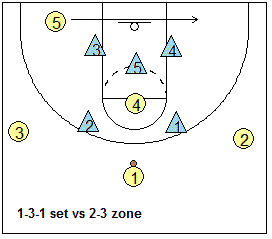
Image Source: cccdn-fe9e.kxcdn.com
Deciphering 2-3 Zone Weaknesses
Every defense has vulnerabilities, and the 2-3 zone is no exception. Its main 2-3 zone weaknesses lie in the gaps between the defenders, particularly in the high post and the corners.
- The High Post: This area, directly in front of the basket and between the two top defenders, is often a soft spot. A player here can receive a pass, draw multiple defenders, and then dish to cutters or open shooters.
- The Short Corner/Baseline: The three baseline defenders are often stretched thin. A quick pass to the short corner can force a defender to step up, opening up opportunities inside or for skip passes.
- Rebounding: Zones can sometimes struggle with boxing out on the perimeter, leading to offensive rebounding opportunities for the attacking team.
- Passing Lanes: While a zone aims to clog passing lanes, rapid and accurate ball movement can break it down.
Fundamental Principles for Beating a Zone
Before we get into specific plays, let’s discuss the core principles for beating zone defense. These are the building blocks of a successful zone offense.
- Patience and Ball Movement: Don’t rush your shots. Move the ball quickly from side to side and up and down to make the zone shift. This is crucial for effective passing in a zone.
- Attack the Gaps: Look to pass or dribble into the open spaces within the zone.
- Overload One Side: Sometimes, concentrating offensive players on one side of the court can draw defenders, creating openings elsewhere.
- High Post Entry: Getting the ball to a player in the high post is a primary way to initiate offense against a 2-3 zone.
- Shooting from the High Post: Players who can hit a shot from the high post area can force the zone’s top players to extend, creating more space underneath.
- Penetration: Dribble penetration zone defense is key. If a defender closes out too hard on a skip pass or a high post entry, that defender can be beaten with a drive.
Proven Plays for Attacking a 2-3 Zone
Here are some effective offensive sets and plays designed to break down a 2-3 zone defense.
Play 1: The High Post Flash
This is a classic and highly effective way to attack the 2-3 zone.
Setup:
* Point Guard (PG) starts at the top.
* Two guards or forwards (Wings) start on the wings.
* Two forwards or centers (Posts) start on the low blocks.
Execution:
- PG passes to a Wing.
- The Wing passes the ball to the top of the key.
- A player (often a mobile forward or center) flashes to the high post. This player should be ready to receive the pass with their back to the basket.
- The high post player receives the ball. They can:
- Turn and shoot if the defender guarding the high post is slow to close out.
- Pass to a cutter from the opposite wing or the low block.
- Dribble towards the basket to draw defenders and then pass.
- Pass to the opposite wing if that player is open for a skip pass.
- The other players move to fill passing lanes and create scoring opportunities. For example, the wing opposite the high post player might cut towards the basket. The players on the low blocks might step out to the short corner or flare out to the wings to create spacing.
Table: High Post Flash Variations
| Scenario | Action | Potential Outcome |
|---|---|---|
| High post defender closes out | High post player turns and attacks, drawing help defense. | Kick-out to open shooter, layup for high post player. |
| Opposite wing is open | High post player makes a skip pass to the opposite wing. | Open three-pointer or drive. |
| Low post player flashes hard | High post player makes a pass to the low post player cutting to the basket. | Layup or foul. |
| Defender is late to high post | High post player receives the ball and shoots. | Open jump shot. |
Play 2: The “Gap” or “In-and-Out”
This play focuses on penetration zone defense by using the dribble to collapse the zone.
Setup:
* PG at the top.
* Two players on the wings.
* Two players in the corners.
Execution:
- PG dribbles towards the center of the court, towards the gap between the two top zone defenders.
- The wings either stay wide or move into the lane to create passing options or draw defenders.
- As the PG penetrates, the zone defenders will shift. The player guarding the high post might step up, and the baseline defenders may drift higher.
- The PG looks to make a pass to an open teammate. This could be:
- A kick-out pass to a wing or corner player who has moved into an open space.
- A pass to a player flashing to the high post if that area opens up as defenders collapse.
- A pass to a player cutting from the weak side as the defense over-rotates.
- This play emphasizes dribble penetration, forcing the zone to make decisions and often leading to breakdowns.
Play 3: The Skip Pass and Drive
This play uses ball movement to create mismatches and opportunities.
Setup:
* Standard 2-3 offensive setup (PG at top, wings, corners).
Execution:
- PG passes to a wing.
- The wing makes a quick pass across the court to the opposite wing (a “skip pass”). This forces the zone to shift laterally.
- The receiving wing immediately looks to penetrate towards the basket.
- As the wing drives, the zone defenders will collapse. The PG or a player from the corner can move to fill the space left by the wing’s drive, becoming open for a pass.
- The driving wing can either finish at the basket or kick out to an open shooter.
Play 4: The Overload
This strategy involves concentrating offensive players on one side to stretch the zone and create openings.
Setup:
* PG at the top.
* One wing, one player in the corner on one side of the court.
* One player in the high post.
Execution:
- PG starts with the ball at the top.
- The PG passes to the wing on the overloaded side.
- The player in the high post moves to the same side of the court to create a strong side presence with the wing and corner player.
- This creates a 3-on-2 or 3-on-1 situation against the zone defenders on that side.
- The goal is to move the ball quickly within the overload to create a quick shot or drive opportunity.
- The player on the weak side can then cut or relocate to create an outlet if the defense overplays the overload.
Play 5: Baseline Entry and Cut
This play targets the weaker baseline coverage of the 2-3 zone.
Setup:
* PG at the top.
* Two players on the wings.
* Two players in the corners.
Execution:
- PG passes to a wing.
- The wing passes to the player in the opposite corner.
- The player in the corner receiving the pass can:
- Drive baseline. This often forces the low defender to commit.
- Pass to a player flashing from the opposite wing towards the basket.
- Pass to a player cutting from the high post down the middle.
- The goal is to force the baseline defenders to move and create opportunities for cutting players or open shots.
Key Skills for Exploiting a 2-3 Zone
Beyond specific plays, certain skills are paramount for exploiting a 2-3 zone.
Sharpshooting
Having players who can consistently hit shots from the perimeter is a zone’s worst nightmare. When shooters are a threat, the zone defenders have to extend, opening up more space inside.
- Develop 3-point shooters: Practice shooting from the wings, corners, and even the high post.
- Good ball movement: Ensure the ball gets to open shooters quickly and accurately.
Passing Prowess
Effective passing in a zone is critical. You need players who can make quick, accurate passes to break down the defense.
- Skip passes: The ability to pass from one side of the court to the other is essential for shifting the zone.
- Entry passes: Getting the ball into the high post or to the short corner often requires precise passing.
- Passes to cutters: Anticipate and deliver passes to teammates making cuts.
Dribble Penetration
Dribble penetration zone defense is a powerful tool. When a defender closes out too hard or a gap opens, a strong dribbler can exploit it.
- Attacking the gaps: Dribble into the spaces between defenders to force them to react.
- Drawing fouls: Penetration often leads to fouls and free throws.
- Creating for others: Once defenders commit to a drive, kick out to open shooters.
Post Play
Players in the high post or low post can be very effective against a 2-3 zone.
- High post skills: Players who can catch, turn, and shoot or pass from the high post are invaluable.
- Low post positioning: Establishing good position on the blocks can draw defenders and create offensive rebounding opportunities.
Defensive Strategies to Counter the Zone
While this article focuses on offense, it’s worth noting that employing offensive strategies can also affect the zone’s effectiveness.
- Screening the zone: Players can set screens on zone defenders to free up teammates.
- Cutting: Constant movement and cutting into open areas can disrupt the zone’s structure.
2-3 Zone Basketball Drills
To effectively implement these strategies, practicing the right drills is essential. Here are some 2-3 zone basketball drills:
Drill 1: 3-on-2 to 2-on-1 / 2-on-3
Objective: To simulate attacking a broken zone and creating scoring opportunities.
Setup:
* 3 offensive players at the top of the key and wings.
* 2 defenders start in a 2-3 zone formation.
* 1 defender is held out.
Execution:
1. The offense starts with 3 players against 2 defenders. The offense tries to move the ball and create an advantage.
2. As soon as the offense gets the ball inside the arc or the defenders commit, the third defender (who was held out) enters the play.
3. The offense now faces a 3-on-3 situation, but ideally, a defensive breakdown has occurred.
4. The defense tries to recover and stop the offense.
5. This drill can be run with variations, like 3-on-2 to a 2-on-3 scenario if the offense makes a mistake.
Drill 2: High Post Entry Passing
Objective: To practice making accurate passes to the high post.
Setup:
* 2 offensive players positioned on the wings.
* 1 offensive player in the high post.
* 3 defenders positioned in a 2-3 zone.
Execution:
1. The two wing offensive players pass the ball back and forth.
2. The goal is to get the ball into the high post.
3. The high post player can then make a decision: shoot, drive, or pass to a cutter.
4. Defenders try to prevent the entry pass and close out on the high post player.
Drill 3: Skip Pass and Drive
Objective: To practice quick ball movement and exploiting the weak side.
Setup:
* 5 offensive players in typical positions.
* 5 defenders in a 2-3 zone.
Execution:
1. Start with the PG. The ball moves from wing to wing.
2. On a skip pass to the opposite wing, that wing player immediately attempts a dribble drive.
3. The offensive players behind the drive fill the open spots for kick-outs.
4. The defense must react to the drive and cover the open players.
Offensive Sets for 2-3 Zone
Beyond individual plays, consider how to structure your offensive possessions against a 2-3 zone.
Set 1: Motion Offense with High Post Entry
- Concept: A free-flowing offense where players cut and move, with a primary objective of getting the ball to the high post.
- Execution: Players move into screens, cut through the lane, and relocate. When the ball is on the wing, a player flashes to the high post. This allows for quick decision-making from the high post player.
Set 2: Corner-to-Corner and High Post
- Concept: This set emphasizes attacking the baseline and then using the high post as a secondary option.
- Execution: The ball is swung from corner to corner. A player in the high post looks to receive passes or fill the lane when the ball is on the opposite side.
Set 3: Perimeter Triangle and Post Play
- Concept: Creates a triangle on the perimeter, with one player operating in the high post.
- Execution: Three perimeter players form a triangle, and two players position themselves in the paint. This can involve screens on the zone defenders to free up shooters or cutters.
Frequently Asked Questions (FAQ)
Q1: What is the best way to initiate offense against a 2-3 zone?
The most effective way to initiate offense against a 2-3 zone is by getting the ball into the high post area. From there, you can attack the zone from the middle, creating passing lanes to cutters or open shooters.
Q2: How important is shooting from the high post against a 2-3 zone?
Shooting from the high post is very important. If the player in the high post can hit jump shots, it forces the top defenders of the zone to extend, which opens up more space for other offensive players, particularly in the paint or the short corners.
Q3: Can I beat a 2-3 zone with just dribble penetration?
While dribble penetration is a crucial part of attacking a zone, relying solely on it is often not enough. Dribbling without passing will eventually lead to the zone collapsing and trapping you. It’s most effective when used to create opportunities for others or to draw defenders before kicking out.
Q4: What are the key weaknesses of a 2-3 zone that offenses should target?
The primary weaknesses of a 2-3 zone are the high post area, the short corner (baseline), and the gaps between the defenders. Rebounding can also be an area of vulnerability.
Q5: How can I improve my team’s passing in a zone defense?
Practicing specific drills like skip passes, entry passes to the high post, and passing to cutters is essential. Emphasize quick, accurate passes and good ball protection. Players should also focus on moving to open spots to receive passes.
Q6: Are there specific offensive sets designed for the 2-3 zone?
Yes, there are several effective offensive sets, including motion offenses with a high post option, corner-to-corner swings with high post involvement, and perimeter triangles with interior player positioning.
Q7: What kind of players are most effective against a 2-3 zone?
Players who are good passers, capable shooters from the perimeter and high post, and have good dribble penetration skills are most effective. Mobile forwards who can operate in the high post are also very valuable.
By implementing these proven plays, mastering fundamental principles, and practicing the right drills, your team can effectively break down any 2-3 zone defense and turn its weaknesses into your offensive advantages.