
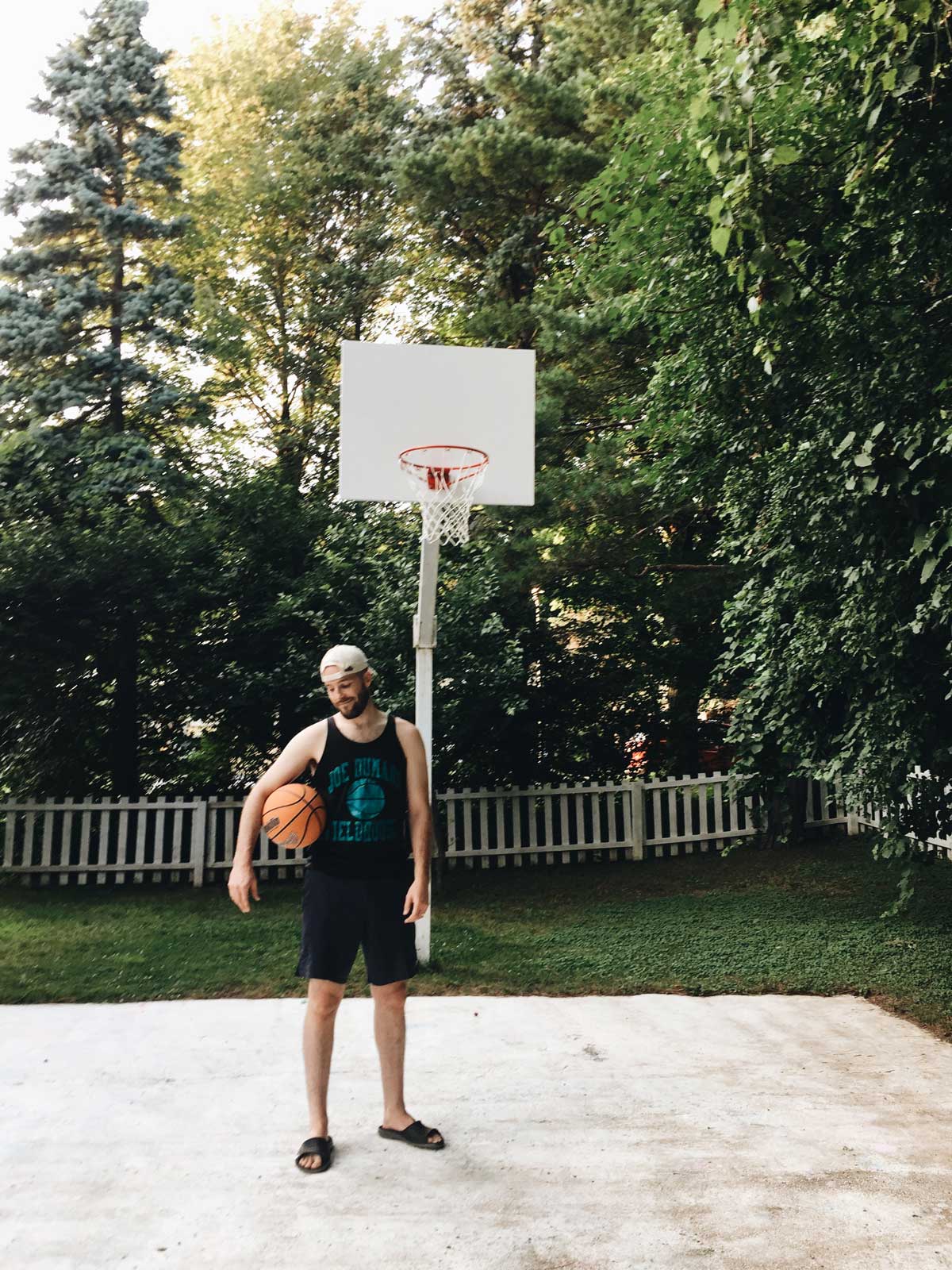
Image Source: rachelschultz.com
How To Build a Basketball Backboard: A Step-by-Step Guide
Can you build your own basketball backboard? Absolutely! Building your own basketball backboard is a rewarding DIY project that can transform your backyard into a fun zone. This guide will walk you through how to make a basketball backboard, covering everything from choosing materials to the final touches for your backyard basketball setup. Get ready to create a fantastic DIY basketball hoop that will provide hours of entertainment.
Planning Your Backyard Basketball Setup
Before you grab your tools, it’s crucial to plan. A well-thought-out plan ensures your DIY basketball hoop is safe, sturdy, and exactly what you envisioned for your outdoor basketball court. Consider the following:
- Location: Where will the backboard be mounted? Think about safety – is there enough clear space around the hoop for play? Avoid areas near windows or driveways.
- Height: Standard basketball hoop height is 10 feet from the court surface. Ensure your mounting location allows for this or your desired height.
- Size: What size backboard do you want? Common sizes are 48 inches, 54 inches, and 60 inches wide. A larger backboard offers a bigger surface for bank shots.
- Budget: Determine how much you’re willing to spend on homemade backboard materials. Prices can vary significantly based on material choices.
- Aesthetics: Do you want a classic look or something more modern? This will influence your material and finish choices.
Gathering Your Homemade Backboard Materials
Choosing the right homemade backboard materials is key to a durable and high-performing basketball backboard. Here’s a breakdown of common and recommended options:
Primary Backboard Material Options
- Plywood Backboard: This is a very popular choice for DIY projects due to its affordability and ease of use.
- Types of Plywood:
- Exterior Grade Plywood: Essential for outdoor basketball court projects. Look for AC, BC, or CDX ratings. AC and BC are generally higher quality. CDX is exterior glued but may have more voids.
- Thickness: 3/4 inch is highly recommended for a sturdy reinforced basketball backboard. Thinner plywood can flex too much, affecting play and potentially breaking.
- Advantages: Easy to cut, drill, and paint. Relatively inexpensive.
- Disadvantages: Can warp or degrade if not properly sealed and painted for weather resistance.
- Types of Plywood:
- Acrylic/Polycarbonate Sheets: These are what professional and high-end home systems often use.
- Advantages: Excellent durability, superior rebound, and inherently weather resistant backboard.
- Disadvantages: Significantly more expensive than plywood. Can be harder to cut and drill without specialized tools, and may crack if not handled carefully.
- Fiberglass: Offers good durability and weather resistance.
- Advantages: Strong and relatively light.
- Disadvantages: Can be more expensive and harder to find in suitable sheet sizes for DIY projects compared to plywood.
For this guide, we will focus on building a plywood backboard as it’s the most accessible and budget-friendly option for a DIY basketball hoop.
Essential Hardware and Fasteners
- Screws: Use exterior-grade screws (galvanized or stainless steel) to prevent rust. 1 1/4 inch and 2 inch lengths are usually sufficient for attaching supports and the rim.
- Bolts, Nuts, and Washers: For securing the rim to the backboard and potentially for mounting. Again, choose galvanized or stainless steel.
- Wood Glue: Waterproof wood glue is vital for reinforcing joints and adding strength.
- Mounting Hardware: This will depend on how you plan to attach the backboard. Options include U-bolts, brackets, or direct post mounting.
Finishing and Protection Materials
- Primer: An exterior-grade primer will help your paint adhere better and provide an initial layer of protection.
- Exterior Paint: Choose a durable exterior acrylic or enamel paint. White is standard for the backboard surface. Black or red is often used for the border and net hooks.
- Clear Coat Sealant: A clear, weather resistant backboard sealant can add an extra layer of protection against moisture and UV rays.
- Edge Trim (Optional): Rubber or aluminum trim can protect the edges and add a finished look.
Tools You’ll Need
- Measuring Tape: For accurate measurements.
- Pencil: For marking cuts and drill points.
- Saw: A circular saw or jigsaw is ideal for cutting plywood. A handsaw can work but requires more effort and precision.
- Drill: With various drill bits for pilot holes and screw driving.
- Sander/Sandpaper: Medium-grit (100-120) and fine-grit (180-220) sandpaper for smoothing edges and surfaces.
- Clamps: To hold pieces together while gluing or screwing.
- Paint Brushes/Rollers: For applying primer, paint, and sealant.
- Safety Glasses: Always protect your eyes!
- Gloves: For painting and handling materials.
- Wrench/Socket Set: If using bolts for mounting.
Basketball Backboard Plans: Design and Dimensions
When you make a basketball backboard, having clear basketball backboard plans is essential. While you can find many pre-made plans online, let’s outline a standard approach for a common size, say 48 inches wide by 32 inches high.
Basic Plywood Backboard Structure
A simple but effective design involves a single sheet of plywood with reinforcing braces on the back.
Dimensions (Example for 48″ x 32″ Backboard):
- Main Backboard Panel: 48 inches wide x 32 inches high x 3/4 inch thick plywood.
- Support Braces: Two pieces of 3/4 inch plywood or 1×4 lumber.
- Length: Approximately 30 inches (slightly shorter than the backboard height).
- Width: 3-4 inches.
Rim Mounting Hole Considerations
The standard NBA/FIBA rim pattern has mounting holes spaced 5 inches wide and 3.5 inches high. Your backboard needs to accommodate this. For a 48-inch wide backboard, you’ll have plenty of room. Mark the center of your backboard (24 inches from either side, 16 inches from the top) and then measure down and across to position the rim mounting holes accurately.
- Top Rim Holes: Typically 5 inches apart, centered horizontally.
- Bottom Rim Hole: 3.5 inches below the top holes, centered horizontally.
Drawing Your Plans
- Measure and Mark: On your large plywood sheet, carefully measure and mark out your desired backboard dimensions (e.g., 48″ x 32″).
- Mark Rim Holes: Find the horizontal center of the board. Measure down from the top edge according to your rim specifications (often around 7-10 inches from the top edge to the center of the rim). Mark the locations for the rim’s mounting bolts. Double-check these measurements against your chosen rim’s template if possible.
- Plan Brace Placement: Decide where your two support braces will attach to the back of the backboard. They are usually placed vertically, running from near the top to near the bottom, spaced a few inches in from the sides. This provides even support.
Step-by-Step Construction Guide
Let’s get building! Follow these steps to construct your DIY basketball hoop backboard.
Step 1: Cutting the Backboard Panel
- Measure and Mark: Using your measuring tape and pencil, accurately mark the dimensions for your backboard on the plywood sheet.
- Cut with Precision: Secure the plywood. Using a circular saw or jigsaw, carefully cut along your marked lines. Take your time for clean, straight edges. If you don’t have a saw, many hardware stores can cut plywood to size for a small fee.
- Smooth the Edges: Once cut, lightly sand all the edges of the backboard panel to remove splinters and create a smooth finish.
Step 2: Preparing the Support Braces
- Cut Braces: Cut your two support braces to the planned length (e.g., 30 inches) from 3/4 inch plywood or 1×4 lumber.
- Angle the Tops (Optional but Recommended): For a cleaner look and better fit, you can angle the top of each brace so they meet the backboard at a slight angle where the rim might attach. However, a straight cut also works.
- Smooth Braces: Sand all edges of the support braces.
Step 3: Attaching the Support Braces
- Position Braces: Lay your main backboard panel flat on a stable surface, face down. Position the two support braces vertically on the back of the panel, flush with the sides and extending from near the top to near the bottom. Ensure they are parallel and evenly spaced.
- Apply Wood Glue: Apply a generous bead of waterproof wood glue along the edges of the support braces that will contact the backboard.
- Secure with Screws: Use clamps to hold the braces firmly in place while you pre-drill pilot holes through the braces and into the backboard. Then, drive 1 1/4 inch exterior-grade screws through the braces into the backboard. Space screws every 6-8 inches for maximum strength. This creates a reinforced basketball backboard.
- Wipe Excess Glue: Clean up any glue that squeezes out with a damp cloth immediately.
Step 4: Drilling Rim Mounting Holes
- Mark Precisely: Based on your basketball backboard plans and the rim’s specifications, accurately mark the pilot hole locations for the rim mounting bolts on the front of the backboard. Double-check these measurements!
- Drill Pilot Holes: Use a drill bit slightly smaller than your mounting bolts to drill pilot holes through the backboard and into the support braces behind it. This prevents the wood from splitting when you insert the bolts.
- Drill Larger Holes (If Necessary): Some rim mounting systems might require slightly larger holes for the bolts or the backboard itself if you’re using a thinner material. However, for a 3/4 inch plywood backboard and standard rim hardware, pilot holes are usually sufficient.
Step 5: Preparing for the Finish (Sanding and Priming)
- Final Sanding: Give the entire front and back of the backboard a thorough sanding with medium-grit sandpaper, followed by fine-grit sandpaper. This creates a smooth surface for painting. Pay attention to the edges.
- Clean Dust: Wipe down the entire backboard with a clean, dry cloth or tack cloth to remove all dust particles.
- Apply Primer: Apply one or two coats of exterior-grade primer to the entire backboard, front and back, and all edges. Allow each coat to dry completely according to the manufacturer’s instructions. Primer is crucial for a weather resistant backboard.
Step 6: Painting the Backboard
- Apply Base Coat (White): Once the primer is dry, apply the first coat of exterior white paint to the entire front surface of the backboard.
- Paint the Border and Net Hooks: While the white paint is still slightly wet (or after it dries, depending on your paint type), use painter’s tape to create a clean border. Standard borders are often 2 inches wide. Mark out the rectangle for the border.
- Apply Border Color: Paint the border area with your chosen color (e.g., black or red). You can also paint the areas where net hooks will be located.
- Paint the Back: Apply at least two coats of your chosen exterior paint to the back of the backboard and the edges. This is crucial for its longevity as a weather resistant backboard.
- Dry Time: Allow the paint to dry completely between coats and before proceeding to the next step. Several light coats are better than one heavy coat.
Step 7: Applying the Clear Coat Sealant (Optional but Recommended)
- Protect Your Work: Once the paint is fully dry, apply 1-2 coats of a high-quality exterior clear coat sealant over the entire backboard, especially the front. This adds an extra layer of protection against the elements and makes it even more weather resistant.
- Drying: Allow the sealant to cure completely as per the product instructions.
Step 8: Attaching the Rim
- Position the Rim: Carefully align your basketball rim with the pre-drilled holes on the backboard.
- Secure with Hardware: Insert the bolts from the back of the backboard through the support braces and the rim. Use washers on both sides of the backboard where the bolts pass through, and then secure tightly with nuts. Ensure the rim is level. Overtightening can crack the plywood, so tighten until snug and secure.
Step 9: Mounting Your Backboard
Mounting a basketball backboard is a critical step that requires careful consideration for safety and stability. The method will depend on your specific backyard basketball setup.
- Direct Post Mount: If you have a sturdy, dedicated basketball pole, you can often mount the backboard directly to it using a mounting bracket system or U-bolts. This is a common and secure method for an outdoor basketball court.
- Process: Position the backboard at the desired height against the pole. Use U-bolts that wrap around the pole and attach to the backboard’s support braces. Use large washers and nuts to tighten securely. Ensure the backboard is plumb (perfectly vertical).
- Wall Mount: If mounting to a garage wall or sturdy shed, you’ll need robust wall brackets.
- Process: Locate wall studs for maximum support. Secure heavy-duty brackets to the studs using lag bolts. Then, attach the backboard to the brackets. Ensure the mounting hardware is rated for outdoor use and can support the dynamic forces of basketball play.
- Freestanding Pole System: Many DIY enthusiasts build freestanding poles. The backboard is then attached to this pole.
- Process: Ensure your pole is sunk deep enough in the ground and properly anchored (e.g., with concrete). Then, use U-bolts or specialized backboard mounting kits to attach the backboard to the pole.
Important Mounting Considerations:
- Stability: The backboard and hoop must be incredibly stable. Any wobble will detract from the playing experience and can be a safety hazard.
- Leveling: Use a level to ensure your backboard is perfectly vertical.
- Hardware Quality: Always use strong, weather-resistant hardware.
- Weight Distribution: Distribute the load evenly across mounting points.
Tips for Making Your Backboard More Durable
- Sealing Edges: Pay extra attention to sealing the edges of the plywood. These are the most vulnerable parts to moisture. Use exterior wood filler to fill any gaps or voids before priming and painting.
- Multiple Coats: Don’t skimp on paint or sealant. Multiple thin coats provide better protection than one thick one.
- Regular Maintenance: Even the most robust weather resistant backboard will benefit from occasional checks. Inspect for any signs of wear, chipped paint, or loose hardware. Touch up as needed.
- Rain Cover (Optional): In areas with extreme weather, consider a custom-fit cover for the backboard when not in use to extend its lifespan.
Frequently Asked Questions (FAQ)
Q1: What is the best material for a DIY basketball backboard?
For most DIY projects, exterior-grade 3/4 inch plywood is the best material due to its affordability, ease of use, and good performance when properly finished.
Q2: Can I use thinner plywood for my basketball backboard?
While you could use thinner plywood (like 1/2 inch), it’s not recommended. A 3/4 inch plywood backboard provides much better rigidity and rebound, making it a truly reinforced basketball backboard. Thinner materials are more prone to flexing and damage.
Q3: How do I make my backboard weather resistant?
To make a basketball backboard weather resistant, use exterior-grade plywood, seal all edges with caulk or wood filler, apply multiple coats of exterior primer and paint, and finish with a good quality exterior clear coat sealant. Ensure all hardware is galvanized or stainless steel.
Q4: What size should my basketball backboard be?
Common sizes for backyard hoops are 48 inches, 54 inches, or 60 inches wide. The height is typically around 32-36 inches. The size depends on your available space and preference.
Q5: How do I attach the rim to the backboard?
You’ll need to drill specific mounting holes based on your rim’s template. Use bolts, washers, and nuts (all exterior grade) to securely attach the rim to the backboard, usually through reinforcing braces on the back for added strength.
Q6: How high should I mount the basketball backboard?
The standard height for a basketball hoop is 10 feet from the court surface to the rim. Adjust this based on the age and skill level of the players if necessary.
Q7: What kind of paint should I use for my basketball backboard?
Use high-quality exterior acrylic or enamel paint. This type of paint is durable and designed to withstand outdoor conditions.
Q8: Can I build a backboard without support braces?
It’s strongly advised against it. The support braces are crucial for providing rigidity to the plywood backboard and preventing it from flexing or breaking, especially when the rim is mounted and during play. They are essential for a reinforced basketball backboard.
Building your own basketball backboard is a fantastic project that can enhance your backyard basketball setup and create a focal point for outdoor fun. By following these detailed steps and using quality homemade backboard materials, you can construct a durable and enjoyable DIY basketball hoop that will last for years. Enjoy the process and happy hooping!