
What is plus minus in basketball? Plus minus in basketball is a statistic that measures a player’s impact on the game when they are on the court. It calculates the point differential for a team when a specific player is playing.
Can I calculate plus minus myself? Yes, you absolutely can calculate plus minus yourself with a few basic stats.
Who is the best at calculating plus minus? While there isn’t one single “best” person, basketball analytics professionals and data scientists are highly skilled at calculating and interpreting plus minus.
In the dynamic world of basketball, simply looking at points scored or assists doesn’t always tell the full story of a player’s contribution. Basketball analytics has introduced a powerful metric that goes deeper: plus minus. This statistic, often referred to as basketball plus minus, offers a more comprehensive view of how a player affects their team’s performance on the court. It’s a key component in measuring impact and is crucial for calculating net rating and appreciating the nuances of player performance beyond traditional box scores.
For many fans and even some seasoned analysts, the concept of player plus minus can seem a bit abstract. However, at its core, it’s a relatively straightforward calculation that provides invaluable insights. This guide aims to demystify basketball plus minus, explaining how it’s calculated, its variations, and how to interpret this essential metric in the context of basketball analytics. We’ll delve into on-off court stats and how they contribute to a deeper appreciation of a player’s value.
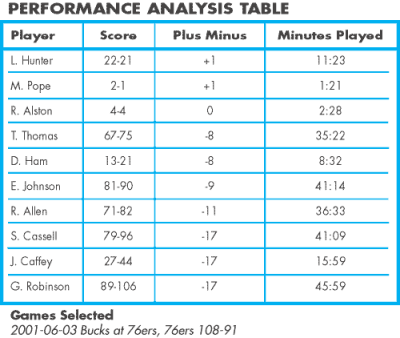
Image Source: coachad.com
The Core Calculation: The Plus Minus Formula
The most fundamental way to calculate basketball plus minus is by tracking the point differential for your team whenever a specific player is on the court. For every game a player participates in, you tally the total points your team scores and the total points the opposing team scores while that player is in the game.
The plus minus formula is simple:
Player Plus Minus = (Team Points Scored While Player is On Court) – (Opponent Points Scored While Player is On Court)
Let’s break this down with a simple example:
Imagine a player, let’s call him Alex, plays in a game.
- During the time Alex is on the court, his team scores 70 points.
- During that same time, the opposing team scores 65 points.
Using the plus minus formula:
Alex’s Plus Minus = 70 – 65 = +5
This means that when Alex was on the court, his team outscored their opponents by 5 points.
Conversely, if the numbers were reversed:
- Team Points Scored While Alex is On Court: 60
- Opponent Points Scored While Alex is On Court: 68
Alex’s Plus Minus = 60 – 68 = -8
In this scenario, Alex’s presence on the court coincided with his team being outscored by 8 points.
This basic calculation forms the foundation for more advanced player plus minus metrics. It’s a direct reflection of how the team performs with that player on the floor, a crucial aspect of measuring impact.
Expanding the Scope: Team Plus Minus and Net Rating
While individual player plus minus is valuable, the concept can also be applied to the team as a whole, giving us team plus minus. This is simply the overall point differential for the team in a given game or season. If a team finishes a game with a +10 margin of victory, their team plus minus for that game is +10.
This leads us to the concept of calculating net rating. Net rating is a more refined measure of a team’s performance relative to their opponents. It’s calculated by taking the team’s offensive rating (points scored per 100 possessions) and subtracting their defensive rating (points allowed per 100 possessions).
Net Rating = Offensive Rating – Defensive Rating
While not directly a plus minus formula, net rating is closely related because both aim to quantify a team’s efficiency and dominance over their opponents. A positive net rating indicates a team is outscoring opponents on average, and a negative net rating suggests the opposite.
The relationship between player plus minus and team plus minus is profound. A player with a consistently high player plus minus often contributes to a strong team plus minus. Conversely, a player with a consistently low player plus minus can drag down the team’s overall performance. This is where on-off court stats become particularly illuminating.
The Power of On-Off Court Stats
On-off court stats are the bedrock upon which player plus minus is built. They provide the raw data to perform the calculations. Essentially, for any given game, you are looking at two distinct periods:
- When Player X is ON the Court: All points scored by the team, all points scored by the opponent, all rebounds, assists, turnovers, etc., that occur during this time.
- When Player X is OFF the Court: All points scored by the team, all points scored by the opponent, and other relevant statistics that occur when that player is on the bench.
The difference between these two periods, specifically in terms of point differential, is what gives us the player plus minus.
Why are on-off court stats so important? They isolate a player’s influence. While a player might have a great individual scoring game, if the team performs significantly worse defensively when they are on the court, their overall impact (as measured by plus minus) might be less positive than their scoring numbers suggest. This allows for a more nuanced evaluation of a player’s contribution beyond just traditional scoring or assist metrics. They are a key part of efficiency metrics.
Variations and Refinements of Plus Minus
The basic plus minus formula is a good starting point, but in modern basketball analytics, there are several more sophisticated versions designed to account for different factors and provide a more accurate picture of a player’s impact.
1. Raw Plus Minus (or Simple Plus Minus)
This is the basic calculation we’ve discussed: the total point differential for a team when a player is on the court.
- Pros: Easy to calculate and understand. Provides a quick snapshot of a player’s impact.
- Cons: Doesn’t account for the quality of teammates or opponents on the court at the same time. A player might look good simply by playing with other stars or against weaker lineups.
2. Adjusted Plus Minus (APM)
APM attempts to isolate a player’s individual contribution by statistically controlling for the performance of their teammates and opponents. It uses regression analysis to determine each player’s independent impact on the point differential.
- How it works (simplified): APM analyzes thousands of individual game possessions. It tries to determine how much each player on the court contributed to the team’s points scored and points allowed, while also accounting for the points scored and allowed by the players on the opposing team. It’s a much more complex statistical model.
- Pros: Provides a more accurate measure of individual impact by accounting for context.
- Cons: Requires significant statistical expertise and large datasets. Can be influenced by collinearity (when variables are highly correlated).
3. Real Plus Minus (RPM)
RPM is a proprietary metric developed by ESPN, building upon the principles of APM. It further refines the calculation by incorporating box score statistics and other advanced data to improve accuracy. RPM attempts to adjust for offensive and defensive roles, the strength of the player’s lineup, and the opponents they face.
- How it works (simplified): RPM uses a regression model that includes on-off court data but also factors in the performance of individual teammates and opponents based on their own box score stats and plus-minus numbers. It also tries to account for “garbage time” or blowout situations.
- Pros: Considered one of the most robust and accurate measures of individual player impact. Attempts to remove the “noise” from the raw plus minus.
- Cons: Highly complex, proprietary data and methodology, not easily replicated by individuals.
4. Net Rating Differential
This metric compares a player’s team’s net rating when the player is on the court versus when they are off the court.
Net Rating Differential = (Team’s Net Rating with Player On) – (Team’s Net Rating with Player Off)
- Pros: Provides a clear comparison of how the team performs with and without a specific player.
- Cons: Still influenced by who else is on the court, though less so than raw plus minus.
These variations highlight the evolution of basketball analytics and the ongoing effort to create increasingly precise efficiency metrics.
Interpreting Plus Minus: What the Numbers Mean
Fathoming plus minus requires looking beyond the raw number and considering the context. A high positive plus minus is generally good, indicating a player is on the court for periods when their team outscores opponents. A high negative plus minus suggests the opposite. However, here are key considerations for proper interpretation:
- Sample Size: A player’s plus minus can be highly volatile with a small sample size. A few good or bad stretches can skew the numbers significantly. It’s best to look at plus minus over a season or multiple seasons.
- Quality of Teammates: A player playing with other star players will likely have a higher plus minus than a player on a less talented team, even if their individual skill level is comparable. This is a limitation of raw plus minus but something APM and RPM try to address.
- Quality of Opponents: Similarly, a player who consistently faces the opponent’s best players will likely have a lower plus minus than someone who primarily guards bench players.
- Role on the Team: A defensive specialist might have a lower offensive plus minus but a very high defensive plus minus. A team’s offensive system can also inflate or deflate a player’s plus minus.
- Home vs. Away: Sometimes, statistics can vary between home and away games due to crowd noise, familiarity with the court, and other factors.
- Pace: Teams that play at a faster pace will have more possessions, leading to potentially larger swings in plus minus. This is why efficiency metrics per possession (like net rating) are often preferred.
Calculating Plus Minus for Yourself: A Practical Approach
If you want to get hands-on with calculating player plus minus, you’ll need play-by-play data. Most official league websites or reputable basketball statistics sites provide this data.
Here’s a simplified process you can follow for a single game:
- Find the Game Log: Locate the box score and play-by-play log for the game you’re interested in.
- Identify Player’s Playing Time: Note the exact start and end times (or possession counts) when your player was on the court. Most play-by-play logs list who is on the court for each play.
- Track Team Points: Go through the play-by-play log. For every play that occurs while your player is on the court, note whether your team scored or the opponent scored. Sum up your team’s total points scored during these periods.
- Track Opponent Points: Similarly, sum up the opponent’s total points scored during the periods your player was on the court.
- Apply the Formula: Subtract the opponent’s total points from your team’s total points to get the player’s raw plus minus for that game.
Example Scenario Walkthrough:
Let’s track a hypothetical player, Sarah, for a quarter.
Sarah’s Playing Time: 1st Quarter
Play-by-Play Summary (Simplified):
- 0:00: Sarah enters the game. Score: 0-0. Players on court: Sarah, Player A, Player B, Player C, Player D.
- 11:30: Team scores 2 points. Sarah’s team: 2, Opponent: 0. (Sarah on court)
- 10:15: Opponent scores 3 points. Sarah’s team: 2, Opponent: 3. (Sarah on court)
- 09:00: Sarah is substituted out.
- 08:45: Opponent scores 2 points. Sarah’s team: 2, Opponent: 5. (Sarah OFF court)
- 07:00: Team scores 3 points. Sarah’s team: 5, Opponent: 5. (Sarah OFF court)
- 06:00: Sarah re-enters the game.
- 05:30: Team scores 2 points. Sarah’s team: 7, Opponent: 5. (Sarah on court)
- 04:00: Opponent scores 2 points. Sarah’s team: 7, Opponent: 7. (Sarah on court)
- 00:00: End of quarter. Sarah’s team finishes the quarter with 10 points. Opponent finishes with 9 points.
Calculation:
- Team Points Scored While Sarah Was On Court: 2 (at 11:30) + 2 (at 5:30) + 2 (at 4:00) = 6 points
- Opponent Points Scored While Sarah Was On Court: 3 (at 10:15) + 2 (at 4:00) = 5 points
Sarah’s Plus Minus for the Quarter: 6 – 5 = +1
This simple manual calculation shows how even over a short period, you can track the differential. For a full game, you would do this for all her minutes played. Compiling this for an entire season involves sophisticated data aggregation.
Plus Minus and Efficiency Metrics
Player plus minus is a critical component in a suite of efficiency metrics used in modern basketball analytics. These metrics aim to quantify how effectively a player contributes to their team’s success on a per-possession or per-minute basis, rather than just raw totals.
Other related efficiency metrics include:
- True Shooting Percentage (TS%): Measures a player’s shooting efficiency, accounting for 2-point field goals, 3-point field goals, and free throws.
- Effective Field Goal Percentage (eFG%): Similar to field goal percentage but gives extra weight to 3-pointers.
- Assist-to-Turnover Ratio: Measures a player’s playmaking ability relative to their ball security.
- Defensive Rating: Estimates points a player allows per 100 possessions.
- Offensive Rating: Estimates points a player’s team scores per 100 possessions while they are on the court.
Plus minus complements these by directly linking a player’s presence to the team’s actual point differential. While a player might have a high TS% or assist-to-turnover ratio, their plus minus indicates whether those efficient actions translate into winning basketball when they are on the floor. It helps answer the crucial question: “Does this player make the team better when they play?”
The Impact of Plus Minus in Player Evaluation
The use of player plus minus has fundamentally changed how players are evaluated. Here’s how:
- Beyond the Box Score: It allows analysts to see the value of players who may not fill up the traditional stat sheet but significantly impact winning through defense, spacing, or creating opportunities for others.
- Identifying Role Players: Plus minus can highlight the importance of role players. A player who excels defensively and doesn’t turn the ball over might have a strong plus minus, even if their scoring average is low.
- Team Building: Coaches and general managers use plus minus data to identify players who fit well together and positively impact the team’s overall performance. It can be a factor in assessing trade value or free-agent acquisitions.
- Understanding Chemistry: Consistently high or low plus minus numbers for specific player combinations can hint at good or bad on-court chemistry.
However, it’s crucial to reiterate that plus minus is not a perfect metric in its raw form. It should always be used in conjunction with other statistics and qualitative observations. Calculating net rating is a team-level metric that also benefits from a deep dive into individual player contributions via their plus minus.
Challenges and Criticisms of Plus Minus
Despite its utility, plus minus isn’t without its critics and challenges:
- The “Teammate Effect”: As mentioned, the quality of teammates has a significant impact. A star player on a bad team might have a negative plus minus simply because their teammates are not as capable.
- The “Opponent Effect”: Similarly, playing against weaker opponents will artificially inflate plus minus.
- Statistical Noise: In smaller sample sizes, random variance can lead to misleading numbers.
- “Garbage Time” Distortion: Plus minus calculations can be skewed by minutes played in games that are already decided, where starters might be pulled or reserves are brought in.
- Lack of Granularity: Raw plus minus doesn’t tell you why a player had a certain differential. Was it stellar defense, great offensive spacing, or just lucky shooting by teammates?
Sophisticated metrics like APM and RPM aim to mitigate these issues through advanced statistical modeling. Still, no metric is perfect, and a comprehensive player evaluation will always involve a blend of statistical analysis, film study, and expert opinion.
Conclusion: Mastering Plus Minus for Deeper Basketball Insights
Basketball plus minus is an indispensable tool for anyone looking to delve deeper into player performance and team dynamics. By calculating net rating and analyzing on-off court stats, we gain a more profound appreciation for how players contribute beyond the visible numbers. While the basic plus minus formula is easy to grasp, the true power of this metric lies in its more advanced variations and its thoughtful interpretation.
As basketball analytics continues to evolve, so too will the ways we measure impact. However, the core principle of player plus minus – evaluating a player’s contribution by the point differential their team experiences when they are on the court – remains a cornerstone of modern basketball analysis. It’s a powerful way to move beyond the surface-level statistics and truly grasp the multifaceted contributions of players to their team’s success.
Frequently Asked Questions (FAQ)
Q1: Is a positive plus minus always good?
A positive plus minus generally indicates that the team performs better when the player is on the court. However, it’s crucial to consider the sample size and the quality of teammates and opponents. A player on a very strong team might have a positive plus minus even if their individual contribution is less impactful than the number suggests.
Q2: How does plus minus differ from efficiency metrics like TS%?
Plus minus measures a player’s impact on the team’s point differential. Efficiency metrics like True Shooting Percentage (TS%) measure a player’s individual scoring efficiency, taking into account different types of shots and free throws. They are complementary; a player can be individually efficient but have a negative plus minus if their overall impact on the team’s scoring margin is negative.
Q3: Can plus minus be used to evaluate defense?
Yes, indirectly. While raw plus minus doesn’t distinguish between offense and defense, a player who significantly boosts their team’s defense (and thus reduces opponent scoring) while on the court will see their plus minus improve. Advanced metrics often try to isolate defensive impact specifically.
Q4: Is it possible for a player to have a high plus minus on a losing team?
Yes, it’s possible. If a player’s on-court performance is so dominant that they only lose games by a small margin when they play, but the team gets blown out when they are off the court, their plus minus could still be positive or less negative than other players on the team. This highlights the importance of context and comparing a player’s on-off splits.
Q5: What is the most reliable way to calculate plus minus?
For individuals without access to advanced statistical modeling software or proprietary data, calculating raw plus minus from play-by-play data is the most direct method. For more sophisticated and reliable measures, relying on metrics like ESPN’s RPM or similar advanced calculations developed by analytics sites is recommended, as they attempt to control for many contextual variables.