
Can you jump higher for basketball? Yes, you absolutely can improve your vertical jump for basketball through focused plyometrics and strength training. This comprehensive guide will delve into the most effective methods to help you reach new heights on the court.
Improving your vertical jump is crucial for basketball players. A higher jump allows for better rebounding, shot blocking, and offensive finishes. Whether you’re looking to snatch boards, elevate for a thunderous dunk, or simply get your shot off over a defender, a powerful vertical leap makes a significant difference. This article will break down the science behind jumping and provide actionable strategies you can implement.
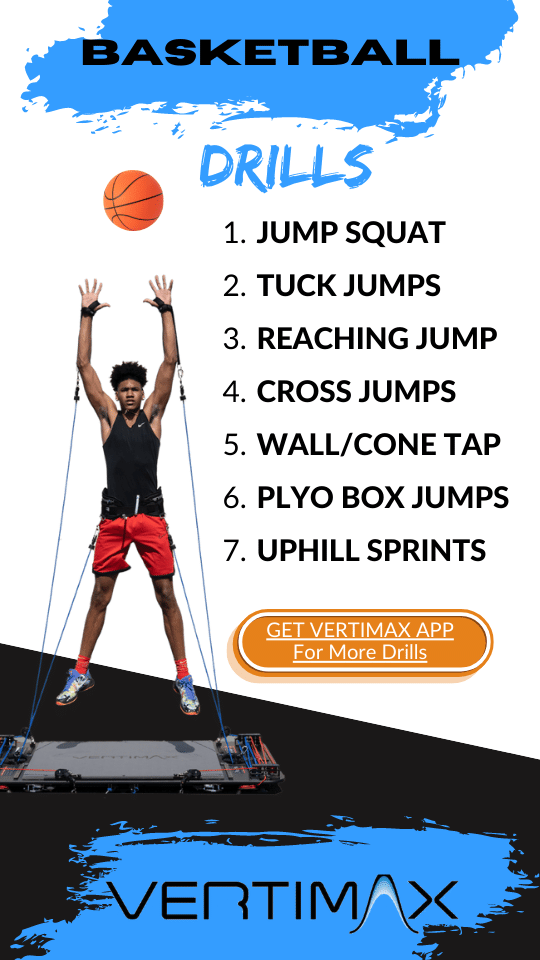
Image Source: f.hubspotusercontent20.net
Deciphering The Mechanics Of A Powerful Jump
A successful vertical jump isn’t just about raw leg strength; it’s a complex interplay of strength, speed, and coordination. To jump higher, you need to generate force quickly through your legs and transfer that energy efficiently upwards. This involves several key components:
- Strength: The muscles in your legs and core need to be strong enough to produce a powerful propulsive force.
- Power: This is the ability to exert maximal force in minimal time. It’s a combination of strength and speed.
- Technique: Proper jump technique ensures you maximize your body’s ability to generate and transfer force.
- Flexibility and Mobility: Good range of motion in your hips, knees, and ankles allows for a deeper preparatory squat and more efficient force production.
The Role of Plyometrics
Plyometrics are exercises designed to improve explosive power. They involve a rapid stretching and contracting of muscles, often referred to as the stretch-shortening cycle. Think of it like a rubber band: when you stretch it quickly, it snaps back with more force. Plyometrics train your muscles and nervous system to react faster and generate more power during explosive movements like jumping.
Essential Plyometric Drills for Vertical Jump
When incorporating plyometrics into your training, it’s vital to start with foundational movements and gradually progress to more complex ones. Always ensure you have a solid base of strength before diving into advanced plyo drills. Proper form is paramount to prevent injuries.
Key Plyometric Exercises:
- Jump Squats: This is a fundamental exercise. Start in a squat position, then explosively jump upwards, extending your hips, knees, and ankles. Land softly back into a squat.
- Box Jumps: Stand in front of a sturdy box or elevated surface. Squat down slightly, swing your arms, and explosively jump onto the box, landing softly. Step down; don’t jump down to protect your joints.
- Depth Jumps: Stand on a box (start with a lower height). Step off the box and immediately upon landing, explosively jump as high as possible. The key here is minimizing ground contact time.
- Broad Jumps: Stand with feet shoulder-width apart. Swing your arms back and then explosively forward and upward as you jump horizontally as far as you can. Land softly with bent knees.
- Knee Tucks: Jump as high as you can and bring your knees up towards your chest in the air.
- Skater Jumps: Jump sideways from one leg to the other, mimicking a speed skater. Focus on explosive lateral movement and stability.
Progression and Safety in Plyometrics:
- Frequency: Start with 1-2 plyometric sessions per week, allowing ample rest between sessions for muscle recovery.
- Volume: Begin with lower repetitions (e.g., 5-8 reps per set) and fewer sets (e.g., 3-4 sets).
- Intensity: As you get stronger, you can increase the height of box jumps, the depth of depth jumps, and the number of repetitions or sets. However, always prioritize quality over quantity. If your form breaks down, stop.
- Surface: Perform plyometrics on a forgiving surface like grass, a basketball court, or a sprung floor. Avoid concrete.
- Warm-up: Always perform a thorough warm-up that includes dynamic stretching and some light cardio.
The Backbone: Strength Training for Vertical Jump
While plyometrics build explosive power, strength training provides the foundation upon which that power is built. Stronger muscles can generate more force, which, when combined with plyometric training, translates directly to a higher vertical jump. Focusing on compound movements that engage multiple muscle groups is key.
Key Strength Training Exercises
The goal here is to build strength in the muscles that are primary movers in a jump: quadriceps, hamstrings, glutes, and calves.
Lower Body Strength Exercises:
- Squat Variations:
- Barbell Back Squats: The king of lower body exercises. Focus on going deep with good form. This builds overall leg and glute strength.
- Front Squats: Emphasizes the quadriceps more and also requires significant core stability.
- Goblet Squats: Excellent for beginners or as a warm-up, focusing on hip and ankle mobility.
- Deadlifts:
- Conventional Deadlifts: Builds overall posterior chain strength (hamstrings, glutes, lower back). Crucial for generating power from the ground up.
- Romanian Deadlifts (RDLs): Specifically targets the hamstrings and glutes, essential for the explosive extension phase of a jump.
- Lunges:
- Forward Lunges, Reverse Lunges, Walking Lunges: Improve balance, stability, and single-leg strength, which is important for many athletic movements.
- Glute Bridges and Hip Thrusts: Directly target the glutes, which are powerhouse muscles for jumping.
- Calf Raises:
- Standing Calf Raises: Targets the gastrocnemius muscle.
- Seated Calf Raises: Targets the soleus muscle. Strong calves are essential for the final push-off. Perform these until failure to build endurance and strength.
Upper Body and Core Strength:
While lower body strength is primary, a strong upper body and core contribute to momentum and stability.
- Upper Body: Push-ups, pull-ups, overhead presses, and rows help develop a powerful core and arm swing, which adds to jump height.
- Core: Planks, Russian twists, and leg raises are vital for transferring force efficiently from the lower body to the upper body, preventing energy leaks.
Strength Training Programming Considerations:
- Frequency: Aim for 2-3 strength training sessions per week, with at least one rest day between sessions targeting the same muscle groups.
- Sets and Reps: For strength and power, focus on lower rep ranges (3-6 reps) with heavier weights. For hypertrophy (muscle growth), aim for 8-12 reps.
- Progressive Overload: Continuously challenge your muscles by gradually increasing weight, reps, sets, or decreasing rest times.
- Rest: Allow adequate rest between sets (60-90 seconds for strength, 30-60 seconds for hypertrophy).
Enhancing Jump Technique
Even with tremendous strength and power, poor jump technique can limit your vertical. Proper technique ensures you utilize your entire body efficiently to maximize upward momentum.
The Five Phases of a Basketball Jump
- Approach (Optional, for running jumps): A controlled, powerful approach builds momentum. This usually involves 1-3 dribbles.
- Penultimate Step: The second-to-last step is crucial. It’s a longer, lower stride that converts horizontal momentum into vertical momentum.
- Plant Step: The final step, typically a plant of the opposite foot of your shooting/driving hand. This acts as a fulcrum.
- Arm Swing: A coordinated and powerful arm swing is vital. As you dip into your countermovement, your arms swing back and down. Then, as you explode upward, they powerfully swing forward and up, driving momentum.
- Takeoff: Explosive extension of the hips, knees, and ankles (triple extension) simultaneously with the powerful arm swing.
Refining Your Jump Technique
- Practice the Dip and Drive: Focus on a quick but controlled dip into your countermovement, then an explosive drive upwards.
- Arm Action: Ensure your arms are coordinated with your leg drive. Think of them as an accelerator.
- Body Alignment: Keep your chest up and core engaged throughout the jump.
- Landing: Practice landing softly and absorbing the impact by bending your knees and hips. This reduces stress on your joints and prepares you for your next movement.
Targeting Specific Muscle Groups
Beyond general strength, specific muscle groups play critical roles in your vertical jump.
The Importance of Ankle Strength and Flexibility
Ankle strength and mobility are often overlooked but are crucial for efficient force transfer and injury prevention. Your ankles act as the final link in the chain, transmitting power from the ground to your body. Weak or inflexible ankles can lead to energy leaks and increase your risk of sprains.
Exercises for Ankle Strength and Mobility
- Ankle Circles: Rotate your ankles clockwise and counterclockwise to improve mobility.
- Calf Raises (as mentioned above): Build strength in the calf muscles.
- Heel Walks: Walk on your heels, keeping your toes off the ground. This strengthens the tibialis anterior (front of the shin).
- Toe Walks: Walk on your toes, lifting your heels high. This further strengthens the calf muscles.
- Resistance Band Ankle Dorsiflexion/Plantarflexion/Inversion/Eversion: Use a resistance band to work the ankle in all directions.
- Alphabet Tracing: Trace the letters of the alphabet with your foot in the air to improve range of motion.
Building Powerful Legs: More Than Just Squats
While squats and deadlifts are excellent, incorporating other exercises can further enhance leg power.
Advanced Leg Power Drills
- Pistol Squats (assisted initially): These single-leg squats build incredible unilateral strength and balance. Start with support or by holding onto something.
- Bulgarian Split Squats: Another fantastic unilateral exercise that challenges strength and balance.
- Kettlebell Swings: Excellent for developing explosive hip extension power, which is vital for jumping.
- Medicine Ball Throws: Overhead slams, rotational throws, and chest passes with a medicine ball can build explosive power throughout your kinetic chain.
The Role of Flexibility
Flexibility is essential for achieving a deeper countermovement, allowing for greater muscle stretch and therefore more forceful contraction. It also aids in recovery and injury prevention.
Flexibility and Mobility Exercises
- Dynamic Stretching (Pre-Workout): Leg swings (forward, backward, side-to-side), hip circles, arm circles, torso twists.
- Static Stretching (Post-Workout): Hold stretches for 20-30 seconds. Focus on quadriceps, hamstrings, hip flexors, glutes, and calves.
- Foam Rolling: Use a foam roller to release muscle tension in your quads, hamstrings, glutes, and calves.
Sample Training Program Structure
Here’s a sample structure for a week. Remember to listen to your body and adjust as needed.
Day 1: Strength Focus
- Warm-up (5-10 mins cardio, dynamic stretching)
- Barbell Back Squats: 4 sets of 5 reps
- Romanian Deadlifts: 3 sets of 8 reps
- Weighted Calf Raises: 3 sets of 12 reps
- Glute Bridges: 3 sets of 15 reps
- Plank: 3 sets, hold for 60 seconds
- Cool-down (static stretching)
Day 2: Plyometrics and Agility
- Warm-up (5-10 mins cardio, dynamic stretching, light jumping)
- Jump Squats: 4 sets of 8 reps
- Box Jumps: 4 sets of 6 reps
- Broad Jumps: 3 sets of 5 reps
- Skater Jumps: 3 sets of 10 reps per side
- Medicine Ball Overhead Slams: 3 sets of 8 reps
- Cool-down (light stretching, foam rolling)
Day 3: Active Recovery or Rest
- Light cardio, stretching, foam rolling.
Day 4: Strength and Power
- Warm-up
- Front Squats: 3 sets of 6 reps
- Conventional Deadlifts: 1 set of 5 reps (after warm-up sets)
- Walking Lunges: 3 sets of 10 reps per leg
- Seated Calf Raises: 3 sets of 15 reps
- Leg Raises: 3 sets of 20 reps
- Cool-down
Day 5: Plyometrics and Jump Technique
- Warm-up
- Depth Jumps (low box): 4 sets of 5 reps
- Knee Tucks: 3 sets of 8 reps
- Jump Technique Drills (focus on approach and arm swing): Practice 10-15 jumps
- Single Leg Hops: 3 sets of 10 reps per leg
- Cool-down
Day 6 & 7: Rest or Active Recovery
Listen to your body. If you feel fatigued, prioritize rest. Active recovery can include light swimming, cycling, or yoga.
Frequently Asked Questions (FAQ)
Q1: How long does it take to see improvements in vertical jump?
A1: With consistent training (2-3 times per week), you can typically start seeing noticeable improvements in your vertical jump within 4-8 weeks. Significant gains may take 3-6 months or longer, depending on your starting point, training intensity, and recovery.
Q2: Can I do plyometrics every day?
A2: No, it’s not recommended to do intense plyometrics every day. Your muscles need time to recover and adapt. Overtraining can lead to injuries and hinder progress. Stick to 1-3 plyometric sessions per week, with rest days in between.
Q3: What is the most important exercise for vertical jump?
A3: While many exercises contribute, the squat and deadlift are foundational for building the necessary leg and hip strength. However, plyometric exercises like depth jumps and box jumps are critical for developing the explosive power needed for a higher jump.
Q4: Should I focus on strength or plyometrics first?
A4: It’s best to build a solid strength base before diving heavily into plyometrics. If your muscles aren’t strong enough to handle the forces involved in plyometric movements, you increase your risk of injury. Aim for at least 2-3 months of consistent strength training before focusing heavily on plyos.
Q5: How can I improve my jumping without weights?
A5: You can significantly improve your vertical jump using bodyweight exercises and plyometrics. Focus on proper form, increasing repetitions, decreasing rest, and progressing through more challenging variations of exercises like jump squats, burpees, and various jumping drills. Using resistance bands can also add a challenge without traditional weights.
Q6: Does ankle strength directly impact jump height?
A6: Yes, ankle strength, particularly in the calf muscles and tibialis anterior, is crucial for the final push-off phase of a jump. Stronger ankles allow for a more efficient transfer of force from the ground, contributing to greater jump height.
Q7: Can I do jump training and weightlifting on the same day?
A7: While possible, it’s often more effective to separate them. If you must do both, perform your most explosive work (plyometrics) first when you are fresh. Alternatively, do weights on one day and plyos on another. Ensure adequate rest between sessions.
By implementing a structured program that combines dedicated strength training, explosive plyometrics, refined jump technique, and attention to crucial elements like ankle strength and flexibility, you will undoubtedly elevate your vertical jump and enhance your performance on the basketball court.