
Can you jump higher for basketball? Yes, you absolutely can improve your vertical jump for basketball by focusing on specific training methods, particularly plyometrics. This guide will delve deep into how to unlock your jumping potential, covering everything from the science behind explosive movements to practical training routines. Whether you’re looking to dominate the paint, snag rebounds, or elevate your game with more aggressive drives, a higher vertical jump is key.
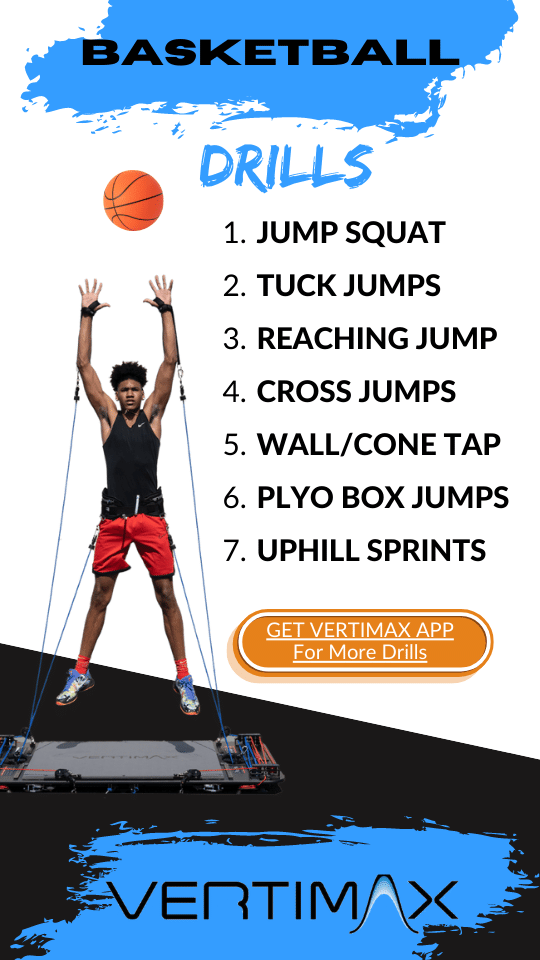
Image Source: f.hubspotusercontent20.net
Deciphering the Mechanics of a Powerful Jump
A powerful vertical jump isn’t just about leg strength; it’s a complex interplay of several biomechanical factors. Fathoming these elements helps us tailor effective training strategies.
- The Stretch-Shortening Cycle: This is the cornerstone of plyometric training. It involves a rapid eccentric contraction (lengthening of the muscle) immediately followed by a concentric contraction (shortening of the muscle). Think of how a rubber band snaps back after being stretched. This cycle stores and releases elastic energy, amplifying the force produced. In jumping, the dip before a jump is the eccentric phase, and the explosive upward movement is the concentric phase.
- Muscle Activation and Coordination: Jumping requires the coordinated effort of multiple muscle groups, primarily in the legs and core. The glutes, quadriceps, hamstrings, calves, and even the muscles in your feet and ankles all play a role. Efficient muscle recruitment means more muscles working together, producing greater force.
- Rate of Force Development (RFD): This refers to how quickly a muscle can generate force. For a basketball player, this means the ability to go from a standstill to a maximal jump as rapidly as possible. Plyometrics are excellent for improving RFD.
- Technique and Arm Swing: While we’re focusing on the legs, don’t underestimate the power of technique. A proper arm swing can add significant momentum, propelling you upwards. Learning to synchronize your arm drive with your leg drive is crucial for maximizing your vertical.
The Power of Plyometrics: Jump Training Essentials
Plyometrics are a cornerstone of any effective jump training program. They are designed to increase muscular power, speed, and explosive power. This type of training involves exercises that stretch muscles quickly and then shorten them, using the stretch-shortening cycle.
Foundational Plyometric Exercises for Basketball
These exercises form the bedrock of plyometric jump training. Start with a focus on proper form and gradually increase intensity.
Squat Jumps
Squat jumps are a fundamental exercise that targets the entire lower body.
- How to do them: Stand with your feet shoulder-width apart. Lower into a squat position, as if sitting back into a chair. Keep your chest up and your back straight. From this position, explode upwards, extending your hips, knees, and ankles as powerfully as possible. Land softly back into the squat position, absorbing the impact.
- Benefits: Improves lower body power, explosiveness, and quadriceps strength.
Box Jumps
Box jumps train you to explode upwards onto an elevated surface.
- How to do them: Stand facing a sturdy box or platform. Start with a height you can comfortably and safely jump onto. Step onto the edge of the box, then jump up onto it, landing softly with your knees slightly bent. Step back down, do not jump down.
- Benefits: Enhances horizontal and vertical power, coordination, and the ability to absorb landing forces.
Lunge Jumps (Alternating)
Lunges are excellent for building unilateral (one-legged) strength and power, essential for many basketball movements.
- How to do them: Start in a split stance, with one leg forward and the other back, both knees bent at roughly 90 degrees. Explode upwards, switching the position of your legs in the air. Land softly in a lunge position with the opposite leg forward.
- Benefits: Develops single-leg power, balance, and hamstring strength.
Depth Jumps
Depth jumps are an advanced plyometric exercise that maximizes the stretch-shortening cycle.
- How to do them: Stand on a box or platform (start low, about 12-18 inches). Step off the box and immediately jump as high as you can upon landing. The goal is to minimize ground contact time.
- Benefits: Significantly improves reactive strength and the ability to produce power quickly after a stretch.
Skipping for Height
While seemingly simple, skipping with maximal effort can build explosive power.
- How to do them: Skip forward, focusing on driving your knee high and extending your ankle powerfully on each push-off. Exaggerate the arm swing.
- Benefits: Improves coordination, leg drive, and elastic energy return.
Plyometric Training Principles
To maximize the benefits of plyometrics and minimize injury risk, follow these principles:
- Frequency: Limit plyometric sessions to 2-3 times per week, allowing at least 48-72 hours of rest between sessions for muscle recovery.
- Intensity: Plyometric exercises are high-intensity. Focus on quality over quantity. Perform 6-10 repetitions per set, with ample rest (60-90 seconds) between sets.
- Volume: The total number of ground contacts is a good measure of plyometric volume. For beginners, aim for 60-80 ground contacts per session. Intermediate athletes can aim for 80-120, and advanced athletes up to 140-200.
- Progression: Start with lower-impact exercises and gradually progress to higher-impact ones. Increase height, distance, or complexity as you get stronger.
- Rest and Recovery: Crucial for muscle repair and adaptation. Ensure adequate sleep and nutrition.
Building a Solid Foundation: Strength Training for Jumping
While plyometrics are king for explosive power, a strong foundation of strength training is essential. Stronger muscles can produce more force, which plyometrics then translate into higher jumps.
Key Leg Exercises for Vertical Jump Improvement
These leg exercises will build the raw strength needed to support and enhance your plyometric training.
Squats (Barbell Back Squats, Front Squats)
Squats are king for overall leg strength.
- Benefits: Builds quadriceps, glutes, and hamstring strength, crucial for the initial jump phase.
- Training: Aim for 3-4 sets of 5-8 repetitions with challenging weight. Focus on proper depth.
Deadlifts (Conventional, Romanian)
Deadlifts work the posterior chain – hamstrings, glutes, and lower back – which are vital for hip extension.
- Benefits: Develops explosive hip extension power and overall posterior chain strength.
- Training: 3-4 sets of 3-6 repetitions.
Lunges (Weighted)
Weighted lunges build single-leg strength and stability.
- Benefits: Improves balance and strengthens each leg independently, which is important for court movements.
- Training: 3-4 sets of 8-12 repetitions per leg.
Calf Raises
Strong calves contribute to the final push-off phase of the jump.
- Benefits: Increases calf muscle strength and power for ankle plantarflexion.
- Training:
- Standing Calf Raises: 3-4 sets of 15-20 repetitions.
- Seated Calf Raises: 3-4 sets of 15-20 repetitions.
Glute Bridges and Hip Thrusts
These exercises directly target the glutes, the primary muscles for hip extension.
- Benefits: Enhances glute activation and power, leading to a stronger jump.
- Training: 3-4 sets of 10-15 repetitions.
Hamstring Curls
Strengthening the hamstrings ensures they can effectively decelerate your leg and contribute to the hip extension.
- Benefits: Improves hamstring strength, which is crucial for both power generation and injury prevention.
- Training: 3-4 sets of 10-15 repetitions.
Strength Training Program Considerations
- Periodization: Structure your training into phases. You might have a strength phase, followed by a power/plyometric phase.
- Progressive Overload: Gradually increase the weight, reps, or sets over time to continue challenging your muscles.
- Form Over Weight: Always prioritize proper technique to avoid injuries.
Maximizing Power Through Flexibility and Mobility
Flexibility and mobility are often overlooked but are critical for improving your vertical jump and preventing injuries. Tight muscles can restrict your range of motion, limiting how effectively you can load and explode.
Key Stretching and Mobility Exercises
Incorporate these into your warm-up and cool-down routines.
Dynamic Stretching (Pre-Workout):
- Leg Swings (Forward/Backward and Side-to-Side): Improves hip mobility.
- Knee Hugs and Quad Stretches: Prepares quads and hips.
- Walking Lunges with a Twist: Warms up hips, glutes, and core.
- High Knees and Butt Kicks: Activates hamstrings and quads.
- Ankle Circles: Ensures ankle mobility.
Static Stretching (Post-Workout or Separate Sessions):
- Hamstring Stretch: Sit with one leg extended, reach for your toes.
- Quad Stretch: Stand and pull one heel towards your glute.
- Calf Stretch: Lean against a wall with one leg back, heel on the floor.
- Hip Flexor Stretch: Kneel with one leg forward, push hips forward.
- Glute Stretch (Pigeon Pose): Improves hip external rotation.
Importance of Core Strength
A strong core acts as a bridge between your lower and upper body, transferring force efficiently.
- Plank Variations: Builds isometric core strength.
- Russian Twists: Engages obliques.
- Leg Raises: Strengthens lower abdominals.
Sample Training Plan for Vertical Jump Improvement
This is a sample, and you should adjust it based on your current fitness level and recovery.
Phase 1: Strength Foundation (4-6 Weeks)
Focus on building a solid base of strength.
| Day | Focus | Exercises | Sets x Reps | Rest (sec) |
|---|---|---|---|---|
| Monday | Lower Body Strength | Barbell Back Squats, Romanian Deadlifts, Glute Bridges, Calf Raises | 3-4 x 5-8 | 60-90 |
| Tuesday | Upper Body & Core | Bench Press, Overhead Press, Pull-Ups, Rows, Planks, Russian Twists | 3-4 x 8-12 | 60 |
| Wednesday | Rest or Active Recovery (light cardio) | |||
| Thursday | Lower Body Strength | Front Squats, Weighted Lunges, Hamstring Curls, Seated Calf Raises | 3-4 x 8-12 | 60-90 |
| Friday | Full Body Conditioning | Kettlebell Swings, Push-Ups, Bodyweight Squats, Farmer’s Walks | 3 x 10-15 | 60 |
| Saturday | Rest | |||
| Sunday | Rest or Light Activity |
Phase 2: Plyometric Power Development (4-6 Weeks)
Transition to incorporating plyometrics, gradually increasing intensity.
| Day | Focus | Exercises | Sets x Reps | Rest (sec) | Ground Contacts per Session (approx.) |
|---|---|---|---|---|---|
| Monday | Plyometrics & Lower Body Power | Squat Jumps, Box Jumps, Alternating Lunge Jumps, Calf Raises | 3-4 x 6-10 | 60-90 | 70-90 |
| Tuesday | Upper Body & Core | Continue with strength work or focus on explosive upper body movements | 3-4 x 8-12 | 60 | N/A |
| Wednesday | Rest or Active Recovery | ||||
| Thursday | Plyometrics & Lower Body Power | Depth Jumps (low height), Skipping for Height, Broad Jumps | 3-4 x 5-8 | 90-120 | 60-80 |
| Friday | Skill Work & Light Strength | Basketball drills, light weightlifting | |||
| Saturday | Rest | ||||
| Sunday | Rest or Light Activity |
Important Notes:
- Warm-up: Always perform a thorough dynamic warm-up before each session.
- Cool-down: Follow with static stretching.
- Listen to your body: If you feel pain, stop and rest.
- Nutrition and Hydration: Crucial for muscle repair and energy levels.
- Progression: In Phase 2, gradually increase the height of box jumps, the intensity of depth jumps, and the number of repetitions. You can also introduce more complex plyometrics.
Factors Affecting Your Vertical Jump
Several elements influence how high you can jump. Addressing these can unlock hidden potential.
- Genetics: While genetics play a role, they don’t determine your ceiling. Training can significantly improve your current abilities.
- Body Composition: Excess body fat can hinder jumping ability. Focusing on a healthy body composition (lean muscle mass) is beneficial.
- Training History: Your previous training experience will influence your starting point and how quickly you adapt.
- Fatigue: Jumping performance is significantly impacted by fatigue, both from previous workouts and daily life.
- Nutrition: Proper nutrition fuels your muscles for training and recovery.
Frequently Asked Questions (FAQ)
How quickly can I improve my vertical jump?
With consistent and proper training, you can see noticeable improvements in your vertical jump within 4-8 weeks. Significant gains might take several months. The rate of improvement depends on your starting point, training consistency, genetics, and recovery.
What is the best plyometric exercise for vertical jump?
While many plyometrics are effective, depth jumps are often considered one of the best for developing reactive strength and maximizing the stretch-shortening cycle, leading to a higher jump. However, a variety of exercises targeting different aspects of the jump is most beneficial.
How often should I do plyometrics?
Limit plyometric sessions to 2-3 times per week. Your muscles need adequate time to recover and adapt to the high-intensity stimulus.
Is it possible to improve my vertical jump without weights?
Yes, you can significantly improve your vertical jump through bodyweight plyometrics and agility drills. However, adding strength training with weights can further enhance your potential by building greater force-generating capacity in your muscles.
How do calf raises help my vertical jump?
Calf raises strengthen the muscles in your calves (gastrocnemius and soleus). These muscles are responsible for plantarflexion – the upward push-off from your toes at the end of the jump. Stronger calves contribute to a more powerful final thrust.
Can I combine plyometrics and weightlifting on the same day?
It’s generally recommended to separate high-intensity plyometrics and heavy weightlifting into different sessions or perform them on separate days. If done on the same day, perform plyometrics before weightlifting if your primary goal is power, or after if strength is the priority and you want to avoid pre-fatiguing your muscles for plyos. However, doing them on separate days is often more effective for optimal results and recovery.
What are the risks of plyometric training?
Plyometrics are high-impact and can increase the risk of injuries like stress fractures, ankle sprains, and knee pain if not performed correctly, with insufficient rest, or by individuals not adequately prepared. Proper technique, gradual progression, and sufficient rest are crucial for minimizing these risks.
How important is flexibility for jumping?
Flexibility is very important. Tight muscles can restrict your range of motion, limiting the stretch phase of the stretch-shortening cycle and hindering your ability to generate maximum power. Regular stretching and mobility work can improve your jumping mechanics and reduce injury risk.
Can I improve my vertical jump with just jump rope?
Jump rope is an excellent conditioning tool and can help improve ankle stiffness and foot speed. It can contribute to better sports performance, but it is not a comprehensive solution for dramatically improving your vertical jump. You need exercises that specifically target the stretch-shortening cycle and build overall leg strength and power.
By focusing on plyometrics, incorporating proper strength training, and prioritizing flexibility, you can significantly enhance your vertical jump for basketball. Consistent effort and smart training are the keys to unlocking your full jumping potential.