
Can you install an inground basketball hoop yourself? Yes, absolutely! With the right planning and a bit of effort, you can install an inground basketball hoop yourself. This guide will walk you through the entire process, from choosing the best inground basketball hoop to enjoying your new backyard basketball court.
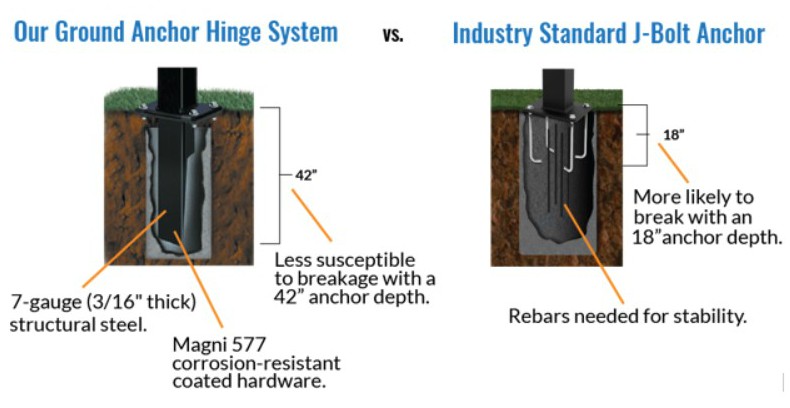
Image Source: www.breakthroughbasketball.com
Choosing Your Inground Basketball Hoop
Before you start digging, you need to pick the right hoop for your needs. Several factors come into play when selecting the best inground basketball hoop for your backyard basketball court.
Types of Inground Hoops
- Fixed-Height Hoops: These are the most basic. The rim is set at a standard height and doesn’t adjust. They are durable and often the most affordable.
- Adjustable-Height Hoops: These allow you to change the rim height, making them great for younger players or if you want to vary your practice.
- Breakaway Rims: These are designed to flex under pressure, reducing the risk of injury and protecting the backboard.
Backboard Materials
The backboard material affects durability, rebound quality, and appearance.
- Acrylic: Lightweight, weather-resistant, and offers decent rebound. A good budget-friendly option.
- Polycarbonate: Very durable and impact-resistant, offering excellent rebound. A popular choice for serious players.
- Tempered Glass: Provides the best rebound and a professional feel. However, it’s heavier, more expensive, and can break if hit hard enough.
- Steel: Primarily used for portable hoops, but some older or specific inground models might feature steel backboards. Durable but can rust.
Pole Types
The pole is crucial for stability and the overall feel of the hoop.
- One-Piece Pole: The entire pole is a single unit. This offers maximum stability and is generally preferred for inground installations.
- Two-Piece or Three-Piece Pole: Poles that join together. While easier to transport, these can be less stable and prone to rattling. Ensure a secure fit if choosing this option.
Gathering Your Tools and Materials
A successful DIY basketball hoop install requires a good set of tools and the right materials. Having everything ready beforehand will make the process much smoother.
Essential Tools
- Shovel: For digging the hole. A post-hole digger or auger attachment for a drill can make this much easier.
- Measuring Tape: For accurate placement and hole dimensions.
- Level: To ensure the pole is perfectly vertical.
- Wrench or Socket Set: To tighten bolts and hardware.
- Wheelbarrow: For mixing and transporting concrete.
- Trowel or Float: For smoothing the concrete.
- Gloves: To protect your hands.
- Safety Glasses: To protect your eyes.
- Stakes and String: For marking out your area.
- Water Source: To mix the concrete and clean up.
- Drill (Optional): For some assembly steps or if using an auger.
Key Materials
- Inground Basketball Hoop Kit: This will include the backboard, rim, pole, and all necessary hardware.
- Concrete Mix: The amount will depend on the size of your hole. Check your hoop’s manual for recommendations. You’ll need concrete specifically designed for setting posts or general-purpose concrete mix.
- Gravel: For drainage at the bottom of the hole.
- Water: For mixing concrete.
Planning Your Hoop Location
Choosing the right spot for your inground basketball hoop is as important as the installation itself. Consider these factors for your backyard basketball court:
- Clearance: Ensure there’s ample space behind and around the hoop for play. You don’t want players running into fences, trees, or other obstacles.
- Playing Surface: Is the area level? Will you be playing on grass, asphalt, or concrete? This might influence your choice of hoop or require additional prep work.
- Sunlight: Avoid placing the hoop where the sun will be directly in players’ eyes for most of the day.
- Underground Utilities: Crucially, check for any underground utility lines before you dig! Call 811 (in the US) or your local utility locating service a few days before you plan to dig. This is a critical safety step.
- Distance from Boundaries: Leave adequate space between the hoop and property lines or out-of-bounds areas.
Step-by-Step Installation Guide
This section details the in-ground basketball pole setup and concrete basketball hoop installation. Follow these steps carefully for a secure and lasting installation.
Step 1: Mark the Hoop Location
Use stakes and string to mark the exact center of where your hoop will be located. This helps you visualize the final position and ensures accurate digging. Measure out the desired playing area and boundary lines for your backyard basketball court.
Step 2: Dig the Hole
This is perhaps the most physically demanding part of the DIY basketball hoop install.
Basketball Hoop Digging Depth
The correct basketball hoop digging depth is vital for stability. Most manufacturers recommend a minimum depth of 3 feet (36 inches) for a standard 10-foot hoop. Taller hoops or those in windy areas might require a deeper hole.
- Diameter: The hole’s diameter should be at least 12 inches wide. Some recommend up to 18 inches for extra concrete support.
- Using a Post-Hole Digger: This tool is designed for digging cylindrical holes and is ideal for this task.
- Using a Shovel: If you don’t have a post-hole digger, a regular shovel can be used. Digging a wider, more cylindrical hole will be challenging.
- Auger Attachment: If you have access to a power drill with an auger attachment, this can significantly speed up the digging process.
Preparing the Hole
- Add Gravel: Once the hole is dug to the correct depth, add a 4-6 inch layer of gravel at the bottom. This provides essential drainage, preventing water from pooling around the base of the pole and potentially causing rust or instability.
- Check Dimensions: Ensure the hole is the correct diameter and depth.
Step 3: Assemble the Hoop Components
This step involves the in-ground hoop assembly of the backboard, rim, and pole. Many hoops come with an anchor kit, which is highly recommended.
Understanding the Basketball Hoop Anchor Kit
A basketball hoop anchor kit is a metal base that is set in the concrete. The pole then attaches to this anchor. This system provides several advantages:
- Easier Assembly: You can assemble the backboard and rim to the pole before setting the pole in the ground.
- Adjustable Pole Placement: The anchor allows you to adjust the pole’s position slightly before the concrete cures.
- Future Replacement: If you ever need to replace the pole, you don’t have to break up the concrete. You simply unbolt the old pole and attach a new one to the anchor.
Assembling the Hoop (with Anchor Kit)
- Attach the Anchor to the Pole: Follow your specific hoop’s instructions. Typically, the anchor system has a base plate with upright rods that attach to the pole.
- Attach the Backboard to the Pole: Mount the backboard to the pole as per the manufacturer’s guide.
- Attach the Rim to the Backboard: Securely fasten the rim to the backboard.
- Attach the Net: Clip or tie the net onto the rim.
Assembling the Hoop (without Anchor Kit)
If your hoop doesn’t come with an anchor kit, you’ll typically set the pole directly into the concrete.
- Attach the Backboard to the Pole: Mount the backboard to the pole.
- Attach the Rim to the Backboard: Securely fasten the rim to the backboard.
- Attach the Net: Clip or tie the net onto the rim.
Step 4: Position the Hoop and Pour Concrete
This is where precision is key for a stable in-ground basketball pole setup.
With an Anchor Kit:
- Place the Anchor System: Position the assembled pole and anchor system in the dug hole.
- Level the Anchor: Use your level on the anchor plate to ensure it is perfectly level and plumb (vertical). This is critical for a straight pole.
- Secure the Anchor: Use temporary supports (like wooden braces) to hold the anchor and pole in place, ensuring it remains level while you pour the concrete.
- Mix the Concrete: In a wheelbarrow, mix your concrete according to the bag’s instructions. Aim for a consistency like thick oatmeal – not too watery, not too dry.
- Pour the Concrete: Carefully pour the concrete into the hole around the anchor. Fill the hole completely, ensuring there are no air pockets. You can tap the sides of the hole or use a stick to poke the concrete and release air.
- Smooth the Concrete: Use a trowel or float to smooth the surface of the concrete, creating a slight slope away from the pole for water runoff.
Without an Anchor Kit:
- Place the Pole: Carefully lower the assembled pole into the dug hole.
- Level the Pole: Use your level on at least two adjacent sides of the pole to ensure it is perfectly plumb (vertical).
- Brace the Pole: This is extremely important. Use sturdy wooden planks or 2x4s to brace the pole securely in its vertical position. Anchor these braces firmly into the ground away from the hole. Use stakes and screws to keep the braces in place and prevent movement.
- Mix the Concrete: Mix your concrete as described above.
- Pour the Concrete: Pour the concrete into the hole around the pole, filling it completely.
- Smooth the Concrete: Smooth the surface with a trowel, creating a slope away from the pole.
Step 5: Curing and Finishing
Proper concrete curing is essential for the strength and longevity of your basketball hoop foundation.
- Curing Time: Allow the concrete to cure for at least 48 to 72 hours before removing the braces or putting any stress on the hoop. For maximum strength, some recommend waiting up to a week.
- Keeping it Moist (Optional but Recommended): For optimal curing, especially in hot or dry weather, you can lightly mist the concrete surface with water a few times a day for the first few days. This prevents it from drying out too quickly.
- Backfilling (Optional): Once cured, you can backfill any remaining space around the concrete pad with soil or gravel if desired.
Step 6: Final Adjustments and Playtime
After the concrete has fully cured:
- Remove Braces: Carefully remove all temporary braces.
- Attach Net (if not already done): If you haven’t already, attach the net to the rim.
- Adjust Height (if applicable): If you have an adjustable hoop, set it to your desired height.
- Test the Hoop: Give the rim a gentle tug to ensure it’s secure.
- Enjoy! Your backyard basketball court is ready for action!
Maintenance for Your Inground Hoop
Proper maintenance will ensure your inground basketball hoop lasts for many years.
Regular Checks
- Tighten Hardware: Periodically check and tighten all bolts and nuts, especially after heavy use or strong winds.
- Inspect for Rust: Look for any signs of rust on the pole or hardware and address them promptly with a rust-inhibiting paint or coating.
- Net Condition: Replace the net if it becomes frayed or worn.
Seasonal Care
- Winter: In colder climates, consider removing the net to prevent ice damage. Some people also cover the backboard.
- Cleaning: Clean the backboard and pole with mild soap and water to keep them looking good and prevent buildup.
Troubleshooting Common Issues
Even with careful installation, you might encounter minor issues.
Hoop is Not Perfectly Vertical
- Cause: The pole wasn’t perfectly leveled during concrete pouring or the braces shifted.
- Solution: If the concrete is still relatively fresh (within the first 24 hours), you might be able to carefully adjust the pole and re-brace it. If the concrete has cured, it’s a much more difficult fix. You may need to dig around the base and re-level, or in severe cases, consider starting over. This highlights the importance of precision in Step 4.
Loose Rim or Backboard
- Cause: Bolts are not tightened sufficiently.
- Solution: Re-tighten all hardware securing the rim to the backboard and the backboard to the pole.
Wobbly Pole
- Cause: Insufficient concrete, shallow hole, or improper bracing during curing.
- Solution: This is often the most problematic issue. If the concrete base is too small or the hole wasn’t deep enough, the foundation is compromised. You may need to dig out the existing concrete (a significant task) and re-install with a larger concrete base and deeper hole.
Frequently Asked Questions (FAQ)
Here are some common questions people have about installing inground basketball hoops.
Q1: How much concrete do I need for an inground basketball hoop?
A1: The amount of concrete needed depends on the size of your hole. For a typical 3-foot deep, 12-inch diameter hole, you’ll need approximately 3-4 bags (80lb size) of concrete mix. Always check your hoop manufacturer’s recommendations for specific amounts.
Q2: Can I install an inground basketball hoop without an anchor kit?
A2: Yes, you can, but it’s not recommended for long-term stability and ease of assembly. The anchor kit makes the process much more manageable and allows for easier pole replacement in the future.
Q3: How long does it take for the concrete to cure?
A3: Concrete typically needs 48-72 hours to cure sufficiently to remove braces and use the hoop lightly. However, it continues to gain strength for weeks. For maximum durability, wait at least 7 days if possible.
Q4: Can I place the hoop on a sloped surface?
A4: It’s best to avoid sloped surfaces for optimal play and structural integrity. If you must install on a slope, you’ll need to create a level concrete pad by using more concrete to build up the lower side, ensuring the hoop is perfectly vertical.
Q5: What if I hit a rock while digging?
A5: If you encounter a large rock, you have a few options: try to break it up with a pickaxe, dig around it to create a wider hole, or if it’s a very large obstruction, you may need to shift your hoop location slightly.
Q6: Do I need a permit to install an inground basketball hoop?
A6: In some areas, a permit might be required for permanent structures. Check with your local building department to be sure.
By following these detailed steps and paying close attention to the specifics of your chosen basketball hoop, you can successfully tackle the DIY basketball hoop install and create an exciting new amenity for your home. Enjoy your new backyard basketball court!