
Can you make a basketball hoop net yourself? Absolutely! Making your own basketball hoop net is a fun and rewarding DIY project. It’s also a great way to save money if your old net is worn out or you need a replacement basketball net. Whether you’re looking for a durable solution or a unique crochet basketball net or knit basketball net, this guide will walk you through everything you need to know to make a basketball net from scratch. We’ll cover materials, techniques, and how to assemble your new basketball hoop netting. Get ready to learn how to tie a basketball net and even how to repair a basketball net if needed!
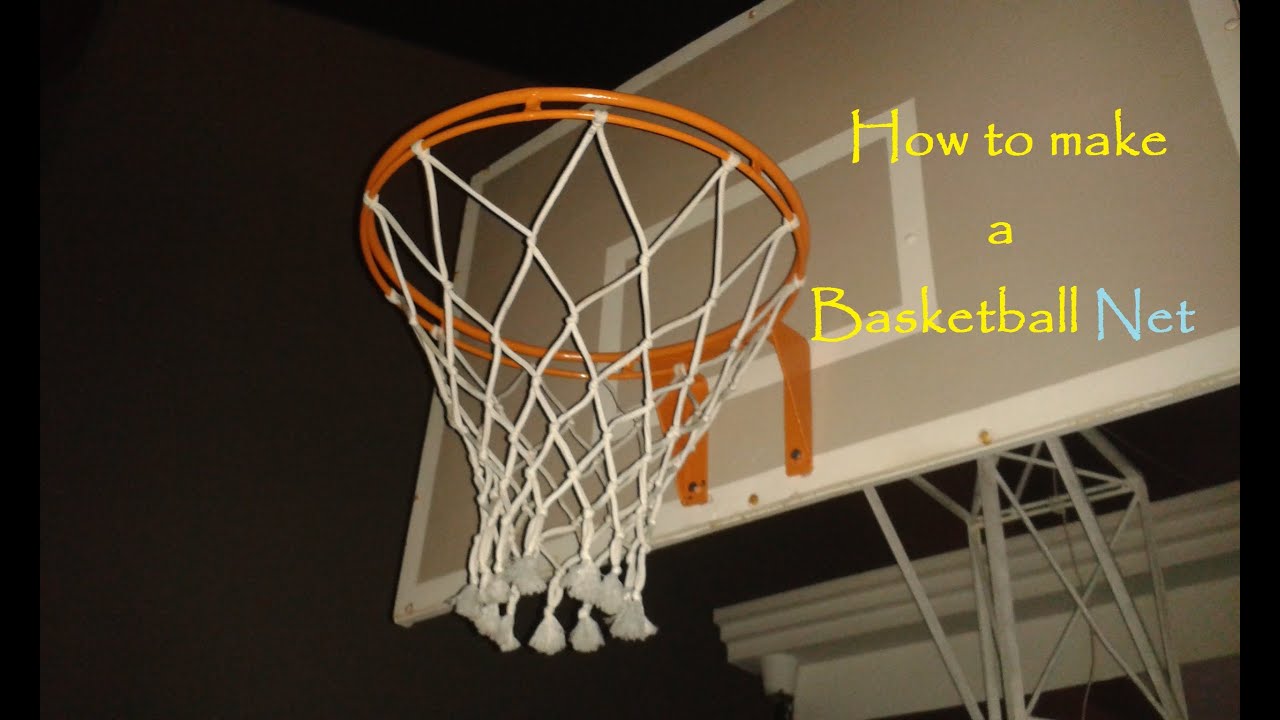
Image Source: i.ytimg.com
Gathering Your Supplies for Your DIY Basketball Net
Before you start making your basketball net from scratch, you need to gather the right materials. The type of material you choose will impact the durability, look, and feel of your finished product. Here’s a breakdown of what you’ll need:
Material Options for Your Basketball Hoop Netting
- Durable Rope or Cord: For a traditional and long-lasting net, strong synthetic rope like nylon or polyester is ideal. These materials are resistant to weather and wear. Look for a cord that is roughly 1/8 to 1/4 inch thick. The amount you need will depend on the size of your hoop, but having at least 100-150 feet is a good starting point for a standard hoop.
- Knotting Cord (for Crochet/Knit Nets): If you’re venturing into a crochet basketball net or knit basketball net, you’ll need a yarn or cord specifically designed for outdoor use. Acrylic yarn is a popular choice for crochet projects due to its durability and color options. For a more robust net, consider using cotton blends or even macrame cord. You’ll likely need several skeins or balls of yarn, depending on the yarn weight and your desired net size.
- Netting Material (Pre-made): For a quicker option, you can purchase bulk netting material. This is often used for fishing nets or sports netting and can be a good base to work with if you want to add your own decorative elements or reinforce it.
Essential Tools for Assembling Your Basketball Hoop Net
- Scissors: Sharp scissors are crucial for cutting your rope or yarn cleanly.
- Measuring Tape: Accurate measurements are key for ensuring your net fits your hoop perfectly.
- Crochet Hook or Knitting Needles (if applicable): Choose a hook or needle size that complements your chosen yarn or cord. A larger hook (like H or I) is often good for crochet basketball nets, while knitting needles might range from size 7 to 10.
- Lighter or Fray Check (for synthetic rope): To prevent synthetic rope ends from unraveling, lightly melt the ends with a lighter or apply a fray-checking liquid.
- Needle and Strong Thread (optional): For any repairs or to reinforce certain areas.
- Ruler or Gauge Tool (optional): To help maintain consistent stitch size if crocheting or knitting.
- A Sturdy Hoop: Of course, you’ll need a basketball hoop to attach your net to!
Making a Basketball Net from Scratch: The Traditional Rope Method
This method is for creating a classic, sturdy basketball net using rope. It involves tying a series of knots to form the mesh of the net. This is how most people learn how to tie a basketball net.
Step 1: Measuring and Cutting Your Rope
- Measure Your Hoop: Use your measuring tape to find the circumference of your basketball hoop. A standard hoop is about 18 inches in diameter, which translates to roughly 56.5 inches in circumference.
- Calculate Rope Length: You’ll need significantly more rope than the circumference to account for knots and the net’s length. A good rule of thumb is to multiply your hoop’s circumference by 5 or 6. For an 18-inch hoop (approx. 56.5 inches circumference), this means you’ll need around 280-340 inches (about 23-28 feet) of rope. It’s always better to have too much than too little. Cut your main rope into several equal lengths. This makes it easier to manage.
Step 2: Creating the Top Ring and Initial Loops
- Form the Top Ring: Take one of your cut rope lengths and form a loop that fits snugly around your basketball hoop. Tie a secure knot (like a double fisherman’s knot or a strong overhand knot) to join the ends, creating a continuous ring. This is the foundation for your basketball hoop netting.
- Attach Loops to the Hoop: Now, you need to create attachment points on your hoop ring. You can do this by tying smaller loops of rope around the main hoop ring at regular intervals. Aim for 10-12 evenly spaced loops. These will be the starting points for your net’s structure.
Step 3: Tying the Net Knots
This is where the art of how to tie a basketball net comes into play. The most common and effective knot for this is the sheet bend knot.
Sheet Bend Knot (for attaching new rope segments):
- Take a new length of rope (your net material).
- Make a bight (a U-shape) in the end of the rope already attached to the hoop.
- Pass the working end of your new rope up through the bight.
- Wrap the working end around the back of the bight, going behind both strands of the bight.
- Bring the working end up and pass it through the loop you just created.
- Pull both ends of the new rope and the bight to tighten the knot securely.
Knotting the Mesh:
- Start by attaching a new length of rope to one of the attachment loops on your hoop ring using a sheet bend knot.
- Let the rope hang down. Decide on the desired length of your net. Standard nets are usually around 15-20 inches long.
- Create a new loop at the desired length. You can do this by folding the rope back on itself and tying another sheet bend knot, but this time, you’re joining the rope back onto itself to form a loop. This loop will be used to connect to the row below.
- Connecting Rows: To create the diamond pattern of the net, you’ll be connecting loops from one row to loops in the next. When you reach the next row where you need to attach a new piece of rope, you’ll use a sheet bend knot to tie it to a loop from the previous row. Then, you’ll continue down, forming new loops.
- Spacing: The key to a good net is consistent spacing. Try to keep the distance between your knots and the length of your loops as uniform as possible. This is crucial for how to assemble a basketball hoop net effectively.
Step 4: Building the Net Downwards
Continue tying knots, creating rows of loops. Each new length of rope you add will typically be tied to two loops from the previous row, forming a diamond shape. This is how you build the structure of your basketball hoop netting. You’ll be essentially creating a series of interconnected diamonds.
Table: Knotting Pattern Example (Simplified)
Row Starting Point Knot Type Ending Point 1 Hoop Attachment Sheet Bend Loop created at desired length 2 Loop from Row 1 Sheet Bend Connect to two points on the next conceptual “level” 3 Loops from Row 2 Sheet Bend Continue forming the net structure
Step 5: Finishing the Bottom of the Net
Once you’ve reached the desired length, you need to finish the bottom.
- Create the Bottom Edge: Gather all the hanging ends of your rope. You can tie them together in a large knot, or create a series of smaller loops that are all tied to a final, thicker rope or cord that runs around the bottom. This is the final step in how to tie a basketball net securely.
- Trim and Secure: Trim any excess rope and use your lighter or fray check to secure the ends, especially if you used synthetic rope.
The Art of the Crochet Basketball Net
A crochet basketball net offers a unique aesthetic and can be a very satisfying project. This is a popular approach for making a DIY basketball net.
Step 1: Choosing Your Yarn and Hook
- Yarn Selection: Opt for durable, weather-resistant yarn. Acrylic is common, but blends with cotton can also work. Consider the yarn weight; a medium to bulky weight will create a more substantial net. Bright colors can also add a fun visual element.
- Hook Size: Match your hook size to your yarn. For a standard crochet basketball net, an H (5mm) to J (6mm) hook is often a good starting point.
Step 2: Starting the Top Ring
- Magic Ring (Magic Circle): This is a common way to start crochet projects for a tight, adjustable center. Alternatively, you can chain a few stitches and join them into a ring.
- Crocheting the First Round: Crochet around your ring, adding enough single crochet stitches to create a firm band that will fit around your basketball hoop. The number of stitches will depend on your yarn and hook size, but aim for a circumference that matches your hoop. You’ll need to measure this as you go.
Step 3: Building the Net with Stitches
This is where you’ll learn how to assemble a basketball hoop net using crochet.
- Creating the Netting Pattern: The most common stitch for basketball net patterns is the double crochet (dc). You’ll typically work in rounds, creating a mesh-like fabric.
- Basic Mesh Pattern: A common pattern involves alternating a double crochet stitch with a chain stitch. For example:
- Round 1: Single crochet evenly around the top ring.
- Round 2: *Double crochet in the next stitch, chain 1* repeat around.
- Round 3: *Double crochet in the next chain-1 space, chain 1* repeat around.
- Continue repeating Round 3 until your net reaches the desired length.
Step 4: Adjusting for Diamond Shape
As you crochet downwards, the net naturally starts to widen slightly. To create the classic diamond pattern, you’ll need to adjust your stitch count or the spacing of your chain stitches.
- Increasing Stitches: In some rounds, you might need to strategically add extra stitches or chain stitches to allow the net to expand. For instance, instead of *dc, ch 1*, you might do *dc, ch 2* in certain stitches to create a wider opening. Experiment with this to achieve the desired look.
Step 5: Finishing the Crochet Basketball Net
- Bottom Edge: Once you’ve reached the desired length, you can finish the bottom edge. This can be done by simply crocheting a few rounds of single crochet for a sturdy finish, or you can create a lacy edge with more complex stitch patterns.
- Weaving in Ends: Securely weave in any yarn tails to prevent unraveling.
Knitting a Basketball Net: A Cozy Alternative
A knit basketball net is less common but can be a charming and unique option, especially for decorative purposes or lighter play. This method shows how to make a basketball net from scratch using knitting techniques.
Step 1: Yarn and Needle Selection
- Yarn: Choose a sturdy yarn suitable for outdoor use. Acrylics or acrylic blends are good choices. The thickness of the yarn will greatly affect the look and speed of your project. Chunky or super bulky yarns will make a faster, more open net.
- Needles: You’ll need knitting needles that match your yarn weight. For bulkier yarns, larger needles (size 10-17 US) are appropriate. Straight needles can work, but circular needles might be easier to manage for the large number of stitches.
Step 2: Casting On for the Top
- Measure and Calculate Cast-On: Similar to the rope method, measure your hoop’s circumference. You’ll need to estimate how many stitches your chosen yarn and needle combination will create per inch. Cast on enough stitches to match your hoop’s circumference.
- Knit the Top Band: You can knit a simple rib stitch (e.g., k1, p1) or a garter stitch band for a few rows to create a sturdy edge that will attach to the hoop.
Step 3: Knitting the Net Fabric
- Creating the Mesh: The key is to create a loose, open fabric.
- Garter Stitch with Yarn Overs: A simple approach is to knit every row, but incorporate yarn overs (yo) between stitches. For example: *Knit 1, yo* repeat across the row. On the next row, knit the stitch and the yarn over together (k2tog) to maintain stitch count and create a hole. This creates a basic net pattern.
- Lace Patterns: More intricate lace knitting patterns can create beautiful, unique basketball hoop netting. Research beginner-friendly lace patterns that create openwork.
Step 4: Decreasing for Shape (Optional)
If you want a more traditional tapered net, you can strategically decrease stitches as you knit downwards. This is more advanced and requires careful planning of your pattern. For a simple net, keeping the stitch count consistent will create a more cylindrical shape.
Step 5: Binding Off and Finishing
- Bind Off: Once your net is the desired length, bind off your stitches loosely to maintain flexibility.
- Securing Ends: Weave in all yarn tails securely. You might also want to attach a cord or ribbon to the bottom edge for added stability or decoration.
Repairing a Basketball Net
Sometimes, you don’t need a whole new net; you just need to repair a basketball net. This can save time and resources.
Common Issues and How to Fix Them
- Frayed or Broken Strands: If a few strands are frayed or broken, you can often fix them by re-tying knots (if using rope) or by sewing the broken ends together with strong thread and a needle. For synthetic ropes, a touch of a lighter can fuse frayed ends.
- Holes in the Net: Small holes can be “darned” closed using a needle and matching thread or yarn. For larger holes, you might need to re-knot sections or crochet/knit a patch to sew into place.
- Worn Top Ring: If the top ring of your net is damaged, you can reinforce it with strong tape, or if it’s a rope net, you can remove the old ring and tie a new one in place.
Assembling Your Basketball Hoop Net
Once your DIY basketball net is made, it’s time to put it on the hoop. This is the final step in the process of how to assemble a basketball hoop net.
Attaching Your New Net
- Position the Net: Drape your new net over the basketball hoop, ensuring it hangs evenly.
- Secure the Top:
- Rope Nets: If your rope net has built-in loops, simply hook these onto the existing hooks or eyelets on your hoop. If you created a solid top ring, you might need to tie it securely to the hoop with strong cord or zip ties.
- Crochet/Knit Nets: If you crocheted or knitted a top band, it should fit snugly around the hoop. You may want to secure it further with a few stitches or zip ties at intervals for added stability.
- Check for Evenness: Make sure the net hangs straight and is evenly distributed around the hoop. Adjust as needed.
Frequently Asked Questions About Making a Basketball Hoop Net
Q1: What is the best material for a basketball hoop net?
A1: For durability and weather resistance, synthetic ropes like nylon or polyester are excellent. For crocheted or knitted nets, acrylic yarn or outdoor-specific cords are recommended.
Q2: Can I use any kind of yarn to make a basketball net?
A2: While you can use various yarns, it’s best to choose yarns labeled for outdoor use or those known for their durability and resistance to UV rays and moisture, like acrylics. Very fine or delicate yarns might not hold up to the demands of basketball.
Q3: How long should a basketball net be?
A3: A standard basketball net is typically between 15 to 20 inches long from the top ring to the bottom edge. This length allows the ball to pass through cleanly and creates the satisfying swish sound.
Q4: Who is this guide for?
A4: This guide is for anyone interested in DIY projects, sports enthusiasts looking for affordable replacement parts, or crafters wanting to try a new skill. It’s suitable for beginners with some patience and intermediate crafters looking for a specific project.
Q5: How do I make sure my net is strong enough?
A5: Use strong, high-quality rope or yarn. Ensure all knots are tied securely and are tight. For crocheted or knitted nets, use appropriate stitch patterns and reinforce any areas that seem weak.
Q6: What is the difference between a crochet basketball net and a knit basketball net?
A6: The primary difference lies in the technique. Crochet uses a single hook to create loops and stitches, often resulting in a denser, more structured fabric. Knitting uses two needles to create interconnected loops, typically resulting in a more flexible and elastic fabric. Both can create functional basketball nets.
Making a basketball hoop net from scratch is a rewarding project that allows for customization and can save you money. Whether you prefer the traditional knot-tying method, the creative approach of crocheting, or the unique texture of knitting, this guide provides the instructions you need to create your own durable and stylish basketball hoop netting. Enjoy the process and the satisfying swish of your homemade net!