
What is zone defense in basketball? Zone defense in basketball is a defensive strategy where players are responsible for guarding a specific area or “zone” on the court, rather than an individual opponent. Can I play zone defense without prior experience? Yes, with proper instruction and practice, players can learn to effectively play zone defense even without prior experience. Who is zone defense best suited for? Zone defense can be a good option for teams that have good communication, quick rotations, and players who understand defensive positioning.
Playing zone defense in basketball is a strategic approach that can baffle opponents and control the flow of the game. Unlike man-to-man defense, where each player guards a specific offensive player, zone defense requires players to protect designated areas of the court. This essay will delve into the intricacies of basketball zone defense strategy, exploring its fundamental principles, various types, and the practicalities of implementation. We will also compare it to man-to-man versus zone defense, discuss defending the zone in basketball, provide zone defense drills, outline zone defense responsibilities, and offer tips for effective zone defense and teaching zone defense to players.
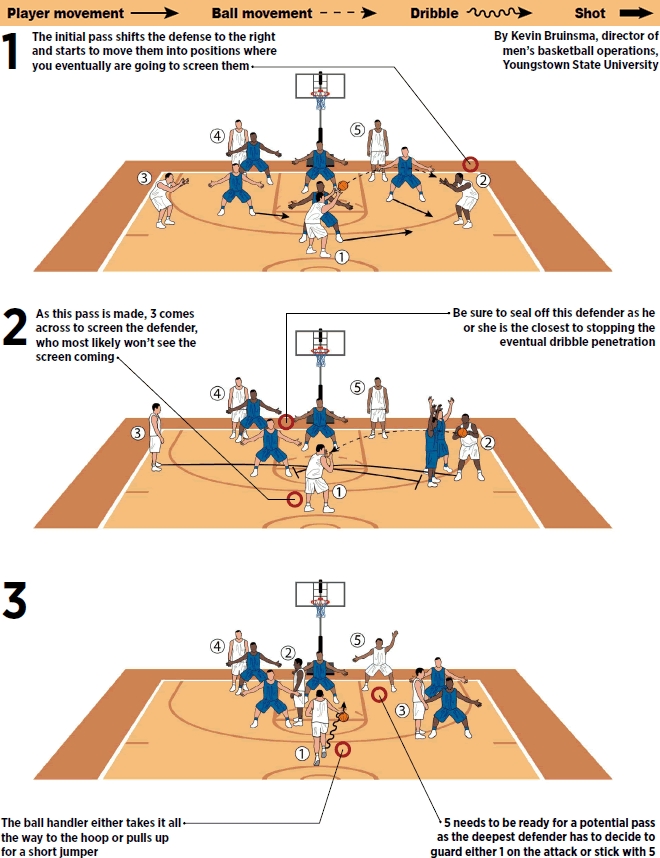
Image Source: d3rqy6w6tyyf68.cloudfront.net
Zone Defense Principles: The Foundation of Success
At its core, zone defense principles revolve around collective responsibility and spatial awareness. The primary goal is to clog passing lanes, contest shots, and force turnovers by working as a cohesive unit. Key principles include:
- Communication: Constant verbal and non-verbal cues are vital. Players must communicate ball movement, screens, and cutters.
- Rotation: When the ball moves, players must shift to cover their assigned zones and support teammates. This requires quick thinking and anticipation.
- Help Defense: Players in the zone must be ready to provide help when a teammate is beaten. This involves stepping up to contest shots or disrupt drives.
- Boxing Out: Even in zone, securing defensive rebounds is crucial. Players must locate their nearest offensive player and box them out.
- Anticipation: Good zone defenders read the offense and anticipate passes or drives to disrupt the play before it develops.
- Coverage: Players must stay in their assigned zones, but also know when to break their zone to contest a ball or close out on a shooter.
Types of Basketball Zone Defenses
There are several common types of basketball zone defenses, each with its own strengths and weaknesses. The choice of zone often depends on the opposing team’s offensive strengths and the defensive team’s personnel.
The 2-3 Zone
The 2-3 zone is arguably the most popular and widely used zone defense in basketball. It features two defenders at the top of the key and three defenders along the baseline.
How to run a 2-3 zone effectively requires specific positioning and movement.
- Two Top Defenders: These players cover the wings and the high post area. They are responsible for closing out on perimeter shooters and preventing entry passes to the high post.
- Three Baseline Defenders: One player is positioned in the center of the paint (the “chaser”), and the other two are in the corners. The chaser is responsible for preventing drives and interior passes, while the corner defenders cover the wings and the corners.
Movement in a 2-3 Zone:
- When the ball is on the wing, the wing defender closes out. The top defender slides over to cover the top of the key, and the baseline defender closest to the ball shifts up.
- When the ball is passed to the top of the key, the two top defenders converge. The wing defender on the ball-side slides to the corner, and the opposite wing defender covers the weak-side corner.
- When the ball enters the high post, the chaser or the closest wing defender steps up to contest.
- When the ball is in the corner, the corner defender closes out, the wing defender rotates to the corner, and the chaser covers the short corner/baseline drive.
A table illustrating typical player positions in a 2-3 zone:
| Player Position | Zone Responsibility |
|---|---|
| Guard 1 (Top Left) | High Post, Left Wing, Left Corner |
| Guard 2 (Top Right) | High Post, Right Wing, Right Corner |
| Forward 1 (Baseline) | Middle of the Paint, High Post (secondary) |
| Forward 2 (Corner) | Left Wing, Left Corner, High Post (secondary) |
| Forward 3 (Corner) | Right Wing, Right Corner, High Post (secondary) |
The 3-2 Zone
The 3-2 zone features three defenders up top and two on the baseline. This zone is more aggressive on the perimeter and can put pressure on guards.
- Three Top Defenders: One in the middle and two on the wings. They aim to deny perimeter passes and close out quickly on shooters.
- Two Baseline Defenders: Positioned in the corners or slightly in to cover the baseline drives and prevent offensive rebounds.
The 3-2 zone is generally weaker in the paint and can be vulnerable to strong post players or quick penetration.
The 1-3-1 Zone
The 1-3-1 zone is an aggressive, trapping zone defense. It has one defender at the top, three in the middle (one at the elbow, two on the wings), and one on the baseline.
- Top Defender: Guards the top of the key.
- Middle Defenders: The elbow defender and two wing defenders can quickly trap opposing ball handlers on the perimeter.
- Baseline Defender: Protects the basket and the low post.
This zone requires excellent anticipation and quick rotations to recover from traps. It can be very effective in creating turnovers but can leave areas open if rotations are slow.
The 2-1-2 Zone
The 2-1-2 zone features two defenders at the top, one in the middle (high post), and two on the baseline. This zone offers good coverage of the high post and can be effective against teams that like to pass inside.
- Two Top Defenders: Cover the perimeter.
- Middle Defender: Guards the high post.
- Two Baseline Defenders: Protect the basket and corners.
This zone can be vulnerable to quick passes to the corners or baseline drives.
Man-to-Man vs. Zone Defense: A Strategic Comparison
The decision to employ man-to-man vs. zone defense is a critical strategic choice for any basketball coach. Both have distinct advantages and disadvantages.
Man-to-Man Defense:
- Pros: Assigns direct responsibility, can stifle individual scorers, better for pressuring the ball handler, can disrupt offensive flow by denying passes.
- Cons: Can be susceptible to mismatches, requires excellent individual defensive talent, can be tiring, vulnerable to screens and isolation plays.
Zone Defense:
- Pros: Can protect the paint, confuses offenses with varied looks, can be effective against dribble-heavy teams, conserves player energy by reducing constant movement, good for forcing turnovers through trapping.
- Cons: Can leave shooters open if rotations are slow, vulnerable to offensive rebounding if players don’t box out, can be exploited by good passing teams that move the ball quickly, requires strong communication.
When to Use Which:
- Zone is often favored when:
- The opponent has one or two dominant scorers that are hard to stop man-to-man.
- Your team lacks quick, agile defenders to match up well man-to-man.
- You want to change the tempo of the game or disrupt the opponent’s offensive rhythm.
- You have strong communication and players who can cover space effectively.
- Man-to-Man is often favored when:
- Your team has athletic, skilled defenders who can handle individual matchups.
- The opponent relies heavily on isolation plays.
- You want to apply intense ball pressure and deny passing lanes.
- You are confident in your team’s ability to switch on screens and help effectively.
Defending the Zone in Basketball: Exploiting Weaknesses
Successfully defending the zone in basketball requires patience, good ball movement, and smart decision-making. The key is to find and exploit the gaps within the zone.
Here are common strategies for attacking zone defenses:
- Pass the Ball: Quick, crisp passes are essential. Moving the ball from side to side forces the zone to shift, creating openings. Avoid holding the ball too long.
- Attack the Gaps: Identify the spaces between defenders. Penetrate these gaps with dribble drives or skip passes to create mismatches or open shots.
- Utilize the High Post: The area around the free-throw line is often a soft spot in many zone defenses. Getting the ball to a player in the high post can force the zone to collapse and create opportunities for cutters or kick-out passes.
- Overload One Side: Focus offensive attention on one side of the floor. This can force the zone to commit more defenders, leaving the weak side open for a skip pass or a drive.
- Offensive Rebounding: Because zone defenders are focused on their areas, crashing the offensive boards can be highly effective. Players should look to get to the weak side of the offensive possession to secure rebounds.
- Screens: Even in zone, offensive players can set screens on defenders to free up teammates for open shots or drives.
- Shooting: Good outside shooting can stretch the zone and force defenders to play closer to the perimeter, opening up the paint.
Specific Zone Vulnerabilities:
- 2-3 Zone: Vulnerable to:
- Quick passes to the high post.
- Drives from the wings that draw the chaser, leading to kick-out passes.
- Corner shots if the baseline defenders are slow to rotate.
- Offensive rebounds in the low post.
- 3-2 Zone: Vulnerable to:
- Penetration into the paint, forcing baseline defenders to collapse.
- Skip passes to the weak side corners.
- Post-ups against the weaker baseline defenders.
- 1-3-1 Zone: Vulnerable to:
- Quick passes into the middle of the zone, between the top and the three middle defenders.
- Good perimeter shooting that forces the zone to extend.
- Drives that draw the baseline defender out.
- 2-1-2 Zone: Vulnerable to:
- Quick passes to the corners.
- Drives from the wings that pull the top defenders out.
- Beating the high post defender to the basket.
Zone Defense Drills: Sharpening Your Skills
Consistent practice is key to mastering zone defense drills. These drills focus on communication, rotations, and covering specific areas.
Drill 1: 3-on-3 Shell Drill
- Setup: Three offensive players and three defensive players. Offensive players try to move the ball and score.
- Focus: Defenders work on passing the ball around the perimeter and maintaining their zone responsibilities. Offensive players move the ball, cut, and look for openings. Defenders must communicate “ball,” “help,” and rotate effectively.
- Variations: Add a fourth offensive player to simulate a high post or weak side shooter. Introduce dribble penetration.
Drill 2: Zone Movement and Rotation
- Setup: Five offensive players and five defensive players in a 2-3 zone formation.
- Focus: Offensive players pass the ball around the perimeter, penetrate, and pass to the high post. Defensive players practice rotating smoothly to cover new areas and close out on shooters.
- Progression: Start with just passing. Then add dribble penetration. Finally, incorporate shooting and cutting.
Drill 3: Zone Rebounding
- Setup: Five offensive players and five defensive players. The offense tries to score, and the defense tries to secure the rebound.
- Focus: Defensive players must transition from their zone positions to locate and box out an offensive player. Emphasis is placed on the closest defender boxing out the closest player.
Drill 4: Trapping Zone Drill (for 1-3-1)
- Setup: Offensive players try to break a 1-3-1 zone.
- Focus: Defenders practice trapping the ball handler on the perimeter and rotating quickly to cover the open areas when the trap is sprung. This requires excellent communication and anticipation.
Zone Defense Responsibilities: Knowing Your Role
Clear zone defense responsibilities are the backbone of an effective zone defense. Each player must know their primary area and their responsibilities when the ball enters or leaves their zone.
General Responsibilities for a 2-3 Zone:
- Top Defenders (Guards):
- Close out hard on perimeter shooters.
- Prevent dribble penetration from the top.
- Cover the high post when the ball is on their side.
- Rotate to cover the corner when the ball is passed to the corner.
- Communicate ball movement and screens.
- Wing Defenders (Forwards):
- Cover the offensive player on the wing.
- Close out on shooters from the wing.
- Rotate to the high post or top of the key when necessary.
- Cover the corner when the ball is passed to the corner.
- Help on drives from the opposite side.
- Chaser (Middle Baseline Defender):
- Guard the basket and low post area.
- Step up to contest drives from the wing or high post.
- Prevent offensive rebounders from getting deep post position.
- Communicate with the corner defenders.
- Corner Defenders (Forwards):
- Guard the offensive player in the corner.
- Close out on shooters in the corner.
- Rotate to cover the wing when the ball is passed to the wing.
- Help on drives from the opposite wing.
Effective Zone Defense Strategies
To achieve effective zone defense, several strategies can be employed:
- Vary Your Zones: Don’t be predictable. Switch between different zone types (e.g., 2-3, 3-2) to keep offenses guessing.
- Pressuring the Ball: While zones are often about protecting space, some pressure on the ball handler can disrupt offensive flow and force mistakes. This can be done by the closest defender stepping up aggressively.
- Trapping: Certain zones, like the 1-3-1, are designed for trapping. This requires precise execution and quick rotations to avoid giving up easy baskets.
- Communication is Key: Constantly talking on defense is non-negotiable. Call out screens, cutters, ball location, and when you need help.
- Anticipate and React: Don’t just wait for the offense to make a move. Try to anticipate passes and drives and be in position to intercept or disrupt.
- Force Turnovers: The goal of any defense is to create turnovers. Zone defenses can be very effective at this by clogging passing lanes and forcing bad decisions.
Teaching Zone Defense to Players
Teaching zone defense to players requires a systematic approach, breaking down complex concepts into manageable steps.
Key Teaching Points:
- Spacing: Explain the importance of covering their assigned area and maintaining proper spacing. Use cones or markers to illustrate zone boundaries.
- Ball Movement: Emphasize how the zone shifts and reacts to the ball’s movement. Use visual aids to show how defenders move in conjunction with the ball.
- Communication: Make communication a habit from the very first drill. Reward players for talking and penalize them for silence.
- Closeouts: Teach proper closeout technique – staying low, balanced, and with hands up to contest shots without fouling.
- Rotations: This is often the most challenging aspect. Start with simple rotations and gradually increase complexity. Explain the “why” behind each rotation.
- Help Defense: Teach players when and how to help their teammates and then recover to their zone.
- Reading the Offense: Encourage players to observe the offense and anticipate plays rather than just reacting.
Progression for Teaching:
- Individual Zone Responsibilities: Start with players understanding their specific area and what to do when the ball is in their zone.
- Two-Player Interactions: Practice how two defenders react when the ball moves between their zones (e.g., wing to corner).
- Three-Player Interactions: Introduce three defenders and how they shift and cover as the ball moves across the court.
- Full Court Zone: Gradually move to five-on-five scenarios, simulating game conditions.
- Review and Reinforce: Constantly review concepts and provide feedback during practice. Use video analysis to show players what they are doing well and where they need to improve.
Frequently Asked Questions (FAQ)
Q1: What are the advantages of playing zone defense?
A1: Advantages include protecting the paint, forcing turnovers by clogging passing lanes, confusing offenses with varied looks, conserving player energy, and being effective against teams with dominant individual scorers or poor outside shooting.
Q2: What are the disadvantages of playing zone defense?
A2: Disadvantages can include leaving shooters open if rotations are slow, being vulnerable to offensive rebounding if players don’t box out, and being exploited by teams with excellent passing and ball movement.
Q3: How do you effectively attack a 2-3 zone?
A3: Attack a 2-3 zone by moving the ball quickly, penetrating the gaps, utilizing the high post, overloading one side of the floor, and securing offensive rebounds.
Q4: When should a team consider using zone defense?
A4: A team might consider zone defense when they lack quick individual defenders, face a dominant scorer, want to change the game’s pace, or need to protect their players from foul trouble.
Q5: What is the most important aspect of playing zone defense?
A5: The most important aspect is communication. Players must constantly communicate with each other about ball movement, screens, and where help is needed to maintain the integrity of the zone.
Mastering zone defense is an ongoing process that requires dedication to drills, clear communication, and a solid grasp of the fundamental principles. By understanding the different types of zones, how to attack them, and how to teach them effectively, coaches and players can add a powerful defensive weapon to their arsenal.