
So, you’re wondering, “How high is a regulation basketball goal?” The answer is straightforward: a regulation basketball hoop is set at 10 feet from the playing surface to the top of the rim. This standard height is fundamental to the sport, influencing everything from shot mechanics to player development. This article will dive deep into the history, variations, and implications of this crucial measurement.
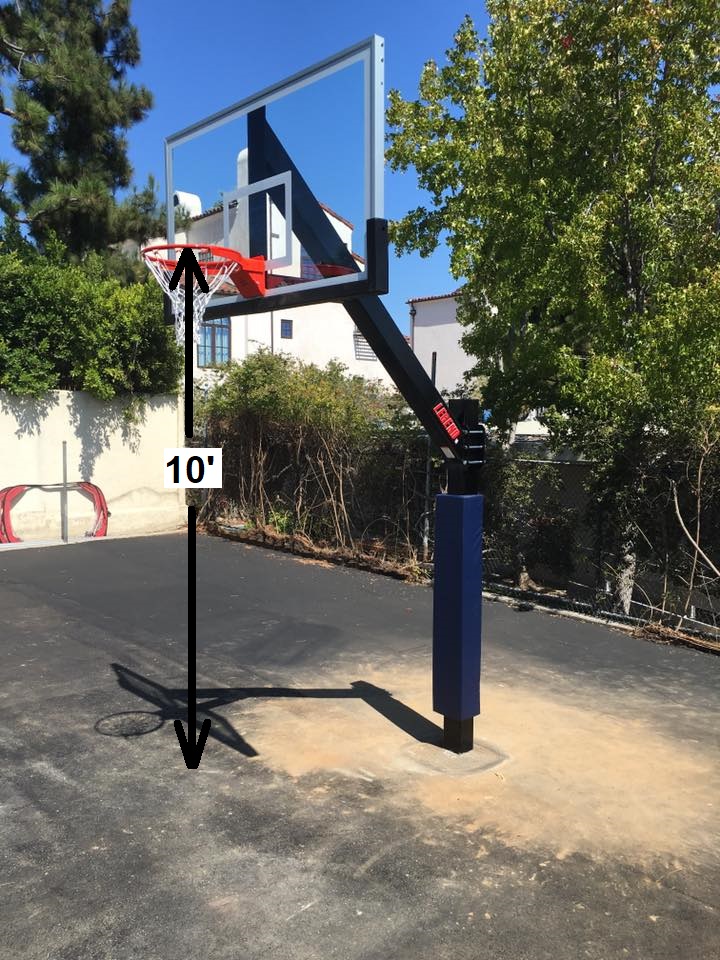
Image Source: www.firstteaminc.com
The Origin of the 10-Foot Rule
The familiar 10-foot basketball hoop height wasn’t always the standard. When basketball was invented by James Naismith in 1891, the “hoops” were actually peach baskets, and they were nailed to the gymnasium balcony, which happened to be 10 feet high. This accidental placement became the bedrock of the sport’s dimensional specifications. As the game evolved, so did the equipment. Peach baskets were eventually replaced by metal hoops with nets, but the iconic 10-foot regulation hoop height remained. This consistent measurement has allowed the sport to maintain a sense of continuity and predictability across different eras and levels of play.
NBA Hoop Height: The Pinnacle of Professional Play
In professional basketball, particularly in the NBA, the NBA hoop height adheres strictly to the 10-foot standard. This means that every professional player, from rookies to seasoned veterans, competes under the same elevated challenge. The basketball rim height of 10 feet dictates the arc of shots, the strategic positioning of players, and the emphasis on vertical leaping ability for rebounds and dunks. The consistency in NBA hoop height is a key factor in the sport’s global appeal and the development of elite athletes who train to master the game at this specific elevation.
Key Dimensions for NBA Play
- Hoop Height: 10 feet (3.05 meters)
- Rim Diameter: 18 inches (45.7 cm)
- Backboard Size: Typically 72 inches wide by 42 inches high (183 cm x 107 cm)
- Free Throw Line Distance: 15 feet (4.57 meters) from the front of the backboard.
These basketball hoop dimensions create a challenging yet fair playing field. The precise official basketball goal size ensures that the game’s fundamental skills – shooting, passing, and dribbling – are tested and refined.
Regulation Hoop Height: Across Different Leagues
While the NBA sets a high bar, the regulation hoop height of 10 feet is not exclusive to professional leagues. This standard is generally adopted across various levels of organized basketball.
NCAA Basketball Hoop Height
Collegiate basketball, governed by the NCAA, also uses the 10-foot regulation hoop height. The NCAA’s commitment to this standard ensures a smooth transition for players moving from high school to college and potentially to the professional ranks. The familiar NCAA basketball hoop height means that the skills developed at the collegiate level are directly transferable to the NBA and other professional leagues.
FIBA Basketball Hoop Height
Internationally, the Fédération Internationale de Basketball (FIBA) also mandates the same 10-foot regulation hoop height. This global uniformity in FIBA basketball hoop height is crucial for international competitions, including the Olympics and the FIBA World Cup. It allows for a consistent playing experience for athletes worldwide and fosters a unified approach to the sport’s development.
FIBA’s Dimensional Specifications
- Hoop Height: 3.05 meters (10 feet)
- Rim Diameter: 45 cm (17.7 inches) – slightly smaller than NBA, but the height is the same.
- Backboard Size: Minimum 180 cm wide by 105 cm high (70.9 inches x 41.3 inches)
- Free Throw Line Distance: 5.80 meters (19 feet 0.4 inches) from the backboard.
The slight difference in rim diameter in FIBA play can subtly alter ball trajectory and rim bounce, but the core challenge of the 10-foot height remains constant.
Youth Basketball Hoop Height: Growing the Game
The concept of youth basketball hoop height is where we see significant variation, and for good reason. Young players are still developing their physical coordination, strength, and shooting mechanics. A regulation 10-foot hoop can be an insurmountable obstacle for very young children, leading to frustration and hindering skill development.
Age-Appropriate Hoop Heights
To foster a positive and effective learning environment, many youth leagues and organizations implement lower hoop heights for younger age groups. This allows children to experience success, build confidence, and learn proper shooting form without being overly challenged by the standard basketball goal height.
Here’s a general guideline for youth basketball hoop heights:
| Age Group | Recommended Hoop Height |
|---|---|
| 5-6 years old | 4 to 6 feet |
| 7-8 years old | 6 to 7 feet |
| 9-10 years old | 7 to 8 feet |
| 11-12 years old | 8 to 9 feet |
| 13+ years old | 9 to 10 feet |
It’s important to note that these are general recommendations, and specific leagues or coaches might adjust them based on the overall skill level of the players. The goal is to provide an appropriate challenge that encourages participation and skill acquisition, rather than imposing a standard that is too difficult. As children grow and develop, gradually increasing the youth basketball hoop height helps them adapt and prepare for the regulation height.
The Benefits of Lower Hoop Heights for Youth
- Improved Shooting Form: Lower hoops allow young players to focus on the proper mechanics of their shot – elbow tucked, follow-through – without straining to reach the basket.
- Increased Success Rate: Making shots builds confidence. When children can consistently score, they are more likely to enjoy the game and continue playing.
- Enhanced Rebounding and Layups: Younger players can more effectively practice layups and develop their rebounding skills when the rim is within a more achievable reach.
- Faster Skill Development: By removing the physical barrier of a high hoop, coaches can focus on teaching fundamental basketball concepts and strategies.
As players age and their physical abilities mature, the standard basketball goal height of 10 feet is introduced. This gradual progression ensures that they are ready for the challenges of a regulation game.
Basketball Hoop Dimensions: More Than Just Height
While basketball hoop height is the most discussed dimension, other aspects of the hoop and backboard system are also critical to the game. These basketball hoop dimensions ensure consistency and fairness across all games.
The Rim
The rim itself has specific basketball rim dimensions. As mentioned, the standard diameter is 18 inches for NBA and FIBA, though FIBA’s is slightly smaller. The thickness of the rim is also specified, typically made from solid steel to withstand the force of dunks. The net attaches to the rim, and its length is also standardized to allow the ball to pass through cleanly.
The Backboard
The backboard is another crucial component. Its size and material can influence the rebound and bounce of the ball.
- Material: Backboards are commonly made from tempered glass, acrylic, or polycarbonate. Glass offers the most authentic feel and rebound, mimicking professional courts, but is more fragile. Acrylic and polycarbonate are more durable and often used for outdoor or recreational play.
- Size and Shape: While rectangular backboards are standard in professional and collegiate play, fan-shaped backboards are also common, especially in recreational settings. The size ensures a sufficient surface area for bank shots and defensive plays.
The Pole and Support Structure
The stability of the entire system is paramount. The pole that supports the hoop must be sturdy and properly anchored. For portable hoops, a well-designed base filled with sand or water is essential for stability. In-ground systems offer the most permanence and stability, with poles cemented directly into the ground. The height adjustability of portable hoops is a key feature for accommodating different players and practice needs, but when set for regulation play, it must reach that 10-foot mark.
Factors Influencing Basketball Hoop Height Decisions
When setting up a basketball hoop, several factors might influence the chosen height, even if the ultimate goal is regulation play.
Portable vs. In-Ground Systems
- Portable Hoops: These offer flexibility. They can be moved around a yard or driveway and often feature adjustable height mechanisms. This makes them ideal for families with children of varying ages, allowing the hoop to be lowered for younger players and raised to the standard basketball goal height as they grow.
- In-Ground Hoops: These are more permanent installations. While their height is typically fixed at the time of installation to the regulation 10 feet, some high-end in-ground systems also offer adjustability.
Indoor vs. Outdoor Courts
The location of the hoop can influence the type of system chosen, which in turn might relate to height adjustability.
- Indoor Courts: Often feature built-in or permanent ceiling-mounted hoops, or adjustable wall-mounted systems. These are usually set to the regulation hoop height and rarely adjusted.
- Outdoor Courts: Can utilize both in-ground and portable systems. The durability of materials becomes more critical outdoors due to weather exposure.
Home Courts and Driveways
For many people, a basketball hoop is for recreational use at home. While the ultimate aim might be to practice for regulation play, the immediate need might be for a family-friendly setup. This often leads to the use of adjustable hoops where the youth basketball hoop height is a primary consideration initially.
Practicing at Regulation Height
For aspiring basketball players, practicing consistently at the regulation hoop height is crucial. It allows them to:
- Develop Proper Shooting Arc: The 10-foot height demands a specific arc for shots to be effective. Practicing at this height helps players find the right trajectory for jump shots, layups, and free throws.
- Improve Strength and Jumping Ability: Reaching and shooting at 10 feet requires a certain level of physical strength and vertical leap. Consistent practice at this height naturally builds these attributes.
- Simulate Game Conditions: To perform well in actual games, players need to be accustomed to the standard basketball goal height. This familiarization reduces the mental and physical adjustment needed when transitioning from practice to a game.
Common Misconceptions About Basketball Hoop Height
Despite the clear standard, some misconceptions persist, particularly regarding variations in hoop height.
- “All hoops are the same height.” While the regulation is 10 feet, this isn’t true for all hoops in use, especially for very young children or in casual play settings.
- “Higher hoops are always better for skill development.” For younger players, excessively high hoops can be detrimental. Age-appropriateness is key.
- “NBA hoops are different from international hoops.” While there are minor differences in rim diameter, the fundamental regulation hoop height of 10 feet is consistent across major international and professional leagues.
Frequently Asked Questions (FAQ)
What is the standard basketball hoop height for professional leagues like the NBA?
The standard basketball hoop height for professional leagues like the NBA is 10 feet (3.05 meters) from the playing surface to the top of the rim.
Are there different basketball hoop heights for men’s and women’s basketball?
No, both men’s and women’s basketball at professional and collegiate levels use the same regulation hoop height of 10 feet.
What is the basketball hoop height for youth leagues?
Youth basketball hoop height varies by age group. Typically, younger children (ages 5-6) play with hoops set between 4 to 6 feet, with the height gradually increasing as they get older, eventually reaching the regulation 10 feet for older teens.
Is the FIBA basketball hoop height the same as the NBA hoop height?
Yes, the FIBA basketball hoop height is also 10 feet (3.05 meters), just like the NBA hoop height. There are minor differences in rim diameter and backboard size, but the critical basketball rim height is identical.
Can I adjust the height of my portable basketball hoop to the regulation height?
Most portable basketball hoops are designed with adjustable height mechanisms. You can typically adjust them to the regulation hoop height of 10 feet for practice or competitive play. Always check the manufacturer’s specifications for your specific model.
Why is the basketball hoop height set at 10 feet?
The regulation hoop height of 10 feet originated from the first basketball game played by James Naismith in 1891. The peach baskets used were nailed to a balcony 10 feet off the ground. This historic placement became the standard for the sport.
What are the key basketball hoop dimensions besides height?
Besides basketball hoop height, other important dimensions include the rim diameter (18 inches in NBA/FIBA), the thickness of the rim, the size and material of the backboard, and the distance of the free-throw line from the backboard. The official basketball goal size encompasses all these elements for fair play.