
Want to shoot more consistently in basketball? The key lies in developing excellent shooting form, practicing diligently with basketball drills, and building strong muscle memory. This guide will walk you through the essential elements to help you master your shot.
What is shooting consistency in basketball? It’s the ability to make shots at a high percentage, shot after shot, game after game, by performing your shooting motion with the same precise technique every time. Can you improve your shooting consistency with dedicated practice? Absolutely! It’s the most direct path to becoming a reliable scorer. Who benefits from learning how to shoot consistently? Every basketball player, from beginners to seasoned professionals, can refine their shooting ability.
This comprehensive guide will delve into the core components of consistent shooting, breaking down the process into actionable steps. We will explore proper grip, the intricacies of jump shot mechanics, effective basketball drills, the importance of practice shooting, and specific techniques for free throws and the dribble pull-up.
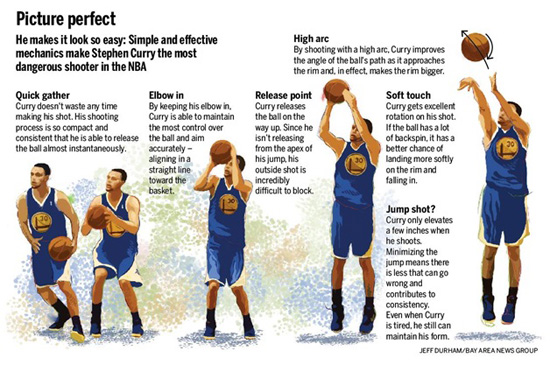
Image Source: www.breakthroughbasketball.com
The Foundation: Perfecting Your Shooting Form
Your shooting form is the blueprint for every shot you take. Deviations can lead to missed opportunities. Let’s break down the fundamental elements of good shooting form.
H3: The Proper Grip
The way you hold the ball significantly impacts its trajectory and your control. A consistent, comfortable grip is paramount.
H4: Hand Placement
- Shooting Hand: Place your shooting hand behind the ball, with your fingertips spread comfortably. Your palm should not be touching the ball. Imagine you’re holding a delicate bird; you want enough contact to control it, but not so much that you squeeze the life out of it. The shooting hand is your primary guiding force.
- Guide Hand: Your non-shooting hand (the guide hand) rests gently on the side of the ball. Its purpose is to stabilize the ball and prevent it from wobbling during the shooting motion. The guide hand should not impart any force or spin on the ball. It’s there for balance, not power.
- Finger Separation: Spread your fingers on your shooting hand about an inch apart. This provides a larger surface area for control and allows you to flick your wrist effectively.
H4: Ball Placement on Fingertips
The ball should rest on your fingertips, not your palm. This allows for greater touch and control. When you shoot, you’ll feel the seams of the ball with your fingertips. This contact point is crucial for generating backspin.
H4: The “Bead of Sweat” Test
A common analogy is to imagine a bead of sweat on the ball. Your shooting hand should be positioned so that when you look at the ball from the side, you can see that bead. This ensures you’re gripping the ball correctly with your fingertips.
H3: Essential Jump Shot Mechanics
The jump shot is a fundamental offensive weapon. Mastering its mechanics is vital for shooting consistency.
H4: The BEEF Acronym: A Simple Way to Remember
A popular and effective way to remember the key elements of a jump shot is the acronym BEEF:
- Balance: Start with a solid base. Your feet should be shoulder-width apart, with your shooting foot slightly ahead if you’re right-handed. Your knees should be slightly bent, ready to spring upwards. This balanced stance provides stability for your entire shooting motion.
- Eyes: Focus your eyes on the target. This is typically the front of the rim or the back of the rim, depending on your preference and the distance. Keep your eyes locked on the target throughout the entire shooting motion.
- Elbow: Keep your shooting elbow tucked in and aligned with the basket. It should form roughly a 90-degree angle. Your elbow acts as a guide, pointing towards your target. Avoid letting your elbow flare out to the side, as this introduces inconsistency.
- Follow-Through: This is arguably the most critical part of the shot. After releasing the ball, extend your shooting arm fully towards the basket, flicking your wrist downwards. Your fingers should point towards the rim, and your arm should remain extended until the ball reaches its destination. Imagine reaching into the cookie jar on a high shelf.
H4: The Shooting Pocket
Before you begin your upward shooting motion, the ball should be in your “shooting pocket.” This is a comfortable, ready position, usually around your chest or chin, where the ball is held securely and ready for the upward sweep. It’s the starting point for your shot’s power generation.
H4: The Upward Motion and Release
The shot is a fluid, continuous motion.
- Dip and Load: As you bend your knees, you dip the ball slightly, preparing to explode upwards.
- Extension: As your legs extend, your arm extends upwards, bringing the ball with it.
- Release Point: The ball should be released at the peak of your jump, or slightly before, with a smooth, one-handed motion.
- Wrist Flick: A strong flick of the wrist imparts backspin on the ball, which helps it go through the net more smoothly.
H4: Backspin: The Key to a Soft Touch
Backspin is essential for a consistent shot. It stabilizes the ball in the air and creates a softer touch off the rim or backboard. You achieve backspin by snapping your wrist downwards and forward as you release the ball, with your fingers following through towards the basket.
H3: Footwork for Stability and Power
Proper footwork is the unsung hero of consistent shooting. It provides the base for your shot’s power and balance.
H4: Stationary Shooting Footwork
- Square Up: Ensure your shoulders and hips are squared up to the basket before you shoot. This alignment is crucial for aiming.
- Feet Placement: As mentioned, feet shoulder-width apart, with knees slightly bent. Your shooting side foot might be a hair forward for comfort and balance.
- Weight Distribution: Keep your weight balanced. Avoid leaning too far back or forward.
H4: Shooting off the Dribble Footwork
This is where the dribble pull-up comes into play.
- Gather: As you dribble and decide to shoot, gather the ball smoothly with both hands.
- Footwork Transition: Your last dribble sets up your footwork.
- One-Two Step: A common and effective technique. After your last dribble, take a step with your non-shooting foot, then a quick step with your shooting foot, bringing your feet together for a balanced jump.
- Hop: A slight hop can also bring your feet together into a balanced shooting position.
- Jump and Shoot: Execute your jump shot with the same consistent mechanics, ensuring you land in a balanced manner after releasing the ball.
Building Your Shooting Consistency Through Practice
Possessing good shooting form is only half the battle. Consistent practice is what transforms good form into reliable performance.
H3: The Importance of Practice Shooting
- Muscle Memory: The more you repeat a motion, the more your brain and muscles learn to perform it automatically. This is muscle memory. Consistent practice drills build this crucial element, allowing your body to execute the shot without overthinking.
- Confidence: Seeing the ball go through the net repeatedly during practice builds confidence, which is a significant factor in clutch shooting.
- Refinement: Practice allows you to identify and correct flaws in your shooting form that might not be apparent in game situations.
H3: Effective Basketball Drills for Improvement
A variety of drills can help you develop and refine your shooting. The key is to make them game-like and to focus on the process, not just the outcome.
H4: Form Shooting (Close Range)
This is the absolute starting point.
- Proximity: Stand directly in front of the basket, about 3-5 feet away.
- Focus: Concentrate solely on your shooting form: proper grip, elbow alignment, and follow-through.
- No Jump: Do not jump for these shots. Focus on using your arm and wrist.
- Repetitions: Make 10-20 shots using perfect form before taking a step back.
H4: Mikan Drill
This classic drill improves your touch around the basket and hand-eye coordination.
- Position: Stand under the basket.
- Alternating Layups: Shoot layups with your right hand, grab the rebound with both hands, and immediately shoot a layup with your left hand. Continue alternating sides without letting the ball touch the ground.
- Focus: Emphasize soft touch and getting the ball up and over the rim.
H4: Shooting Around the Key (Spot Shooting)
This drill simulates game situations where you might catch and shoot.
- Designated Spots: Mark several spots around the key (e.g., wings, elbows, top of the key).
- Repetitions per Spot: Make a set number of shots (e.g., 5 or 10) from each spot.
- Focus: Maintain your shooting form and follow-through on every shot.
H4: Shooting off the Dribble Drills
These are critical for improving your dribble pull-up.
- Dribble Pull-Up (Static):
- Start at the three-point line with the ball.
- Take one hard dribble towards the basket.
- Perform a quick “gather” and pull-up into your jump shot.
- Focus on a smooth transition from dribble to shot.
- Dribble Pull-Up (Dynamic):
- Start at the top of the key.
- Dribble towards the basket, using a crossover or other move.
- Explode into your pull-up jumper, maintaining balance.
- Practice from different angles and with various dribble moves.
H4: Free Throw Technique Drills
Free throws are critical for scoring and winning close games.
- Routine: Develop a consistent pre-shot routine (e.g., dribble three times, spin the ball).
- Repetitions: Shoot 10-20 free throws at a time, focusing on form.
- Concentration: Treat each free throw as if it were the game-winner.
- Progressive Practice: Start by shooting them when you’re fresh, then incorporate them after drills when you’re fatigued to simulate game conditions.
H4: Shooting Progression Chart
Using a chart can help you track your progress and stay motivated.
| Drill Name | Starting Distance | Shots Made Goal | Notes |
|---|---|---|---|
| Form Shooting | 3-5 feet | 15 (perfect form) | Focus on mechanics, no jump. |
| Close-Range Shots | 5-8 feet | 10 | Continue focusing on form and wrist flick. |
| Mid-Range Jumpshots | 10-15 feet | 8 | Incorporate a slight jump, maintain balance. |
| Three-Point Shots | 20-22 feet | 5 | Ensure proper power transfer from legs. |
| Dribble Pull-Ups | 15 feet | 7 | Focus on smooth gather and balanced jump. |
| Free Throws | N/A | 8/10 | Consistent routine, mental focus. |
How to Use:
* Start with a realistic goal.
* Once you can consistently hit your goal for a drill, move to the next stage or a more challenging variation.
* Keep a log of your progress.
H3: The Mental Aspect of Shooting
Beyond physical technique, the mental game plays a huge role in shooting consistency.
H4: Visualization
Before or during practice, visualize yourself making shots. See the ball going through the net. This mental rehearsal can prime your body and mind for success.
H4: Positive Self-Talk
Replace negative thoughts like “I can’t make this shot” with positive affirmations like “I’ve practiced this, I can make it.”
H4: Focusing on the Process
Don’t get discouraged by misses. Focus on executing your shooting form perfectly for each shot. The results will follow the process.
Advanced Shooting Techniques and Considerations
Once you have a solid foundation, you can start incorporating more advanced techniques.
H3: Mastering the Dribble Pull-Up
The dribble pull-up is an essential offensive move that allows you to create your own shot.
H4: The Mechanics Breakdown
- Controlled Dribble: Maintain control of the ball with your dribbling hand.
- Explosive Gather: As you transition from dribbling to shooting, gather the ball with both hands. This gather should be quick and efficient, bringing the ball into your shooting pocket.
- Simultaneous Jump and Release: Your jump and the ball’s release should be coordinated. The ball typically leaves your hands at the peak of your jump or just before.
- Balance on Landing: Aim to land balanced. This allows you to react quickly to a rebound or defensive pressure.
H4: Game Situations
- Beating Defenders: Use dribble moves to create space, then pull up for a shot before the defender can recover.
- Attacking Closeouts: When a defender closes out aggressively, a quick pull-up can be effective.
H3: Shooting Off Screens
Shooting after coming off a screen requires quick footwork and a fluid motion.
H4: Catch and Shoot
- Reading the Screen: Anticipate the screen and move towards it.
- Footwork: As you come off the screen, take your first two steps towards the basket, then pivot or hop to square up for your shot.
- Catching the Ball: Catch the ball cleanly and bring it directly to your shooting pocket.
- Immediate Shot: Release the shot quickly and smoothly, utilizing the momentum from coming off the screen.
H3: Shooting Under Pressure
Game pressure can make even good shooters miss. Here’s how to maintain consistency:
- Practice Under Fatigue: Incorporate shooting drills at the end of your practice sessions when you’re tired.
- Simulate Game Scenarios: Have teammates or coaches apply light defensive pressure during practice.
- Focus on Routine: Stick to your pre-shot routine, even when the pressure is on.
Common Shooting Mistakes and How to Fix Them
Even with dedicated practice, some common mistakes can hinder shooting consistency.
H3: Elbows Flaring Out
- Problem: Your shooting elbow drifts away from your body.
- Fix: Imagine you’re trying to keep your elbow tucked into your ribs. Place a towel under your shooting arm during drills to help reinforce this position. Focus on pointing your elbow towards the basket.
H3: Not Following Through
- Problem: You release the ball without fully extending your arm and flicking your wrist.
- Fix: Make a conscious effort to “hold” your follow-through. Imagine you’re reaching into a cookie jar on a high shelf. Your fingertips should point down towards the rim.
H3: Insufficient Backspin
- Problem: The ball travels too flat, making it harder to get a good bounce off the rim.
- Fix: Focus on a strong wrist flick. Your fingers should be the last to touch the ball, rolling off it to create backspin.
H3: Unbalanced Stance
- Problem: Your feet are too close, too far apart, or your weight is not distributed evenly.
- Fix: Practice standing in a balanced shooting stance. Start with form shooting close to the basket, focusing on your base. Use the “square up” principle consistently.
H3: Releasing the Ball Too Early or Too Late
- Problem: Releasing the ball before the peak of your jump or after you’ve started descending.
- Fix: Focus on coordinating your jump and release. Practice jumping and holding the ball in your shooting pocket at the apex of your jump before releasing.
Frequently Asked Questions (FAQ)
Q1: How many shots should I take per day to improve?
There’s no magic number, but consistency is key. Aim for quality over quantity. 200-300 shots with perfect form per day is a good goal. Focus on making shots with good technique rather than just taking many shots sloppily.
Q2: What is the best age to start working on shooting?
You can start developing good shooting habits at any age. However, younger players should focus on proper form and avoid over-muscling the ball. Age-appropriate drills are essential.
Q3: Should I use my guide hand to help shoot?
No, your guide hand is only for stabilization. It should not provide any force or spin to the ball. If you find yourself pushing with your guide hand, focus on keeping it on the side of the ball and letting go before your shooting hand.
Q4: How important is practice shooting when I’m tired?
Practicing when fatigued is crucial for building shooting consistency under game-like conditions. Many missed shots in games happen when players are tired. Working on your shot when fatigued trains your body and mind to maintain form.
Q5: How do I get more power on my shots?
Power primarily comes from your legs and core. Ensure you’re bending your knees sufficiently and using your entire body to generate upward momentum. A strong follow-through also helps transfer energy effectively.
Q6: What if I can’t make shots in a game even though I make them in practice?
This is a common issue. It often stems from mental pressure, fatigue, or slight adjustments in your mechanics due to game speed. Focus on your pre-shot routine, visualization, and trusting your practice. Sometimes, it takes time and experience to translate practice success to game success.
Conclusion
Achieving shooting consistency in basketball is a journey, not a destination. It requires dedication, meticulous attention to detail in your shooting form, and a commitment to regular practice shooting. By focusing on the proper grip, mastering jump shot mechanics, incorporating effective basketball drills, and honing your free throw technique and dribble pull-up, you build the muscle memory and confidence needed to become a reliable scorer. Embrace the process, stay persistent, and watch your shooting improve, shot after shot.