
Can you roll a basketball on your finger? Yes, you absolutely can learn to roll a basketball on your finger, and with practice, you can make it look effortless! This impressive skill, often seen as a symbol of superb basketball ball handling tips, is more than just a flashy move; it’s a testament to precision, balance, and a deep connection with the ball. This guide will walk you through everything you need to know to achieve this coveted trick basketball finger roll.
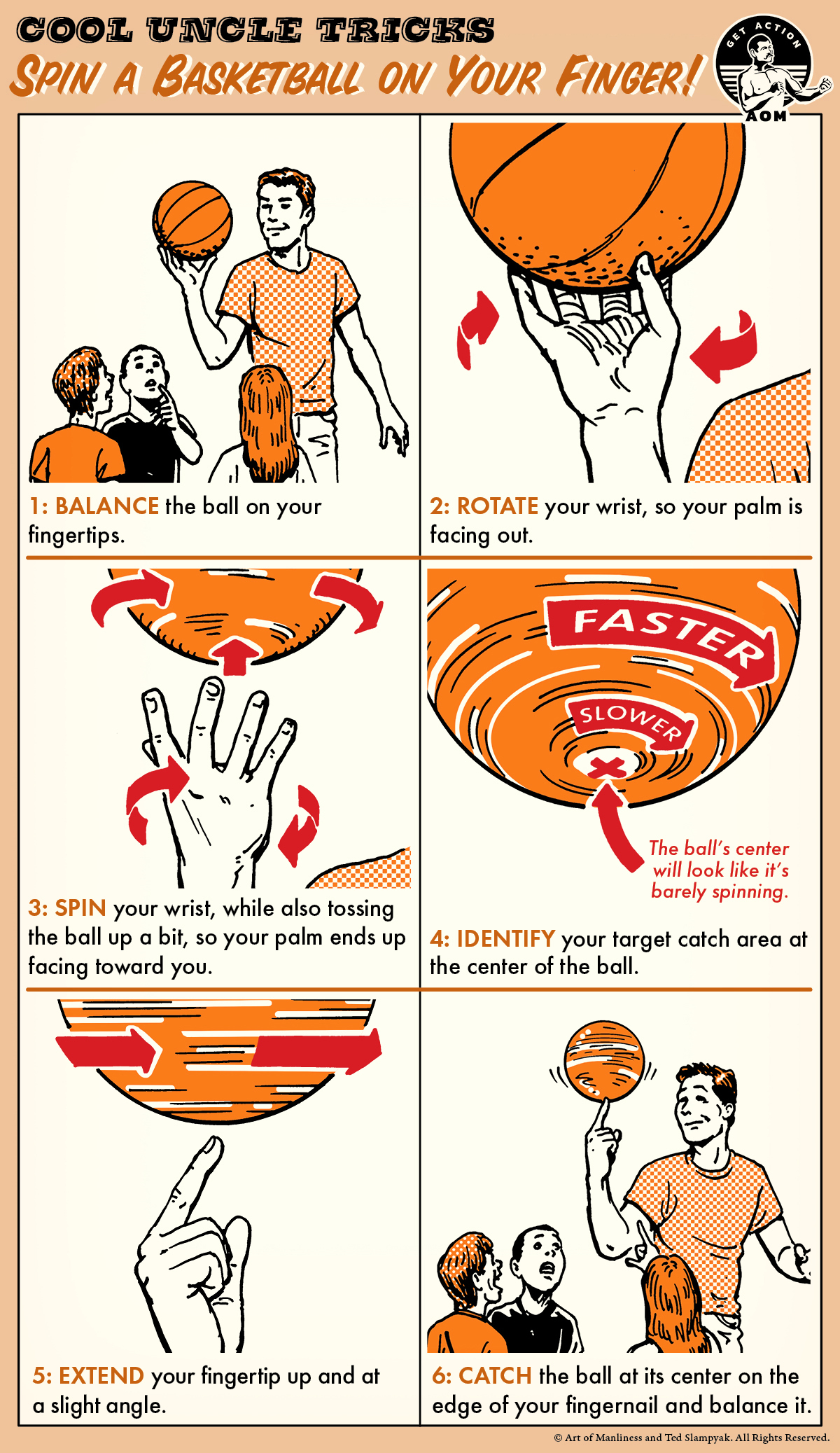
Image Source: content.artofmanliness.com
The Fundamentals: Getting Started with Finger Balancing Basketball
Before you even think about spinning a full-sized basketball on one finger, it’s crucial to build a solid foundation. This isn’t just about how to spin a basketball; it’s about developing a feel for the ball and a sense of its weight distribution.
Choosing the Right Ball
For beginners, starting with a slightly deflated basketball or a smaller-sized ball can be immensely helpful. A full, properly inflated basketball can be unwieldy, and a little give in the ball makes it easier to grip and balance.
- Standard Size (Size 7): This is what you’ll eventually want to master. It’s heavier and requires more control.
- Intermediate Sizes (Size 6, Size 5): These are excellent for learning. They are lighter and have a slightly smaller circumference, making them easier to manage.
- Street/Outdoor Balls: These often have a grippier surface, which can aid in the initial stages of balancing.
Finding Your Dominant Finger
Which finger should you use? Most people find success with their index finger or middle finger. Experiment to see which one feels most natural and provides the best stability.
- Index Finger: Offers a good combination of reach and control.
- Middle Finger: Provides a slightly wider base, which can be beneficial for stability.
Tip: Don’t be afraid to try both! You might be surprised at which finger feels best for finger balancing basketball.
Setting Up for Success: The Ball and Your Hand
The way you hold the ball before initiating the roll is critical. You want to create a stable starting point.
- Grip: Gently cup the basketball with your non-rolling hand. Your palm should be on the bottom, and your fingers should be wrapped around the sides.
- Finger Placement: Bring your chosen rolling finger (index or middle) to the top of the basketball.
- Center of Gravity: Try to find the ball’s natural balance point on your finger. This is often near the seam or where the air valve is located, but it can vary slightly from ball to ball.
The Core Technique: Mastering Basketball Finger Spin
This is where the magic happens! The key to a successful finger roll is a smooth, controlled motion. It’s not about brute force; it’s about finesse.
The Initial Push
The roll begins with a gentle, upward push from your finger.
- The Motion: Imagine you’re trying to gently lift the ball off your fingertip. The push should be straight up.
- Finger Angle: Keep your finger relatively straight, not bent too much. A slight bend is okay for comfort, but a fully bent finger will offer less support.
- Power: The power comes from a quick flick of your wrist and a smooth extension of your finger. Think of it as a controlled flick, not a hard shove.
Maintaining Balance
Once the ball is in motion, your job is to keep it there. This is where the art of mastering basketball finger spin truly comes into play.
- Follow the Ball: Your finger needs to follow the ball’s rotation. As the ball spins, your finger will naturally move in a circular pattern beneath it.
- Pressure Adjustment: The pressure you apply with your finger is crucial. Too much pressure, and the ball will wobble or fall off. Too little, and it won’t spin effectively. You’re looking for a light, consistent touch.
- Body Stability: Keep your body still and balanced. Any swaying or jerky movements will transfer to the ball and make it harder to control. Your knees should be slightly bent.
Developing Feel: Improving Basketball Control
This is arguably the most important aspect of learning any advanced basketball moves. Developing a feel for the ball allows you to make micro-adjustments to keep it balanced.
- Practice with Different Balls: As mentioned, start with lighter balls. Once you’re comfortable, transition to a regulation-sized ball. This helps you adapt to different weights and textures.
- Short Bursts: Don’t aim for long rolls immediately. Start by trying to get one or two rotations. Celebrate small victories!
- Slow and Steady: When learning, it’s better to go slow and controlled than fast and wild. Focus on the feel of the ball and the sensation of it spinning on your finger.
Progression Steps: From First Spin to Flawless Rolls
Learning to roll a basketball on your finger is a journey. Here’s a breakdown of how to progress and refine your technique.
Step 1: Getting the Ball to Spin
Focus purely on getting the ball to spin on your finger, even if it only lasts a second.
- Place your finger under the ball, finding the balance point.
- Gently push upwards and slightly to the side, creating a spin.
- Observe how the ball reacts. Does it wobble? Does it fall off immediately?
- Repeat this, trying to achieve a consistent spin.
Step 2: Extending the Roll
Once you can get a spin, the next step is to keep it going.
- As the ball starts to spin, keep your finger moving with it.
- Try to maintain a consistent, light pressure.
- Focus on keeping your finger steady and your body still.
- Aim for two, then three, then more rotations.
Step 3: Transitioning to Longer Rolls
This is where basketball dribbling techniques start to merge with balancing.
- Finger Roll Basketball Tutorial: Many online videos demonstrate this. Watch how experienced players move their fingers and bodies.
- Small Adjustments: You’ll find yourself making tiny adjustments to your finger’s position and pressure to counteract any wobbling. This is natural and a sign you’re improving.
- Looking Up: As you get more confident, try looking up briefly while the ball is rolling. This is a key step towards integrating this into game-like situations.
Step 4: Incorporating Movement
Once you can roll the ball while standing still, it’s time to add movement.
- Walking: Start by slowly walking forward while keeping the ball balanced.
- Changing Direction: Practice turning and changing your pace.
- Head Up: The ultimate goal is to keep your head up and be aware of your surroundings while performing the roll.
Advanced Techniques and Tips for Mastery
Once you’ve got the basic roll down, you can explore variations and refine your skills further. These are the hallmarks of advanced basketball moves.
Varying Your Rolling Finger
- Other Fingers: Can you roll it on your thumb? Your pinky? While challenging, mastering different fingers adds versatility.
- Back of the Hand: Some advanced players can even balance and roll the ball on the back of their hand!
Combining with Dribbling
This is where basketball dribbling techniques get a whole new dimension.
- Transitioning: Learn to smoothly transition from a dribble to a finger roll and back to a dribble.
- Fakes: Use the finger roll as a deceptive move. For example, fake a crossover, then roll the ball on your finger to draw defenders in.
Playing with Spin and Speed
- Faster Spin: Experiment with a quicker initial flick to achieve a faster rotation.
- Slower Spin: Learn to control the spin for a slower, more deliberate roll.
Basketball Balance Tricks Integration
The finger roll is often the foundation for many other basketball balance tricks.
- Elbow Balance: Similar to finger balancing, but on the elbow.
- Head Balance: A much more advanced skill, but the principles of balance are transferable.
Common Challenges and How to Overcome Them
No one masters the finger roll overnight. Here are some common hurdles and how to jump over them.
The Ball Keeps Falling Off
- Problem: You’re applying too much pressure, or your finger isn’t following the ball’s motion.
- Solution: Focus on a lighter touch. Ensure your finger is moving smoothly with the ball. Practice finding the ball’s sweet spot.
Wobbling Ball
- Problem: An uneven push or inconsistency in your finger’s movement.
- Solution: Ensure your initial push is straight up and smooth. Keep your body and supporting hand as still as possible.
The Ball Won’t Spin Enough
- Problem: Not enough initial flick or improper finger angle.
- Solution: Experiment with a slightly quicker flick of your wrist and finger. Make sure your finger is positioned to impart a good rotation.
Fatigue in Hand/Wrist
- Problem: Holding the ball too tightly or for too long without proper technique.
- Solution: Relax your grip. The goal is control, not squeezing. Take breaks and stretch your hands and wrists.
Benefits of Mastering the Finger Roll
Beyond the obvious “cool factor,” learning to roll a basketball on your finger offers significant benefits for your overall game.
Enhanced Ball Control
This skill directly translates to better improve basketball control. You develop a much finer sense of touch and feel for the ball, which is crucial for dribbling, passing, and shooting.
Improved Hand-Eye Coordination
The constant focus and adjustment required to keep the ball balanced sharpens your hand-eye coordination. This is a foundational skill for almost all sports.
Increased Confidence
Successfully executing a challenging move like the finger roll builds significant confidence, both on and off the court. This confidence can spill over into other areas of your game.
Develops Patience and Perseverance
Learning this skill takes time and repetition. It teaches you the value of patience and the reward of sticking with something difficult until you achieve it.
Frequently Asked Questions (FAQ)
Q1: How long does it take to learn to roll a basketball on my finger?
A: This varies greatly from person to person. Some pick it up within a few hours of dedicated practice, while others might take a few days or even weeks. Consistency is key!
Q2: What is the best finger to use for rolling a basketball?
A: Most people find success with their index or middle finger. Experiment to see which feels most comfortable and stable for you.
Q3: Should the basketball be fully inflated?
A: For beginners, a slightly less inflated ball can be easier to manage. As you improve, you’ll want to master it with a fully inflated ball.
Q4: Can I practice this on any surface?
A: Yes, you can practice on any flat, stable surface. Indoors on a hard floor is ideal to avoid distractions.
Q5: What are the most important factors for success?
A: Patience, consistency, a light touch, and smooth finger movement are the most important factors.
Q6: Are there specific drills to help me improve?
A: Yes, focus on short, controlled spins, then gradually increase the duration. Practice while walking slowly, and then try changing directions. Keeping your head up is a crucial drill.
Q7: Can this help me with my dribbling?
A: Absolutely! Developing a better feel for the ball through finger rolling significantly enhances your overall basketball dribbling techniques and basketball ball handling tips.
Q8: What if the ball keeps wobbling?
A: A wobbling ball usually means your initial push isn’t smooth or your finger’s movement isn’t following the ball’s rotation perfectly. Focus on a gentler, more consistent push and ensure your finger moves with the ball in a fluid motion.
Q9: Is the finger roll a useful move in a game?
A: While not a primary game move for most players, it can be used as a deceptive tactic or a way to momentarily protect the ball. The skills developed, like ball control and hand-eye coordination, are invaluable in all aspects of the game.
Q10: Where can I find more resources or video tutorials?
A: YouTube is an excellent resource for detailed finger roll basketball tutorial videos. Searching for terms like “how to spin a basketball on your finger” or “basketball finger roll tutorial” will yield many helpful results.
Mastering the art of rolling a basketball on your finger is a rewarding journey that enhances your connection with the ball and elevates your overall basketball prowess. With consistent practice and a focus on these techniques, you’ll be spinning the ball like a pro in no time. Remember to stay patient, enjoy the process, and celebrate each small step towards mastering this impressive skill!