
What is plus minus in basketball, and how is it calculated? Plus minus is a basketball statistic that measures a player’s impact on the game by tracking the point differential when that player is on the court. It’s a simple concept with deep implications for how we evaluate player performance in basketball analytics.
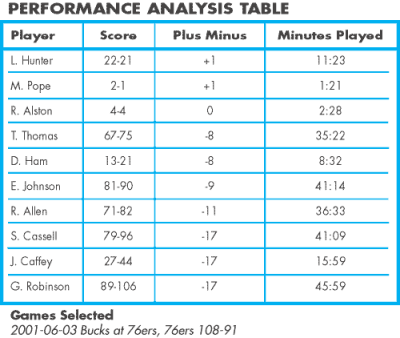
Image Source: coachad.com
The Core Concept: On-Court Differential
At its heart, basketball plus minus is about the on-court differential. This means we look at the difference between the points scored by a team when a specific player is on the floor and the points scored by the opposing team during that same period. If your team scores 20 points and the opponent scores 15 points while a player is playing, that player has a plus minus of +5 for that stretch of play. Conversely, if your team scores 15 points and the opponent scores 20, that player has a plus minus of -5.
This raw calculation provides a basic gauge of a player’s contribution to a team’s scoring advantage. It’s a starting point for deeper analysis, offering a quick snapshot of whether a player tends to make the team better or worse when they are involved in the game.
Simple Calculation: The Plus Minus Formula
The most basic plus minus formula is straightforward:
Player’s Plus Minus = (Team Points Scored While Player is On Court) – (Opponent Points Scored While Player is On Court)
Let’s break this down with a simple example:
Imagine a player, let’s call him Alex, plays 10 minutes in a game. During those 10 minutes:
- Alex’s team scores 25 points.
- The opposing team scores 22 points.
Using the plus minus formula, Alex’s plus minus for that game is:
25 (Team Points) – 22 (Opponent Points) = +3
If, in another game, Alex played 12 minutes and his team scored 20 points while the opponent scored 23 points, his plus minus for that game would be:
20 (Team Points) – 23 (Opponent Points) = -3
This simple calculation is fundamental to calculating plus minus. It’s what you’ll see reported as basic box score stats.
Beyond the Basic: Why Simple Plus Minus Falls Short
While the basic plus minus formula is easy to grasp, it has limitations. A player might have a great plus minus simply because they played a lot of minutes with the team’s best offensive players and against the opponent’s weaker lineups. This is where the concept of basketball analytics becomes crucial, as we need more sophisticated ways to measure a player’s true impact.
The raw on-court differential doesn’t account for:
- Teammates: Who else is on the court with the player? Are they elite scorers or defensive anchors?
- Opponent Strength: Is the player playing against starters or bench players? Are they facing the opponent’s best offensive or defensive units?
- Pace of Play: A faster game means more possessions, which can inflate or deflate raw point differentials.
Because of these factors, statistical plus minus often requires adjustments to provide a more accurate picture of individual player performance.
Navigating Advanced Metrics: Adjusted Plus Minus
To address the shortcomings of raw plus minus, advanced basketball analytics developed more sophisticated metrics. The most prominent among these is adjusted plus minus. This is where we start to delve deeper into calculating plus minus in a way that tries to isolate a player’s individual contribution.
What is Adjusted Plus Minus?
Adjusted plus minus (APM) is a statistical technique that uses regression analysis to estimate a player’s impact on the team’s point differential, controlling for the impact of their teammates and opponents. In essence, it attempts to answer the question: “What is this player’s contribution to the team’s point margin, regardless of who else is on the court with them or who the opponent is playing?”
The goal of APM is to remove the noise from the raw on-court differential and isolate the signal of individual player skill. It’s a more robust measure than simple plus minus because it tries to account for the context in which those points were scored or allowed.
How is Adjusted Plus Minus Calculated?
Calculating plus minus with APM involves complex statistical modeling. The general idea is to set up an equation that estimates each player’s contribution to the team’s point differential. The model analyzes every possession or segment of play and attributes a portion of the outcome to each player on the court.
Here’s a simplified conceptualization of the process:
- Data Collection: Gather play-by-play data for an entire season or multiple seasons. This includes who is on the court for each team, the score at the beginning and end of each possession or time segment, and who scored.
- Regression Analysis: A statistical model (often a linear regression) is used to determine the coefficients for each player. These coefficients represent their estimated impact on the point differential. The model tries to find the values for each player that best explain the observed point differentials across all games and all combinations of players.
- Isolation of Impact: The regression aims to isolate a player’s effect from the combined effect of their teammates and opponents. For instance, if a player consistently has a positive on-court differential when playing with a star teammate, the regression will try to attribute the portion of that advantage that belongs solely to the player being analyzed, separating it from the star player’s influence.
The complexity lies in the sheer volume of data and the statistical methods used. Different versions of APM exist, each with slightly different methodologies and data inputs. Some might use possessions as the unit of analysis, while others might use minutes or even individual plays.
The Value of APM
Adjusted plus minus aims to provide a more accurate measure of a player’s overall contribution to winning, beyond traditional box score stats like points, rebounds, and assists. It’s particularly useful for:
- Evaluating Role Players: Players who don’t score a lot but contribute positively to the team’s efficiency on both ends of the floor.
- Comparing Players Across Different Teams: Since it accounts for teammates and opponents, it can offer a fairer comparison between players who might play in very different team contexts.
- Assessing Defensive Impact: APM can capture a player’s defensive value, which is often difficult to quantify with traditional stats.
Other Statistical Plus Minus Variants
The world of basketball analytics is constantly evolving, and several other variations of plus minus have emerged, each with its own nuances in calculating plus minus.
1. Real Plus Minus (RPM)
Real Plus Minus (RPM) is an advanced metric developed by ESPN that aims to refine APM further. It attempts to isolate a player’s impact on both the offensive and defensive ends of the court, separately. RPM uses play-by-play data but also incorporates player tracking data (where available) and adjusts for the quality of teammates and opponents.
RPM is considered a more granular measure because it breaks down a player’s contribution into offensive RPM (ORPM) and defensive RPM (DRPM). This allows analysts to see if a player is a strong offensive contributor, a strong defensive contributor, or both.
2. Player Efficiency Rating (PER)
While not directly a “plus minus” stat, Player Efficiency Rating (PER) developed by John Hollinger is a per-minute statistic that attempts to boil down all of a player’s positive contributions to the game into one number. It uses a formula that accounts for positive stats (field goals, free throws, 3-pointers, assists, rebounds, steals, blocks) and negative stats (turnovers, missed field goals, missed free throws, personal fouls).
PER is adjusted for pace, so it’s a measure of player efficiency on a per-minute basis. While it doesn’t directly measure point differential, highly efficient players often correlate with positive plus minus impacts. However, PER has been criticized for not adequately capturing defensive contributions and for potentially overvaluing volume scoring.
3. On/Off Splits
On-off splits are a simpler, yet still informative, way to look at a player’s impact. They are essentially raw plus minus calculations broken down by the percentage of game time a player is on the court.
- On-Court Differential: The point differential when the player is playing.
- Off-Court Differential: The point differential when the player is NOT playing.
These splits provide a quick look at whether the team performs better with a particular player on the floor compared to when they are on the bench. However, like basic plus minus, they are heavily influenced by who is playing alongside the player and against whom.
Table: Example of On/Off Splits
| Player | Minutes Played | Team Point Differential (On Court) | Team Point Differential (Off Court) | Net Rating (On Court) | Net Rating (Off Court) |
|---|---|---|---|---|---|
| Alex | 32 | +8 | -5 | +2.5 | -1.6 |
| Ben | 28 | -3 | +10 | -1.1 | +3.5 |
Note: Net Rating is often calculated as the difference between points scored per 100 possessions and points allowed per 100 possessions. A positive net rating indicates a positive differential.
As you can see from the table, Alex’s team performs significantly better when he is on the court (+8 differential) compared to when he is off the court (-5 differential). Ben, on the other hand, seems to have a negative impact when he’s playing, with the team performing much better when he’s on the bench.
Interpreting Plus Minus: What the Numbers Mean
Calculating plus minus is one thing; interpreting it correctly is another. Here’s how to make sense of the numbers:
Positive vs. Negative Plus Minus
- Positive Plus Minus: Indicates that the team scored more points than the opponent while the player was on the court. This generally suggests the player had a positive impact on the team’s performance.
- Negative Plus Minus: Indicates that the team was outscored by the opponent while the player was on the court. This generally suggests the player had a negative impact.
What a High Plus Minus Suggests
A consistently high plus minus (especially in advanced metrics like APM or RPM) can indicate a player who:
- Excels on Offense: Creates scoring opportunities for themselves and teammates, efficient shooting, good decision-making.
- Contributes Positively on Defense: Disrupts opponent plays, forces turnovers, good positioning, effective communication.
- Is a Floor General: Controls the tempo, makes smart plays, elevates the performance of those around them.
- Plays with Other Strong Players: This is where context is key. A player on a winning team with many stars will likely have a better plus minus than a player on a struggling team, even if their individual skill level is comparable.
What a Low Plus Minus Suggests
A consistently low or negative plus minus might suggest a player who:
- Struggles on Offense: Inefficient shooting, poor decision-making, turnovers.
- Is a Defensive Liability: Lacks defensive intensity, poor positioning, fouls too much.
- Is on a Poor Team: This is a major factor. Even good players on bad teams can have negative plus minus figures.
- Plays with Weaker Teammates: Similar to the point above, playing with less talented players can drag down a player’s plus minus.
Context is King: Considering the Whole Picture
It’s crucial to remember that plus minus stats, even adjusted ones, are not perfect. They are just one piece of the puzzle when evaluating a player.
- Sample Size: A player’s plus minus can fluctuate wildly over short periods or with a small number of minutes played. Always consider a large enough sample size (e.g., a full season) for more reliable data.
- Team Strength: As repeatedly mentioned, playing on a winning team generally leads to higher plus minus figures than playing on a losing team.
- Lineup Combinations: The specific players on the court with a player significantly impact their plus minus.
- Pace of Play: Teams that play at a faster pace will have more possessions, potentially leading to larger point differentials.
How to Use Plus Minus Effectively
- Compare Players on the Same Team: This is often the most straightforward use of raw plus minus or on-off splits. It helps identify which players are contributing most to that specific team’s success.
- Look at Trends Over Time: Does a player’s plus minus improve or decline over a season or multiple seasons?
- Combine with Other Metrics: Don’t rely solely on plus minus. Use it in conjunction with traditional box score stats, advanced efficiency metrics (like True Shooting Percentage or Usage Rate), and qualitative observation.
- Focus on Adjusted Metrics for Player Comparisons: For comparing players across different teams or assessing individual impact independent of teammates, APM and RPM are more valuable than raw plus minus.
The Evolution of Plus Minus: From Raw to Refined
The journey of calculating plus minus in basketball reflects the broader evolution of basketball analytics. What started as a simple way to measure point differential when a player was on the court has transformed into a complex suite of statistical tools designed to provide deeper insights into player value.
- Early Days (Raw Plus Minus): The initial understanding of plus minus was very basic, focusing on the raw point differential. This was a starting point, providing a basic directional indication of impact.
- The Rise of On-Off Splits: These offered a slightly more nuanced view by comparing performance when a player was on vs. off the court, highlighting the team’s performance shift.
- The Statistical Revolution (APM): The advent of advanced statistical modeling allowed for adjusted plus minus, attempting to isolate individual player contributions and control for confounding factors. This marked a significant leap in basketball analytics.
- Refinement and Specialization (RPM, etc.): Further advancements led to metrics like Real Plus Minus (RPM), which broke down impact into offensive and defensive components, offering even greater detail.
Each step in this evolution has aimed to create a more precise and reliable measure of a player’s impact, moving beyond simple observation to data-driven analysis.
Frequently Asked Questions (FAQ)
What is a good plus minus in basketball?
“Good” is relative and depends on the context. In raw plus minus, a positive number is generally better than a negative one. For advanced metrics like APM or RPM, a value significantly above the league average (which is often close to zero) is considered good. For example, an RPM of +3 or higher might be considered excellent. Always compare a player’s plus minus to their teammates and the league average.
Can I calculate plus minus for myself?
Yes, you can calculate raw plus minus for any game if you have access to the play-by-play data or can track the score yourself. However, calculating advanced metrics like Adjusted Plus Minus (APM) requires sophisticated statistical software and extensive play-by-play data, making it impractical for individuals.
Who is the best player based on plus minus?
This is a subjective question, and relying solely on plus minus to determine the “best” player is not recommended. While players with consistently high plus minus figures (especially in advanced metrics) are often among the league’s elite, many factors contribute to a player’s overall value. You should consider their contributions across various statistical categories, their leadership, and their impact on team success.
How does pace affect plus minus?
Pace significantly affects raw plus minus because it dictates the number of possessions in a game. A team playing at a faster pace will have more scoring opportunities (both for and against), which can lead to larger point differentials and thus potentially larger plus minus numbers, both positive and negative. Advanced metrics often adjust for pace to provide a more comparable measure of efficiency.
What is the difference between plus minus and net rating?
While related, they are not exactly the same. Net rating is typically calculated as the difference between a team’s offensive rating (points scored per 100 possessions) and defensive rating (points allowed per 100 possessions). It’s a team-level metric. Plus minus is a player-level metric that tracks the point differential while a player is on the court. A player’s on-court differential (their raw plus minus) can be used to calculate their net rating while they are playing.
Is plus minus a good measure of defense?
Plus minus, especially advanced versions like RPM, can be a very good measure of defensive impact, as it captures how well a team performs defensively when a player is on the court. However, raw plus minus can be easily influenced by offensive performance or the quality of teammates. Advanced metrics attempt to isolate defensive contributions more effectively.
How is player efficiency related to plus minus?
Player efficiency metrics (like PER) focus on a player’s per-possession or per-minute contributions to scoring and other positive plays, while accounting for negative plays. Highly efficient players often generate more scoring opportunities for their team and are less prone to turnovers or wasted possessions. This efficiency often translates into a positive on-court differential and, consequently, a higher plus minus. However, efficiency doesn’t always capture defensive impact or leadership qualities that contribute to a player’s plus minus.