
Yes, you can push off in basketball, but only under very specific circumstances that don’t involve illegal contact with an opponent. Pushing off is often misunderstood, and it’s a key area where players can commit offensive fouls if they aren’t careful with their movements and intentions. This article will break down the basketball rules surrounding pushing off, explaining what is legal, what constitutes a foul, and how these actions impact the game.
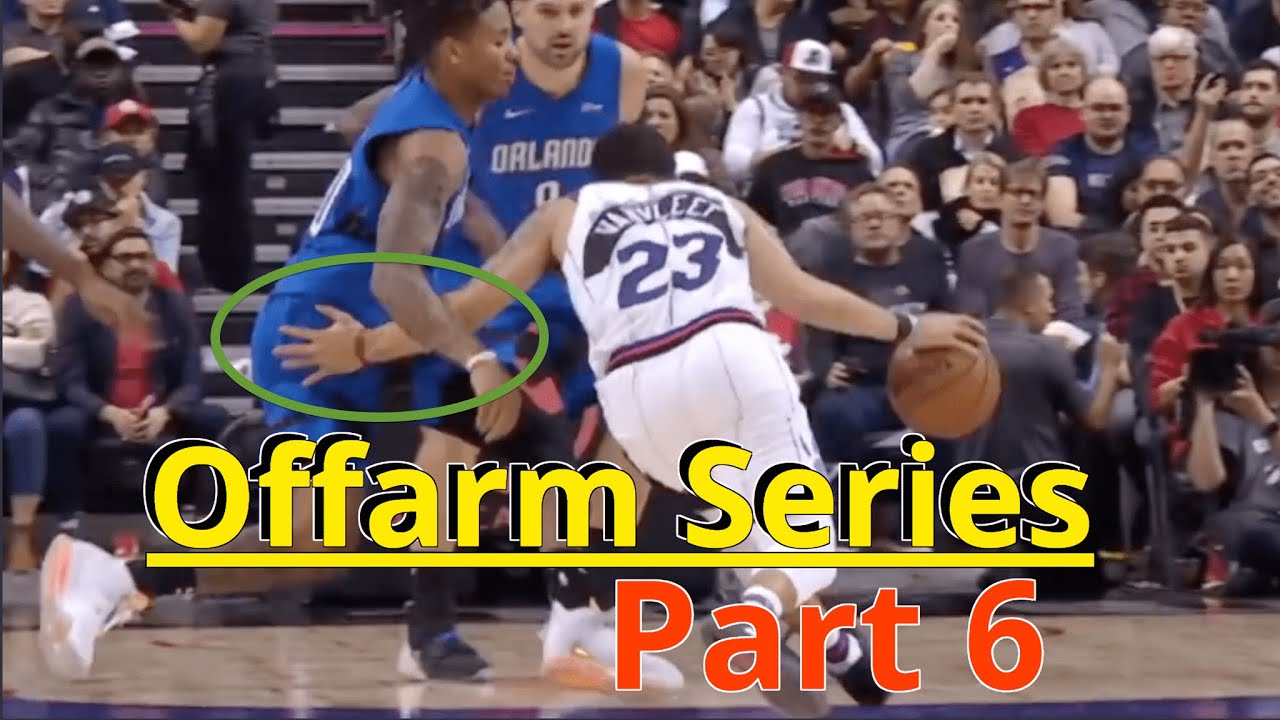
Image Source: i.ytimg.com
Deciphering the “Push Off”
In basketball, a “push off” generally refers to a player using their hand or arm to create space between themselves and a defender. This can happen in various situations: when a player is trying to get open for a pass, when they are backing down a defender in the post, or when they are driving to the basket. The crucial distinction lies in how that space is created.
Legal Methods of Creating Space
Players are allowed to use their bodies legally to maintain position or create space without drawing an offensive foul. This involves:
- Use of the legal “pivot foot”: When a player has established a pivot foot, they can move their other foot freely to create space. They can also extend their arm to protect the ball or maintain balance, as long as it’s not a forceful push against a defender.
- Spin moves: A player can spin their body to evade a defender. This often involves a slight extension of the arms or legs, but the primary action is the player’s own rotation, not a forceful shove against the defender’s body.
- “Jump stops”: Executing a jump stop allows a player to come to a controlled halt on both feet simultaneously. From this position, they can use their body and legal arm extension to shield the ball or pivot.
- Dribbling away from pressure: While dribbling, players can use their body to shield the ball. A slight extension of an arm to keep a defender at bay is generally legal if it’s a passive extension and not a forceful push.
Illegal Contact: When Pushing Becomes a Foul
The line between legal space creation and an offensive foul is often defined by the nature of the contact and the intent behind it. An illegal push-off occurs when a player uses excessive force to displace a defender.
Key Indicators of an Offensive Foul Push-Off:
- Forceful Extension: The player extends their arm or hand with significant force into the defender’s chest, shoulder, or arm to push them backward. This is not about protecting the ball; it’s about creating separation through force.
- Displacing the Defender: If the push clearly causes the defender to move significantly out of their position or lose their balance, it’s likely an offensive foul.
- Arm Bar: Using the arm to hook or hold a defender in place while moving in another direction is also a push-off violation.
- Non-Basketball Play: The action is not a natural part of trying to shoot, pass, or dribble. It’s solely for creating space.
The Role of the “Gather Step” and Traveling Violation
The gather step is a critical element in understanding how players can move with the ball. It’s the step or steps a player takes immediately after picking up their dribble. In most rule sets (NBA, NCAA, FIBA), a player is allowed one or two steps after gathering the ball before they must shoot, pass, or come to a stop.
Push Off vs. Traveling
It’s important to differentiate between pushing off and committing a traveling violation.
- Traveling: This occurs when a player takes too many steps after gathering the ball, or lifts their pivot foot illegally before releasing the ball.
- Push Off (Offensive Foul): This involves illegal contact with a defender.
Sometimes, a player might attempt a push-off motion and, in doing so, take an extra step or move their pivot foot illegally. This could result in both a traveling violation and an offensive foul, depending on what the referee sees first or deems more egregious. The key is that a push-off is about the contact, while traveling is about illegal footwork.
Post-Up Moves and Creating Advantage
In the post, creating space is paramount. Players often back down defenders, using their strength and body position.
Legal Post-Up Maneuvers:
- Lowering the Shoulder: A player can lower their shoulder to shield the ball and lean into the defender, but this must be controlled contact, not a forceful push.
- Using the Pivot Foot: As mentioned, a strong pivot foot is essential. A player can pivot away from the defender, using their body as a shield.
- “Seal”: A player can “seal” a defender by using their body legally to prevent the defender from reaching the ball or driving past them. This involves using one’s own body to occupy space.
Illegal Post-Up Maneuvers (Offensive Fouls):
- Forearm Shiver: A hard, extended forearm shove into a defender’s chest to create space.
- Hooking: Using an arm to hook the defender’s arm or body to hold them.
- Forceful Back-Down: Driving the defender backward with significant force through repeated pushes with the arms or shoulders.
Driving to the Basket and Drawing Fouls
When driving, players often have defenders in close proximity. Creating space to shoot or pass is essential, but illegal contact can lead to offensive fouls.
Legal Drives:
- Protecting the Ball: Players can use their off-arm to protect the ball from a defender trying to steal it. This is usually a more passive extension.
- Body Control: Using one’s own body to absorb contact and maintain balance.
- “Pump Fake”: A pump fake can draw the defender into the air, allowing the offensive player to drive past them. This is a skill, not a push.
Illegal Drives (Offensive Fouls):
- “Step Through” Foul: Extending the leg into the defender to prevent them from blocking the shot or driving.
- Elbow Out: A forceful extension of the elbow into the defender to create space or clear them out.
- Head Down Charge: Driving with the head down, leading with the forehead into the defender’s chest without attempting to avoid contact. This is often a defensive charge for the defender but can be an offensive foul for the attacker if the defender has established position.
The Referee’s Perspective: Interpreting Contact
Referees are trained to distinguish between legal basketball plays and offensive fouls. They look at several factors:
- Point of Contact: Where is the contact occurring? Contact with the chest or shoulders is more likely to be legal than contact with the face or throat.
- Force of Contact: How much force is being used? Is it incidental contact, or is it a deliberate, forceful shove?
- Player’s Momentum: The momentum of both the offensive and defensive players is considered. If a defender moves into an offensive player who has already established position, it might be a defensive charge. However, if the offensive player initiates contact with excessive force to create space, it’s an offensive foul.
- Intent: While difficult to judge definitively, referees often infer intent based on the action. Is the player trying to play basketball, or are they deliberately trying to push the defender out of the way?
- “Basketball Moves”: Referees generally allow players to use their bodies in ways that are considered standard basketball rules and techniques, like establishing a pivot foot or shielding the ball.
Case Studies: Scenarios and Rule Application
Let’s examine some common scenarios to clarify the rules:
Scenario 1: Post-Up
A player receives the ball in the post with a defender on their back. The offensive player pivots, and as they turn, they extend their arm to create a small amount of space to shoot over the defender.
- Likely Call: If the extension is controlled and the defender is not significantly moved or their momentum is not directly disrupted by a forceful push, it’s likely a legal play.
- Potential Foul: If the offensive player extends their arm with significant force, shoves the defender backward, or uses their forearm to push the defender away, it would be an offensive foul.
Scenario 2: Driving to the Basket
A player drives to the basket. A defender stands their ground, trying to draw a charge. The offensive player attempts to “gather” the ball and takes a step, but their off-arm makes contact with the defender’s chest, displacing them.
- Likely Call: If the contact is a forceful push with the off-arm, it’s an offensive foul.
- Potential Charge: If the offensive player’s momentum carries them into a defender who has established a legal defensive position and has their feet set, and the offensive player initiates contact with their body (not an arm push), it could be a defensive charge. However, if the arm push is the primary action, the offensive foul is more likely.
Scenario 3: Creating Space for a Shot After a Dribble
A player stops their dribbling, establishes a pivot foot, and then takes a step back while extending their arm to create space for a jump shot.
- Likely Call: This is a very common area for an offensive foul. The backward step while extending the arm to create separation from the defender is often deemed a push. The player has already stopped their dribbling, and now they are using their arm to push the defender away to get a cleaner shot. This is usually illegal.
- Legal Alternative: The player could pivot, use their body legally to shield the defender, and shoot. Or, they could use a jump stop followed by a legal pivot.
The Impact of Momentum
Momentum plays a role in foul calls. A player driving with considerable speed might naturally make contact with a stationary defender. Referees assess whether the offensive player is using their momentum to initiate contact or whether they are reacting to the defender’s positioning. If an offensive player is trying to push off and create space, and the defender has established a legal defensive stance, the offensive player’s forceful action to overcome that stance is typically an offensive foul.
Tables for Clarity
Here’s a simple table outlining common push-off actions and their likely calls:
| Action | Description | Likely Call |
|---|---|---|
| Legal: Shielding the ball with off-arm | Player extends off-arm to protect the ball from a defender trying to steal it. Contact is generally passive or incidental. | Legal (unless excessive force) |
| Illegal: Forceful arm extension to push defender | Player uses arm/hand to shove defender backward to create space. | Offensive Foul |
| Legal: Pivot and step away from defender | Player uses established pivot foot to turn and move away from the defender, using their body to shield. | Legal |
| Illegal: Arm bar or hook defender | Player uses arm to hook or hold the defender while moving. | Offensive Foul |
| Legal: Jump stop and pivot | Player lands on both feet simultaneously and pivots legally, using body to shield. | Legal |
| Illegal: Pushing off after gather step | Player has gathered the ball and forcefully extends arm to push defender away to shoot or drive. | Offensive Foul |
| Legal: Using body to seal defender in the post | Player positions their body to prevent the defender from getting to a spot, without excessive arm use. | Legal |
| Illegal: Forceful shoulder or forearm push in post | Player uses shoulder or forearm with significant force to push defender backward. | Offensive Foul |
Understanding the Nuances: The “Basketball Move” Defense
One common defense for an alleged push-off is the “it’s a basketball move” defense. Players are allowed to use their bodies and arms in ways that are customary in the game. However, this allowance has limits.
- What is a “basketball move”? This typically refers to actions like:
- Protecting the ball while dribbling.
- Establishing a pivot foot.
- Using one’s body to screen or seal a defender.
- Executing a gather step and taking legal steps.
- When does it become illegal? When these “moves” involve excessive force, extended arms that act as levers to push defenders, or actions clearly intended to displace a defender rather than to advance the play.
The key is whether the action is a normal part of playing basketball or an exaggerated or forceful action to gain an unfair advantage through illegal contact.
The Importance of Proper Technique
For offensive players, mastering proper technique is crucial to avoid offensive fouls. This means:
- Strong Core: A strong core helps players maintain balance and control their bodies, reducing the need for forceful pushes.
- Proper Footwork: Mastering the pivot foot, jump stop, and legal gather step allows players to create space without fouling.
- Ball Protection: Learning to shield the ball effectively with the body and off-arm without excessive extension is key.
- Reading the Defender: Anticipating a defender’s move and reacting with legal adjustments rather than brute force.
Frequently Asked Questions (FAQ)
Q1: Can I push a defender with my arm when I’m dribbling?
A1: You can use your off-arm to protect the ball while dribbling, but it must be a controlled extension. If you forcefully push the defender away with your arm, it’s an offensive foul.
Q2: What’s the difference between a push-off and a screen?
A2: A screen involves using your body to impede a defender’s movement, but you must be stationary or moving parallel to the defender. A push-off involves using your arm or body forcefully to displace a defender who is actively guarding you.
Q3: If I stop my dribble and a defender runs into my extended arm, is it a foul on me?
A3: If your arm is extended with force to create space, and the defender runs into it, it’s likely an offensive foul on you. If your arm is in a natural position to protect the ball or maintain balance, and the defender initiates contact with their head or shoulder, it might be called a defensive charge.
Q4: What happens if I commit a push-off foul?
A4: The play stops. The opposing team gets possession of the ball. If the foul occurs before the bonus, it’s just a change of possession. If it’s in the bonus, the fouled player might get free throws.
Q5: Can I push off a defender to get a rebound?
A5: No. Fighting for rebounds involves boxing out, which is legal positioning. Using your arms or body to forcefully push a player away from a rebounding position is an illegal push-off and would result in an offensive foul.
Q6: Does the gather step allow me to push off?
A6: The gather step is about taking legal steps after picking up your dribble. It does not grant permission to push off a defender with excessive force. Your footwork after the gather must be legal, and your body contact must be legal.
Q7: How do referees decide if it’s a push-off or just incidental contact?
A7: Referees look at the force, direction, and intent of the contact. Incidental contact is often a minor bump that doesn’t significantly affect the defender’s ability to play. A push-off involves a deliberate, forceful action to create separation or impede the defender. The momentum of both players is also considered.
Q8: Can I push off a defender if they are fouling me first?
A8: Generally, no. If a defender is fouling you, the proper response is to try and sell the call or play through it without committing your own foul. Responding to a foul with another illegal act like a push-off will likely result in an offensive foul called against you.
In conclusion, while creating space is a vital skill in basketball, it must be done within the framework of the basketball rules. Understanding what constitutes an offensive foul, the nuances of traveling violation, the gather step, and the importance of legal dribbling and pivot foot usage will help players stay on the court and avoid costly penalties. Master these principles, and you’ll be able to play effectively without drawing the dreaded whistle for an illegal push-off.