
What is the correct height for a basketball hoop? The correct height for a standard basketball hoop is 10 feet (3.05 meters) from the playing surface to the rim.
Measuring a basketball hoop correctly is crucial for players of all ages and skill levels. Whether you’re setting up a new hoop in your driveway, ensuring your local park has compliant equipment, or simply curious about the game’s specifications, knowing how to measure accurately makes a difference. This guide will walk you through everything you need to know to properly measure a basketball hoop, from rim height to backboard dimensions, covering standard, professional, and youth setups.
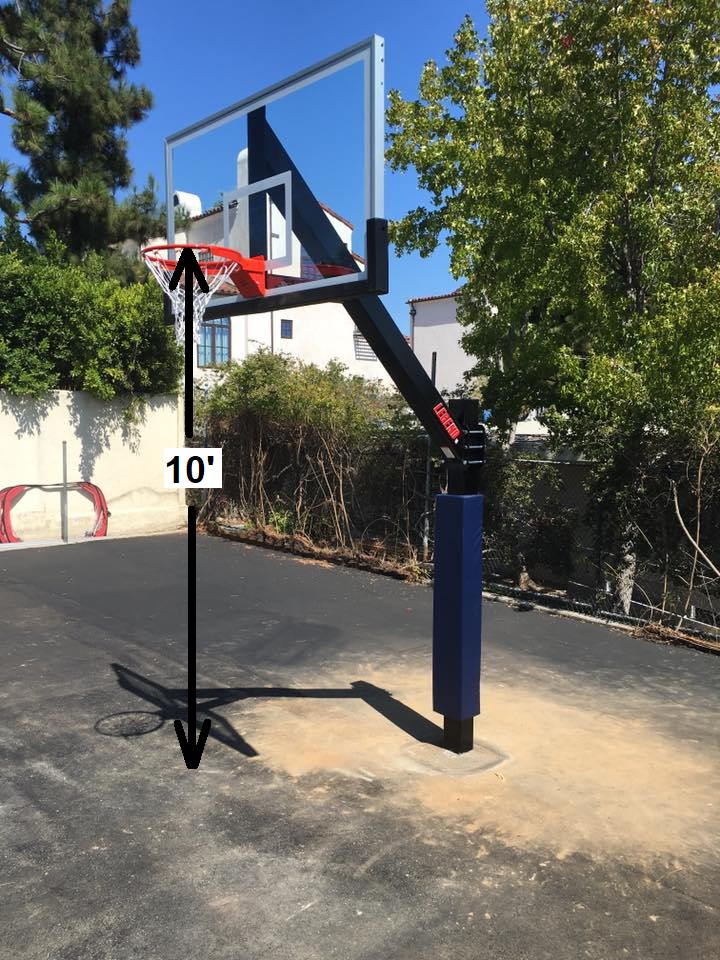
Image Source: www.firstteaminc.com
The Foundation: Rim Height
The height of the basketball rim is the most fundamental measurement and the one most players think of first. This measurement dictates the challenge and feel of the game.
Regulation Basketball Hoop Height
For a regulation basketball hoop, the basketball hoop height is consistently set at 10 feet (3.05 meters). This is the standard used in professional leagues, collegiate play, and most organized adult basketball. This height ensures a consistent challenge, allowing for the display of skill in shooting, rebounding, and shot-blocking.
NBA Hoop Height vs. FIBA Hoop Height
The NBA hoop height and the FIBA hoop height are identical: 10 feet (3.05 meters). Both governing bodies for professional basketball adhere to this same standard. This uniformity ensures that players transitioning between leagues or international competitions face the same fundamental challenge.
Youth Basketball Hoop Height
Youth basketball hoop height varies significantly based on age and development. While younger children might start with hoops set much lower, typically around 6 feet (1.83 meters) or even less, as they grow and develop their skills, the rim height is gradually increased. This progressive approach allows younger players to build confidence and learn proper shooting mechanics without the frustration of consistently missing due to excessive height.
- Ages 5-7: Often play with hoops set at 5-6 feet (1.5-1.8 meters).
- Ages 8-10: May use hoops set at 7-8 feet (2.1-2.4 meters).
- Ages 11-12 and up: Typically begin to transition to the 9-foot (2.74 meters) and then the full 10-foot (3.05 meters) regulation basketball hoop height.
It’s important to note that many portable and adjustable basketball hoop height systems are designed to accommodate this progression, making them excellent choices for families or community centers.
Measuring the Rim: Diameter and Level
Beyond height, the rim itself has specific dimensions and needs to be perfectly level for fair play.
Measuring Basketball Rim Diameter
When measuring basketball rim diameter, the standard is 18 inches (45.7 cm). This measurement is taken from the inside edge of the rim. This consistent diameter ensures that shots that hit the rim have a predictable outcome, regardless of the hoop’s location or manufacturer.
Ensuring the Rim is Level
To ensure proper proper basketball hoop setup, the rim must be perfectly level. You can check this using a spirit level.
- Place the level on top of the rim.
- Check across the diameter.
- Look for the bubble in the center. If the bubble is not centered, the rim is not level.
- Adjust the pole or mounting system to correct any tilt. Even a slight tilt can significantly affect how the ball bounces off the rim and can penalize players with perfectly executed shots.
The Backboard: Size and Placement
The backboard plays a vital role in the game, influencing shots that bounce off it and providing a surface for bank shots.
Hoop Backboard Size
The hoop backboard size for professional and collegiate play is standardized. The most common dimensions for a regulation backboard are:
- Width: 72 inches (183 cm)
- Height: 42 inches (107 cm)
However, there are variations, especially for residential or recreational setups. You might find backboards that are:
- 60 inches (152 cm) wide: Common for many in-ground and portable systems.
- 54 inches (137 cm) wide: Often found on mid-range portable units.
- 48 inches (122 cm) wide: Typical for smaller, more basic residential hoops.
While the width is the primary dimension that affects play, the height of the backboard also contributes to the overall look and feel of the hoop. The distance from the bottom of the backboard to the playing surface is also important for proper basketball hoop setup. For a 10-foot rim, the bottom of the backboard is typically 6 feet 6 inches (1.98 meters) from the ground, though this can vary slightly with different mounting mechanisms.
Backboard Material and Thickness
The material of the backboard can also influence play.
- Tempered Glass: Offers the best rebound characteristics, similar to professional courts, and is durable.
- Acrylic: A good alternative to glass, offering decent rebound and better shatter resistance.
- Polycarbonate: Lighter and more impact-resistant than acrylic, but rebound may not be as true.
- Wood/Fiberglass: Often found on older or lower-end models, offering less consistent rebound.
The thickness of the backboard also matters, with thicker backboards generally providing more stability and a better sound when the ball hits them.
Measuring the Pole and Support Structure
The pole and support system are what hold the hoop at the correct height and ensure stability.
Pole Diameter and Gauge
For in-ground systems, the diameter and gauge (thickness) of the steel pole are critical for stability. A thicker gauge and larger diameter pole will resist bending and vibration better, especially during powerful dunks or hard shots.
- Common Pole Diameters: 3.5 inches (8.9 cm), 4 inches (10.2 cm), 4.5 inches (11.4 cm), 5 inches (12.7 cm).
- Gauge: Thicker steel (lower gauge number) is stronger.
Support Arms and Extension
The support arms that connect the backboard to the pole determine the extension, which is the distance from the face of the pole to the front of the backboard.
- Regulation Extension: For a 72-inch backboard, the extension is typically 4 feet (1.2 meters). This means the backboard extends 4 feet out from the pole. This spacing is crucial to prevent players from running into the pole during play.
- Residential Systems: Extensions can vary from 18 inches (46 cm) to 4 feet (1.2 meters) or more, depending on the hoop’s size and intended use.
Anchor Systems
In-ground hoops rely on anchor systems (often concrete footing) for stability. The depth and diameter of the concrete footing are essential to prevent the pole from shifting or leaning. Portable hoops use a base filled with sand or water for weight and stability.
Tools for Accurate Measurement
Having the right tools makes measuring a basketball hoop straightforward and accurate.
Essential Measuring Tools
- Tape Measure: A long, retractable tape measure (at least 25 feet or 7.6 meters) is essential.
- Spirit Level: A spirit level or bubble level is needed to ensure the rim is perfectly horizontal.
- Ladder or Step Stool: For safely reaching the rim and backboard.
- Calculator (Optional): For converting measurements or calculating angles if needed.
How to Measure Hoop Height Accurately
- Identify the Playing Surface: This is the ground where players stand and shoot from. For most outdoor courts, this is asphalt or concrete.
- Position the Tape Measure: Place the end of your tape measure directly on the playing surface, perpendicular to the base of the pole or the point directly beneath the hoop.
- Extend the Tape Measure Upwards: Extend the tape measure vertically along the pole towards the rim.
- Read the Measurement at the Rim: Take the measurement from the top of the rim to the playing surface. For regulation basketball hoop height, this should be 10 feet (3.05 meters).
- Use a Level: For the most precise height measurement, you can extend the tape measure horizontally from the rim to a plumb bob or a string dropped from the rim’s exact center. Then, measure the vertical distance from that point to the ground. This accounts for any slight angle in the pole.
Measuring Backboard Dimensions
- Backboard Width: Measure from one side of the backboard to the other.
- Backboard Height: Measure from the top edge of the backboard to the bottom edge.
- Backboard Extension: Measure from the face of the pole (the side closest to the court) to the front surface of the backboard.
- Rim to Backboard Distance: Measure from the front of the backboard to the face of the rim. This is typically about 6 inches (15 cm) for most hoops.
Different Hoop Types and Their Measurements
The way a basketball hoop is mounted significantly impacts how it’s measured and its potential for adjustability.
In-Ground Basketball Hoops
These are the most permanent and stable types of hoops.
- Installation: The pole is typically set in concrete.
- Height Measurement: Measured from the ground to the top of the rim.
- Adjustability: Many in-ground systems feature crank mechanisms or pin systems to adjust the adjustable basketball hoop height. When adjusting, always ensure you are adhering to the specified regulation basketball hoop height for competitive play.
Portable Basketball Hoops
These hoops have a base that can be filled with water or sand for stability and often have wheels for repositioning.
- Installation: Simply fill the base and set up the hoop.
- Height Measurement: Measured from the ground to the top of the rim.
- Adjustability: These are designed with adjustable height features, making them excellent for families with growing children or for casual play. It’s essential to check that the adjustable basketball hoop height mechanism is secure and set at the desired level.
Wall-Mounted Basketball Hoops
These are attached directly to a wall, typically a garage or building.
- Installation: Securely bolted to a sturdy wall.
- Height Measurement: Measured from the ground to the top of the rim.
- Adjustability: Less common for significant height adjustments, but some systems may offer limited range.
Over-the-Door Basketball Hoops
These are small, recreational hoops designed for indoor play.
- Installation: Hang over a door.
- Height: Not standardized, as they are for recreational purposes only. The height will depend on the door and how the hoop is hung.
- Rim Diameter: Usually much smaller than regulation.
Why Proper Measurement Matters
Accurate measurement isn’t just about following rules; it affects the game’s integrity and player development.
Fair Competition
Consistent and correct measurements ensure that games are played under fair conditions. Whether it’s an informal pickup game or a formal tournament, everyone playing by the same rules and equipment standards is fundamental.
Skill Development
Playing at the correct basketball hoop height for a player’s age and skill level is crucial for developing proper shooting form, vertical leap, and overall game awareness. Too high, and young players may develop bad habits trying to force shots. Too low, and they may not develop the necessary strength and technique.
Safety
Ensuring a stable and correctly installed hoop, with adequate clearance around the playing area, is vital for player safety. A wobbly pole or a rim too close to the backboard can lead to accidents.
Troubleshooting Common Measurement Issues
Sometimes, hoops aren’t set up perfectly. Here’s how to address common problems.
Rim Not Level
- Problem: The rim appears tilted to one side.
- Solution: Use a spirit level. Loosen the bolts or adjustment screws on the support arm and gently adjust until the rim is level. Re-tighten securely.
Hoop Height Inconsistent
- Problem: The measured height varies depending on where you measure on the rim.
- Solution: This usually means the rim is not level or the pole is not perfectly vertical. Address the level issue first. If the pole is leaning, it may need to be reset or stabilized.
Incorrect Backboard Extension
- Problem: The backboard is too close to or too far from the pole, interfering with play.
- Solution: Check the mounting bracket and support arm connections. Ensure all bolts are tightened correctly and that the extension matches the manufacturer’s specifications. For safety and regulation, the backboard should not be so close that players can touch the pole while shooting.
Frequently Asked Questions (FAQ)
Q1: What is the standard basketball hoop size for a driveway?
A1: For driveways, most people opt for systems that offer adjustability. The adjustable basketball hoop height feature is key, allowing the hoop to be set at regulation basketball hoop height (10 feet) for older players and lowered for younger ones. Backboard sizes commonly range from 54 to 72 inches wide.
Q2: Can I use a smaller backboard for my home court?
A2: Yes, you can. While standard basketball hoop dimensions for professional play include a 72-inch backboard, smaller backboards (like 54 or 48 inches) are perfectly acceptable and common for residential use. The most critical measurement remains the basketball hoop height.
Q3: Who sets the rules for basketball hoop dimensions?
A3: Governing bodies like the NBA (National Basketball Association), FIBA (International Basketball Federation), and NCAA (National Collegiate Athletic Association) set the official rules for professional and collegiate play, including NBA hoop height and FIBA hoop height. For youth sports, organizations like USA Basketball or specific leagues often establish guidelines for youth basketball hoop height.
Q4: How do I adjust the height on my portable hoop?
A4: Most portable hoops use a crank mechanism or a pin-and-hole system. Refer to your hoop’s user manual for specific instructions on how to operate the adjustable basketball hoop height feature safely.
Q5: Is the rim diameter the same for all basketballs?
A5: The measuring basketball rim diameter is consistently 18 inches for all official basketballs, regardless of whether it’s an NBA, FIBA, or recreational hoop. This ensures a fair playing field.
By following this comprehensive guide, you can confidently measure any basketball hoop and ensure it meets the necessary standards for fair play, skill development, and enjoyment. Whether you’re a seasoned player or just starting, knowing these measurements will enhance your appreciation for the game.