
What is the primary function of a basketball scoreboard? The primary function of a basketball scoreboard is to display crucial game information, including the score, time remaining, and possession, for players, officials, and spectators. Can you operate a scoreboard without prior experience? Yes, with a clear guide and practice, individuals with no prior experience can learn to operate a basketball scoreboard effectively. Who is responsible for operating the scoreboard? Typically, a designated scorekeeper or a volunteer is responsible for operating the scoreboard, ensuring accurate and timely updates of game information.
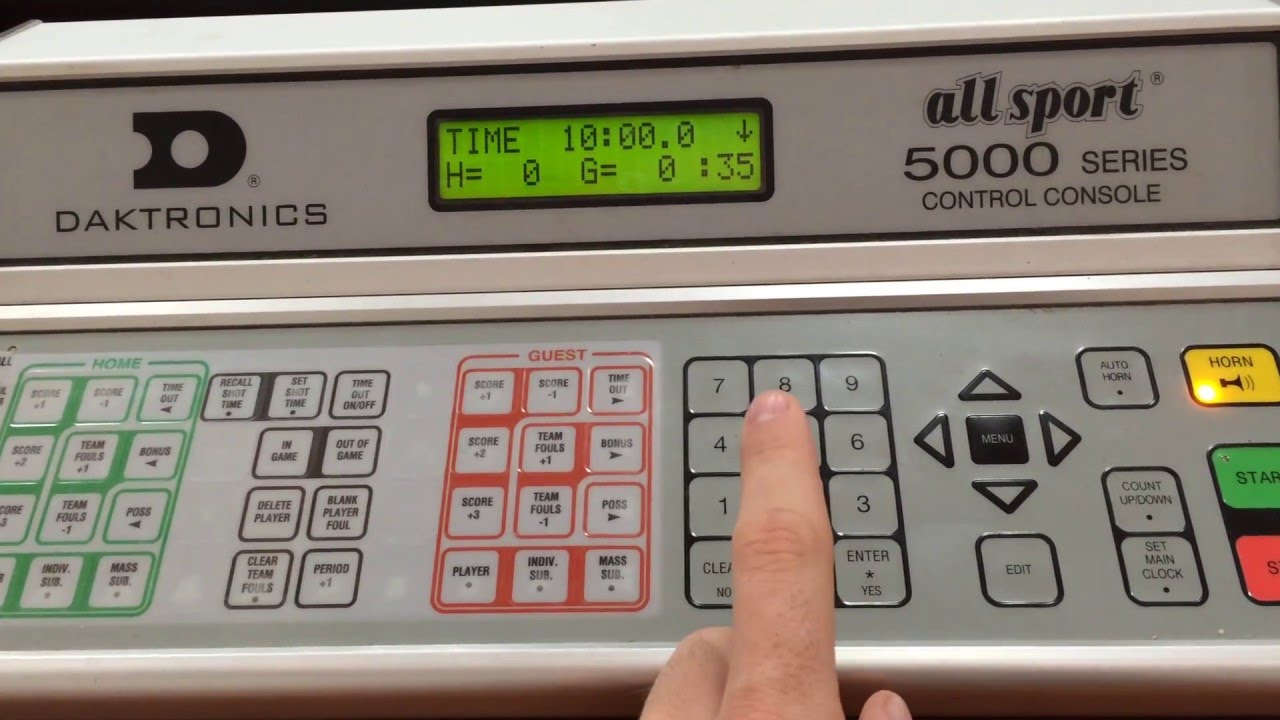
Image Source: i.ytimg.com
Mastering Basketball Scorekeeping: A Comprehensive Approach
Working a basketball scoreboard is more than just pushing buttons; it’s about facilitating the smooth flow of the game. Accurate basketball scorekeeping is vital for ensuring fair play and providing clear information to everyone involved. Whether you’re a seasoned official, a dedicated volunteer, or a curious fan, grasping the intricacies of basketball scoreboard operation can significantly enhance your appreciation and involvement in the sport. This guide will break down the essential elements of how to manage a basketball game from the scorekeeper’s table, covering everything from basic scoring to understanding basketball timer rules and the nuances of a basketball scoring system.
Deciphering the Basketball Scoreboard: Core Components and Their Purpose
A modern basketball scoreboard is a sophisticated piece of equipment, but its core functions remain consistent. Fathoming these functions is the first step to effective operation.
Key Scoreboard Functions Basketball Must Display:
- Team Scores: This is the most obvious function, showing the current point total for each team.
- Game Clock: This displays the time remaining in the current period and the overall game.
- Period Indicator: Shows which quarter or half of the game is currently being played.
- Possession Arrow/Indicator: Visually signifies which team has the right to inbound the ball.
- Fouls (Team and Player): Displays the number of team fouls and often individual player fouls.
- Timeouts Remaining: Indicates how many timeouts each team has left.
The Art of Basketball Scorekeeping: Step-by-Step Guidance
Basketball scorekeeping basics are built on precision and attentiveness. To effectively work the scoreboard, you need a systematic approach.
Setting Up for Success: Pre-Game Preparations
Before the first whistle blows, proper preparation is key to successful basketball game management.
- Familiarize Yourself with the Scoreboard: Spend time with the specific scoreboard model you’ll be using. Most have a control panel with clearly labeled buttons for each function.
- Understand the Game Rules: A solid grasp of basketball timer rules and general game rules is essential. This includes knowing how long quarters are, the duration of timeouts, and how the shot clock works (if your scoreboard also displays it).
- Confirm Game Information: Get the team names, player numbers, and any special game instructions from the officials or league administrators.
- Prepare Your Score Sheet: Ensure you have a clean basketball score sheet and reliable pens or pencils. The score sheet is your official record of the game.
Executing the Game Clock: Timing the Action
The basketball game clock is one of the most critical elements. Incorrect timing can have significant consequences.
Starting and Stopping the Clock:
- Start: The clock typically starts when the ball is legally touched by a player on the court during a throw-in after a stoppage.
- Stop: The clock stops on all whistles for fouls, violations, and out-of-bounds plays. It also stops when a made basket occurs in the last two minutes of the fourth quarter (or overtime).
- When in Doubt, Stop: It’s always better to stop the clock unnecessarily than to let it run when it should be stopped.
Period Transitions:
- End of Period: When the horn sounds at the end of a period, the clock should be stopped.
- Between Periods: Ensure the clock is reset for the next period and the correct period indicator is activated.
Managing the Score: Accurately Reflecting Points
The essence of basketball scorekeeping lies in accurately reflecting points scored.
Adding Points:
- Free Throws: Award 1 point for each made free throw.
- Field Goals: Award 2 points for baskets made inside the three-point line.
- Three-Pointers: Award 3 points for baskets made from beyond the three-point line.
- Visual Confirmation: Always get a visual cue or verbal confirmation from the officials before adding points to the scoreboard and score sheet.
Tracking Team Fouls:
- Penalties: Many leagues have bonus rules (e.g., after a certain number of team fouls in a period, the opposing team shoots free throws on non-shooting fouls). The scoreboard often has a designated area to track team fouls.
- Clear Indication: Ensure the foul count is clearly visible.
Handling Fouls and Violations: The Scorekeeper’s Role
Beyond just points, meticulous tracking of fouls and violations is part of effective basketball game management.
Player Fouls:
- Personal Fouls: Each player’s personal fouls are typically tracked on the score sheet and sometimes on the scoreboard itself.
- Disqualification: When a player accumulates a certain number of fouls (usually five or six, depending on the league), they are disqualified from the game.
Technical Fouls:
- Severity: These are awarded for unsportsmanlike conduct or certain rule infractions. They result in free throws for the opposing team and possession.
- Record Keeping: Technical fouls are recorded separately from personal fouls.
Ejections:
- Serious Infractions: Players or coaches can be ejected for severe misconduct. This needs to be clearly communicated and noted.
Implementing the Possession Arrow: A Crucial Detail
The possession arrow is a simple yet vital tool for ensuring fair play.
- Jump Ball Situations: After a jump ball that isn’t a start of the game or overtime, the arrow indicates which team gets possession for the next held ball.
- Direction: The arrow points towards the basket of the team that will gain possession.
Timeouts: A Strategic Element
Managing timeouts effectively is part of efficient basketball game management.
- Awarding Timeouts: When a coach calls a timeout, you must acknowledge it and stop the game clock.
- Tracking: Diligently track the number of timeouts each team has remaining and update the scoreboard accordingly.
- Timeout Duration: Be aware of the standard timeout lengths for your league.
Advanced Scoreboard Features and Their Use
Beyond the basics, many scoreboards offer additional features that can enhance the game experience.
Shot Clock Operation:
- Purpose: The shot clock limits the time a team has to attempt a shot after gaining possession.
- Resetting: The shot clock resets to 24 seconds (or the league-specific time) after the ball hits the rim or enters the basket. It may also reset on certain fouls or violations.
- Manual Control: While often automated, manual control is sometimes necessary.
Player Statistics:
- Individual Tracking: Some scoreboards can track individual player points, fouls, and sometimes even assists or rebounds if the system is integrated with statistical input.
Working with Officials and Coaches: Collaboration is Key
Effective basketball scorekeeping requires good communication with game officials and coaches.
- Clear Communication: Maintain eye contact with referees and signal clearly when confirming scores or fouls.
- Proactive Reporting: Inform officials immediately if you notice any discrepancies or have questions.
- Respectful Demeanor: Always be polite and professional, even if there are disagreements.
Common Pitfalls to Avoid in Basketball Scorekeeping
Even with the best intentions, mistakes can happen. Knowing these common pitfalls can help you prevent them.
- Failing to Stop the Clock: This is perhaps the most frequent error. Be vigilant.
- Incorrectly Adding Points: Double-check the number of points being awarded.
- Losing Track of Fouls: Both team and player fouls need meticulous tracking.
- Not Resetting the Clock or Score: Ensure all game elements are reset between periods.
- Misinterpreting Possession: The possession arrow must be updated correctly.
The Basketball Score Sheet: Your Official Record
The basketball score sheet is your detailed log of the game’s progression. It’s more than just a tally; it’s a historical document.
Components of a Basketball Score Sheet:
- Game Information: Date, time, location, teams, players, coaches, officials.
- Player Statistics: Points scored, fouls (personal and technical), substitutions.
- Team Statistics: Team fouls, timeouts used.
- Period Summaries: Points scored in each quarter.
- Final Score: The conclusive outcome of the game.
Filling Out the Score Sheet: A Detailed Process
- Player Identification: Assign each player a number and list their name.
- Recording Points:
- For 2-point field goals, place a ‘2’ in the appropriate box for the player.
- For 3-point field goals, place a ‘3’ in the appropriate box.
- For free throws, place a ‘1’ in the appropriate box.
- Tracking Fouls:
- Use specific symbols for personal fouls, technical fouls, and disqualifying/ejection fouls.
- Mark the team foul column for each foul committed by a team.
- Substitutions: Record player numbers when they enter and leave the game.
- Timeout Tracking: Mark when a team calls a timeout.
The Importance of Accuracy on the Score Sheet:
The score sheet is the official record. Any inaccuracies can lead to disputes or incorrect game summaries. It’s crucial to reconcile the scoreboard with the score sheet regularly during the game.
Basketball Game Management: The Scorekeeper’s Integral Role
The scorekeeper plays a vital role in overall basketball game management. You are the silent conductor of the game’s tempo and record.
- Maintaining Order: A well-operated scoreboard contributes to a sense of order and professionalism.
- Providing Clarity: Clear score and time displays help players and coaches manage their strategies.
- Ensuring Fairness: Accurate tracking of fouls and possession prevents unfair advantages.
Table of Common Scoreboard Buttons and Their Functions
While specific button labels can vary, most scoreboard control panels share common functionalities.
| Button/Control | Description |
|---|---|
| Home Score | Increases the score for the home team. |
| Guest Score | Increases the score for the visiting team. |
| Game Clock Start/Stop | Starts and stops the main game clock. |
| Game Clock Reset | Resets the game clock to the starting time (e.g., 12:00 or 10:00). |
| Period Advance | Moves the period indicator to the next quarter or half. |
| Period Reset | Resets the period indicator (e.g., to 1st Quarter). |
| Timeout (Home) | Records a timeout used by the home team. |
| Timeout (Guest) | Records a timeout used by the visiting team. |
| Team Fouls (Home) | Increases the team foul count for the home team. |
| Team Fouls (Guest) | Increases the team foul count for the visiting team. |
| Player Fouls | Often a dedicated section to input player foul numbers. |
| Possession Arrow | Toggles the arrow to indicate possession. |
| Shot Clock Reset | Resets the shot clock, often to 24 seconds. |
| Shot Clock Timer | Starts or stops the shot clock independently. |
Frequently Asked Questions (FAQ) about Working a Basketball Scoreboard
Here are some common questions that arise when learning to operate a basketball scoreboard:
Q1: What do I do if the referee signals for a timeout, but the clock is running?
A1: Immediately press the “Game Clock Stop” button. Then, record the timeout on your score sheet and update the scoreboard’s timeout counter for the respective team.
Q2: How do I know when to start the shot clock?
A2: The shot clock starts when a team gains possession of the ball. If the ball hits the rim or goes in the basket, the shot clock is reset. Common scenarios include after a defensive rebound, an inbounds pass, or after certain violations or fouls.
Q3: What is the difference between a personal foul and a technical foul on the scoreboard?
A3: Personal fouls are typically committed during the normal course of play (e.g., illegal contact). Technical fouls are for unsportsmanlike conduct, delay of game, or certain rule infractions, and they usually carry different penalties, including free throws and possession. You’ll need to track them separately on your score sheet and potentially on the scoreboard if it has specific indicators.
Q4: How do I handle a made basket that is ruled a two-pointer after initially appearing to be a three-pointer?
A4: Wait for confirmation from the referees. If they signal a two-point basket, ensure you only add two points to the score and record the correct value on your score sheet.
Q5: What if I make a mistake on the scoreboard?
A5: If it’s a simple error (e.g., added an extra point), you may be able to correct it immediately if the game hasn’t resumed play significantly. For more significant errors that affect game flow, you must consult with the lead official to determine the proper course of action. Always document any corrections on the score sheet with a clear explanation.
Q6: How important is the basketball score sheet compared to the scoreboard?
A6: Both are critically important. The scoreboard provides real-time, visible information for everyone. However, the score sheet is the official, permanent record of the game. If there’s a discrepancy between the two, the score sheet, when accurately kept, usually takes precedence after review by officials.
Q7: What are the basic basketball timer rules I need to be aware of?
A7: You need to know how long each period is, when the clock starts and stops (especially for fouls, violations, out-of-bounds, and made baskets in the last two minutes), and the duration of timeouts and intervals between periods.
By diligently following these guidelines, you can confidently operate a basketball scoreboard and contribute to the smooth and fair execution of any basketball game. Mastering basketball scorekeeping is a skill that is highly valued and essential for the sport.