
A standard basketball goal height is 10 feet from the playing surface to the rim. This fundamental measurement applies across most professional and organized levels of play.
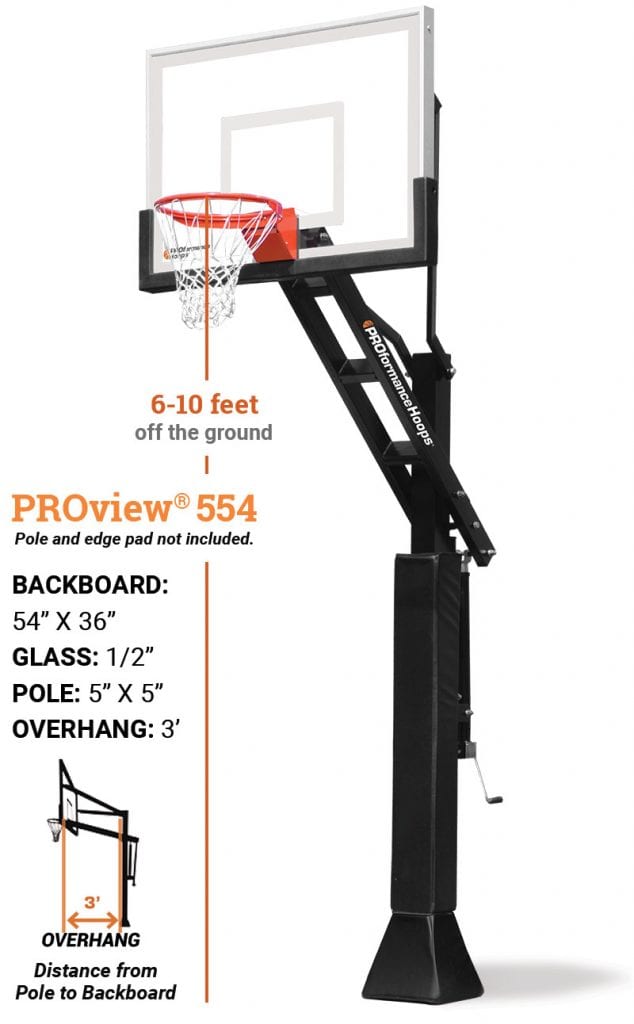
Image Source: superiorplay.com
The Foundation of the Game: Establishing the Standard
The 10-foot mark is more than just a number; it’s a cornerstone of the game of basketball, influencing strategy, player development, and the very aesthetic of a shot. This seemingly simple measurement has evolved over time, driven by the need for consistency and fairness across different leagues and playing environments. Whether you’re playing on a pristine indoor court or a weathered outdoor hoop, the basketball hoop height remains a constant.
A Look at Different Leagues and Organizations
While 10 feet is the universally recognized standard, it’s worth noting how this measurement is applied and sometimes slightly adapted by major basketball organizations worldwide.
NBA Hoop Height: The Pinnacle of Professional Play
In the National Basketball Association (NBA), the NBA hoop height is, without question, 10 feet. This is the regulation height for all NBA games, from the regular season to the playoffs. The consistency of this dimension is critical for the league’s competitive balance and for the skill development of its elite athletes. The challenge of scoring against a 10-foot rim forces players to develop precise shooting techniques, powerful drives, and strategic use of the backboard. The sheer athleticism required to consistently make shots at this height is a testament to the dedication of NBA players.
FIBA Basketball Hoop Height: Global Consistency
The Fédération Internationale de Basketball (FIBA), the governing body for international basketball, also adheres to the 10-foot standard for its FIBA basketball hoop height. This global uniformity ensures that players can compete on any international stage with the same fundamental challenge presented by the rim. This standardization is vital for international tournaments like the Olympics and the FIBA Basketball World Cup, allowing for fair competition and a consistent experience for athletes and fans alike.
Regulation Basketball Goal Height: The Overarching Standard
When we talk about regulation basketball goal height, we are referring to the official measurement that governs organized basketball. This 10-foot standard is typically enforced in high school, college, and professional leagues across many countries. Whether it’s an indoor basketball goal height in a gleaming gymnasium or an outdoor basketball hoop height in a public park, the 10-foot rule ensures a consistent playing experience.
The Genesis of the 10-Foot Rule
The 10-foot height wasn’t an arbitrary choice. It evolved from the game’s early days, reflecting a balance between making the game accessible and challenging. Initially, peach baskets were used, and there was no standardized height. As the game grew and evolved, so did the equipment. The adoption of a fixed rim height was a crucial step in professionalizing the sport. This height was found to be challenging enough to require skill and athleticism but not so high as to make scoring exceedingly difficult for the average player.
Beyond the Professional Ranks: Youth and Development
The consistent application of the 10-foot standard is crucial for player development. However, for younger players just learning the game, the full 10-foot height can be daunting. This is where the concept of youth basketball hoop height comes into play.
Adapting for Young Players
To foster a love for the game and allow younger players to develop proper shooting mechanics without undue frustration, many organizations and parents utilize adjustable basketball hoops. These adjustable systems allow the rim height to be lowered significantly, often starting as low as 6 feet for very young children. As players grow and their skills mature, the hoop can be gradually raised to the regulation 10 feet. This progressive approach is vital for building confidence and ensuring a positive learning experience.
The Importance of Gradual Progression
- Early Childhood: For children aged 4-6, a hoop height of around 5-6 feet is often recommended. This allows them to experience the satisfaction of making a shot.
- Elementary School: As children progress, typically between ages 7-9, the hoop height might be adjusted to 7-8 feet.
- Middle School: By the time players reach middle school age (10-13), they are usually ready to play on hoops set at 9 feet.
- Transition to Regulation: The final step is raising the hoop to the standard basketball rim height of 10 feet, usually around the age of 13 or 14, when they enter high school play.
This gradual increase in height allows young players to develop the necessary strength, technique, and coordination without being overwhelmed. It’s about building a solid foundation for future success.
Adjustable Basketball Hoop Height: Flexibility and Growth
The advent of adjustable basketball hoop height systems has revolutionized how people learn and play basketball at home and in recreational settings. These systems offer unparalleled flexibility.
Benefits of Adjustable Hoops:
- Player Progression: As mentioned, they cater to different age and skill levels.
- Family Fun: Allows parents and children to play together at appropriate heights.
- Skill Development: Players can practice shooting at various heights to improve their game.
- Space Adaptation: Can be adjusted for different playing environments.
These adjustable hoops are a common sight in driveways, backyards, and community parks, making basketball more accessible to a wider range of individuals.
The Anatomy of a Basketball Goal: Components and Dimensions
Beyond the height of the rim, understanding the other components of a basketball goal helps paint a complete picture.
The Rim and Net: The Scoring Mechanism
The official basketball net height is determined by the rim’s position. The rim itself is a steel ring, typically 18 inches in inner diameter. Attached to this rim is the net. The official basketball net height is measured from the top of the rim down to the bottom of the net. When the net is properly installed, it should hang about 6 inches below the rim. The net’s purpose is to slow the ball down after it passes through the rim, providing a clear visual cue of a successful shot and a satisfying swish sound. The net is usually made of nylon or chain, with nylon being the more common and quieter option.
The Backboard: A Crucial Surface
The backboard is another integral part of the basketball goal. While not directly related to the rim height, its presence and dimensions influence the game, particularly the use of bank shots.
Backboard Materials and Sizes:
- Tempered Glass: Found in professional and high-level collegiate play, offering excellent rebound and durability.
- Acrylic: A common choice for outdoor and recreational use, providing good visibility and rebound.
- Polycarbonate: Another durable option for outdoor courts.
- Fiberglass: Often used in lower-cost systems.
The size of the backboard also varies, but official backboards typically measure 72 inches wide by 42 inches high for professional and collegiate play. Smaller backboards are common in residential settings.
The Pole and Support System: Ensuring Stability
The pole and support system are crucial for holding the backboard and rim at the correct height and ensuring stability during play. Whether it’s a single-pole system, an in-ground pole, or a portable base, the structural integrity is paramount. An outdoor basketball hoop height must be securely anchored to withstand various weather conditions and the force of enthusiastic play. Similarly, an indoor basketball goal height, often mounted on walls or ceilings, requires robust installation to maintain the 10-foot standard.
The Impact of Rim Height on Gameplay
The 10-foot rim height is not just an arbitrary measurement; it profoundly impacts how the game is played at all levels.
Shooting Mechanics and Strategy
The 10-foot height requires players to develop specific shooting techniques. They need sufficient power and arc to get the ball over the rim and into the basket. This influences:
- Shooting Form: Players must learn to use their legs and core for power.
- Ball Arc: A higher arc can help clear defenders and increase the chance of going in.
- Layups and Dunks: These close-range shots require strength and vertical leap. Dunks, in particular, are a demonstration of athleticism made possible by the 10-foot goal.
Rebounding and Interior Play
The height of the rim also affects how players approach rebounding and interior play.
- Rebounding: Players must time their jumps and position themselves effectively to grab missed shots. The higher rim means more opportunities for rebounds.
- Post Play: For players operating near the basket, the 10-foot rim presents a challenge, requiring finesse and strength to score over defenders.
Defensive Strategies
Defenses often position themselves to contest shots and block attempts at the rim. The 10-foot height provides a significant vertical challenge for offensive players trying to score close to the basket.
Variations and Exceptions: When 10 Feet Isn’t the Rule
While 10 feet is the standard, there are a few instances where this might differ, primarily in recreational or specialized settings.
Youth Leagues and Training Facilities
As discussed, youth basketball hoop height is often adjusted. Some dedicated youth training facilities might also have adjustable hoops set at various heights to cater to specific drills and skill development programs.
Adaptive Basketball
In adaptive basketball, designed for individuals with physical disabilities, equipment and rules can be modified. This might include adjusting the standard basketball rim height to accommodate different mobility levels and playing styles.
Backyard and Recreational Hoops
For many families, a backyard hoop is a source of fun and exercise. Many residential hoops come with an adjustable basketball hoop height feature, allowing users to set the rim lower for younger children or higher for more competitive play among older family members. While the goal is often to reach the 10-foot mark, the flexibility is a key selling point for these systems.
Maintaining the Standard: Installation and Equipment
Ensuring that basketball goals are set at the correct height is crucial for fair play and proper development.
Professional Installation
For public courts and institutional settings, professional installation is typically employed to guarantee that the regulation basketball goal height is met and maintained. This involves secure anchoring of poles and precise mounting of backboards and rims.
Home Hoop Setup
For those setting up hoops at home, following the manufacturer’s instructions is essential. Most portable or in-ground systems will have clear guidelines for assembly and height adjustment. It’s important to check that the final height is indeed 10 feet if that is the desired standard.
Regular Checks and Maintenance
Over time, ground settling, wear and tear, or even deliberate tampering can affect the height of a basketball hoop. Regular checks are advisable, especially for outdoor hoops, to ensure they remain at the correct standard basketball rim height.
The Future of Basketball Goal Height
While the 10-foot standard has proven remarkably durable, the sport is always evolving. However, it’s unlikely that the fundamental basketball hoop height will change significantly. The 10-foot mark has been tested and proven to provide a balanced and exciting game. Innovations will likely focus on materials, durability, safety features, and perhaps even smart technology integration rather than altering the core dimensions of the goal itself.
Conclusion: The Enduring 10-Foot Standard
From the grand arenas of the NBA to the local park courts, the standard basketball goal height of 10 feet is a defining characteristic of the game. It’s a testament to a measurement that has stood the test of time, challenging athletes, fostering skill, and providing countless hours of enjoyment. Whether you’re a seasoned pro or a beginner learning to shoot, that 10-foot hoop is the ultimate target, a constant reminder of the skill, effort, and passion that defines the sport of basketball. The consistency of the regulation basketball goal height across different leagues and levels ensures a unified playing experience, promoting fairness and allowing players to measure their abilities against a consistent benchmark.
Frequently Asked Questions (FAQ)
Q1: Is the basketball hoop height the same everywhere?
A1: For most organized basketball play, including professional leagues like the NBA and FIBA, the standard basketball hoop height is 10 feet. However, youth leagues and recreational settings often use adjustable hoops that can be set at lower heights for younger or less experienced players.
Q2: What is the standard basketball rim height for youth leagues?
A2: The standard basketball rim height for youth leagues varies by age. For very young children (ages 4-6), it might be as low as 5-6 feet. As players get older (around 10-13), the height is gradually increased, often to 9 feet, before reaching the regulation 10 feet in high school.
Q3: How do I know if my basketball hoop is at the regulation height?
A3: You can measure the height from the playing surface to the top of the rim. A standard basketball goal height is 10 feet. Many adjustable hoops will have markers or indicators to help you set the correct height.
Q4: Does the net height matter for the standard basketball goal height?
A4: The official basketball net height is determined by the rim. The net should hang about 6 inches below the rim when properly installed. The primary measurement for the goal height is the rim’s position.
Q5: Are there different basketball hoop heights for indoor and outdoor courts?
A5: No, the standard basketball hoop height of 10 feet is consistent for both indoor basketball goal height and outdoor basketball hoop height in regulated play. The difference lies more in the construction and materials of the goals themselves.
Q6: Can I adjust my basketball hoop to any height?
A6: If you have an adjustable basketball hoop height system, you can typically adjust it to various heights. Always refer to the manufacturer’s instructions for safe and proper adjustment. This flexibility is great for family play and skill development.