
A basketball hoop in the NBA stands at precisely 10 feet from the playing surface to the top edge of the rim. This standard height has been a cornerstone of the game for decades, dictating everything from shooting mechanics to defensive strategies. This isn’t just an arbitrary number; it’s a carefully chosen specification that contributes significantly to the sport’s challenge and excitement.
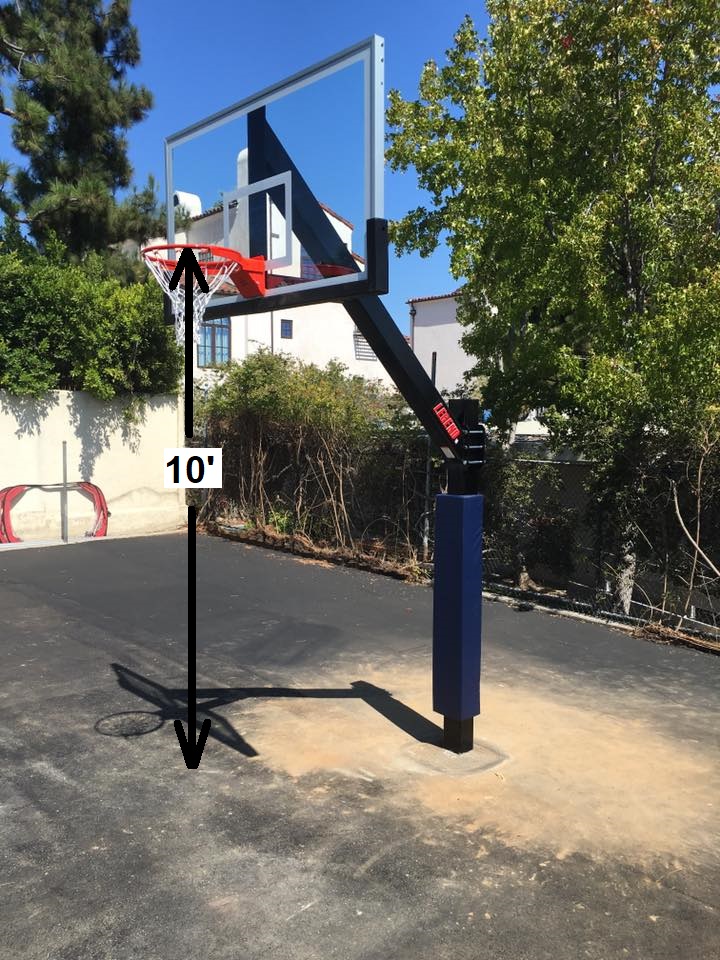
Image Source: www.firstteaminc.com
The Immovable Standard: NBA Hoop Height
The NBA hoop height is a fundamental element of the game, as ingrained as the dribble and the pass. For any aspiring or casual player looking to replicate the pros, knowing this measurement is crucial. The regulation basketball rim height is set at 10 feet (3.05 meters) above the floor. This measurement applies to all official NBA games and is a core component of NBA equipment standards.
Why 10 Feet? A Glimpse into History
The origin of the 10-foot hoop height isn’t perfectly documented with a single, definitive event, but it evolved as the game itself did. When James Naismith invented basketball in 1891, the original baskets were peach baskets nailed to the gymnasium balcony. These were approximately 10 feet from the ground, primarily because that’s where the balconies were located. As the game progressed, and the need for a more standardized and durable setup arose, the peach baskets were replaced with metal rims and nets. However, the 10-foot height remained, becoming an intrinsic part of the sport’s identity. This consistent basketball goal height NBA players and fans recognize today is a legacy of those early days.
Deciphering the Details: Basketball Net Height and Beyond
While the rim height is the most discussed measurement, other aspects contribute to the overall basketball hoop specifications. The basketball net height, meaning the distance from the rim to the bottom of the net, is typically about 15-18 inches. This allows the ball to pass through cleanly and makes a satisfying swish sound that is music to a basketball fan’s ears. The net itself is usually made of nylon or cotton and has 12 loops.
Beyond the Rim: NBA Court Dimensions and Equipment
The 10-foot hoop height doesn’t exist in isolation. It’s part of a larger, carefully designed environment dictated by NBA court dimensions and other NBA equipment standards.
Navigating the Hardwood: Basketball Court Dimensions
An NBA basketball court is a precisely measured rectangle. The length of the court is 94 feet (28.65 meters), and the width is 50 feet (15.24 meters). These dimensions influence player movement, defensive positioning, and offensive strategies.
- Three-Point Line: The three-point line varies in distance depending on the league, but in the NBA, it’s an arc that is 23 feet 9 inches (7.24 meters) from the center of the basket at its furthest point, and 22 feet (6.71 meters) in the corners.
- Key (The Paint): The rectangular area under the basket, often called “the paint,” is 19 feet by 16 feet. This is where much of the physical battle for rebounds and close-range scoring occurs.
- Free Throw Line: The free throw line is 15 feet (4.57 meters) from the backboard.
The Core Component: NBA Rim Diameter
The NBA rim diameter is also a critical piece of basketball hoop specifications. It’s designed to be a challenging but achievable target. The inner diameter of a regulation basketball rim is 18 inches (45.72 cm). This size is consistent across all levels of organized basketball, from youth leagues to the professional ranks, ensuring a uniform challenge.
The Backboard: A Crucial Element
The backboard, while not directly related to the hoop’s height, plays a significant role in the game. In the NBA, backboards are made of tempered glass and measure 6 feet wide by 3.5 feet tall (1.83 meters by 1.07 meters). They are positioned 4 feet in from the baseline. The backboard’s surface is white and has a target square marked in black, which is 12 inches wide by 11 inches tall (30.5 cm by 28 cm), centered 15 inches (38 cm) above the rim. Players often use the backboard to bank in shots, adding another layer of strategy to the game.
Material Matters: NBA Equipment Standards
The materials used for NBA equipment are chosen for durability, performance, and safety.
- Rims: NBA rims are typically made of solid steel for strength and flexibility. They are designed to withstand the forceful dunks of professional athletes.
- Nets: The nets are made of nylon or polyester cord and are designed to be durable while allowing the ball to pass through cleanly.
- Balls: An official NBA basketball has a circumference of 29.5 inches (74.93 cm) and weighs 22 ounces (623.7 grams).
Interpreting NBA Game Rules Height
The NBA game rules height, referring to the 10-foot rim, influences many aspects of how the game is played.
Offensive Strategies Shaped by Height
- Jump Shots: The 10-foot height forces players to develop proper shooting form, emphasizing arc and trajectory. Players must generate enough force and spin to get the ball over the defenders and into the hoop.
- Dunking: While dunking is a spectacular part of the game, achieving it requires significant athleticism. The 10-foot rim means players need to be able to jump high enough to get the ball over the rim and force it down. This has led to the evolution of incredible leaping abilities among NBA players.
- Layups and Close-Range Shots: Even for shots close to the basket, players must judge the angle and height correctly. The backboard is often used strategically, especially on layups, where the angle off the backboard can guide the ball into the hoop.
Defensive Tactics and the Vertical Game
- Blocking Shots: The height of the rim makes shot-blocking a crucial defensive skill. Defenders must time their jumps to swat shots away before they reach their apex or descend towards the hoop. The 10-foot standard allows for a significant area where a block can occur.
- Rebounding: The trajectory of missed shots is affected by the hoop’s height. Rebounders need to anticipate where the ball will bounce off the rim and backboard to secure possession.
A Comparative Look: Hoop Heights Across Different Leagues
While the NBA sets the standard at 10 feet, it’s worth noting how this measurement compares to other levels of basketball. This provides context for the specific challenge presented by the NBA hoop height.
Youth Basketball
- Ages 7-10: Typically use a 8-foot hoop.
- Ages 11-12: Commonly use a 9-foot hoop.
- Ages 13 and Up: Transition to the regulation 10-foot NBA hoop height.
This gradual increase in hoop height is designed to help younger players develop proper shooting mechanics without being discouraged by a rim that is too high. It allows them to build confidence and refine their skills before facing the full challenge of the regulation height.
College Basketball (NCAA)
The NCAA adheres to the same 10-foot NBA hoop height. This uniformity ensures that players transitioning from college to the professional ranks don’t face a significant adjustment in the fundamental dimension of the game.
International Basketball (FIBA)
FIBA, the international governing body for basketball, also mandates a 10-foot (3.05 meters) rim height. This global standard makes basketball a universally consistent sport, regardless of where it is played on an international level.
The Importance of Standardized Basketball Hoop Size
The consistent regulation basketball rim height is a critical factor in the sport’s global appeal and the development of its athletes.
- Fairness and Competition: A standard height ensures that all players, teams, and leagues are competing on a level playing field regarding the physical requirements of shooting and scoring.
- Skill Development: Athletes worldwide train with the 10-foot goal in mind. This shared standard allows for consistent skill development and progression across different countries and cultures.
- Spectator Experience: The predictable dimensions contribute to the rhythm and flow of the game that fans have come to expect. The visual of players reaching up to shoot or dunk is an iconic image of the sport, made possible by this specific height.
Beyond the Numbers: The Feel of the Game
While the precise measurements are important for official play, there’s also an intangible aspect to the basketball goal height NBA players experience. It’s a challenge that requires a blend of technique, strength, and timing. The 10-foot rim is not just a number; it’s a focal point that shapes every jump shot, every layup, and every defensive play. The standard basketball hoop size is a testament to how a simple measurement can profoundly impact a sport.
The NBA rim diameter of 18 inches, combined with the 10-foot height, creates a specific target that requires precision. Misses are common, and the art of getting the ball to roll around the rim before dropping in is a skill in itself. The slight imperfections in the rim or the bounce off the backboard can lead to dramatic swings in possession and momentum.
The Psychology of Height
The 10-foot barrier is also psychological. For younger players, it represents a goal to strive for. For professionals, it’s a familiar challenge they have mastered through countless hours of practice. The feeling of the ball hitting the rim or passing cleanly through the net is ingrained in their muscle memory. This psychological aspect is as crucial as the physical one.
Maintaining the Standard: NBA Equipment Standards in Practice
The NBA has strict NBA equipment standards to ensure the integrity of the game. This includes regular checks and maintenance of all equipment, including the hoops, backboards, and balls.
- Rim Integrity: Rims must be securely attached to the backboard and free from damage that could affect ball trajectory.
- Backboard Stability: Backboards must be stable and securely mounted, ensuring safety and preventing any wobble that could influence play.
- Net Condition: Nets are regularly inspected for wear and tear. A torn or frayed net can alter the way the ball passes through the hoop.
These details, while seemingly minor, contribute to the overall consistency and fairness of NBA games. The basketball goal height NBA officials and groundskeepers ensure is always exactly 10 feet.
FAQ: Common Questions About NBA Hoops
Q1: What is the standard height of an NBA basketball hoop?
A1: The standard height of an NBA basketball hoop is 10 feet (3.05 meters) from the playing surface to the top edge of the rim.
Q2: What is the diameter of an NBA basketball rim?
A2: The inner diameter of a regulation NBA basketball rim is 18 inches (45.72 cm).
Q3: Does the NBA hoop height vary for different positions or players?
A3: No, the NBA hoop height is uniform for all players and all games.
Q4: Are there different basketball hoop heights for women’s basketball leagues like the WNBA?
A4: No, the WNBA also uses the standard 10-foot hoop height, consistent with NBA standards.
Q5: Why is the basketball hoop set at 10 feet?
A5: The 10-foot height originated from the early days of basketball when peach baskets were hung on gymnasium balconies, which happened to be around 10 feet high. This measurement has remained a tradition and a fundamental aspect of the game’s design.
Q6: What is the height of a basketball hoop for youth players?
A6: Youth basketball hoop heights vary by age. Typically, younger children use lower hoops (e.g., 6 or 7 feet), with the height gradually increasing as they get older, reaching the 10-foot standard around age 13.
Q7: What is the distance from the free-throw line to the backboard in the NBA?
A7: The free-throw line is 15 feet (4.57 meters) from the front of the backboard.
Q8: What are the overall basketball court dimensions in the NBA?
A8: An NBA court is 94 feet (28.65 meters) long and 50 feet (15.24 meters) wide.
Q9: Is the basketball net height the same as the rim height?
A9: No, the net hangs from the rim. The basketball net height, meaning the length of the net itself, is typically about 15-18 inches. The rim height is the critical measurement for gameplay.
Q10: What materials are NBA basketball hoops made from?
A10: NBA rims are typically made of solid steel for durability and flexibility, while backboards are usually tempered glass.