
Can you increase your vertical leap for basketball? Absolutely! With focused training and the right approach, anyone can improve their ability to jump higher. This guide will walk you through the key principles and exercises to help you achieve a more explosive vertical.
Basketball demands athleticism, and a higher vertical leap is a game-changer. Whether you’re aiming to snatch rebounds, block shots, or finish at the rim with a thunderous dunk, improving your vertical is crucial. But how do you actually get there? It’s not just about jumping more; it’s about jumping smarter and training your body to produce maximum force in a short amount of time. This involves a combination of strength training, power development, and meticulous technique.
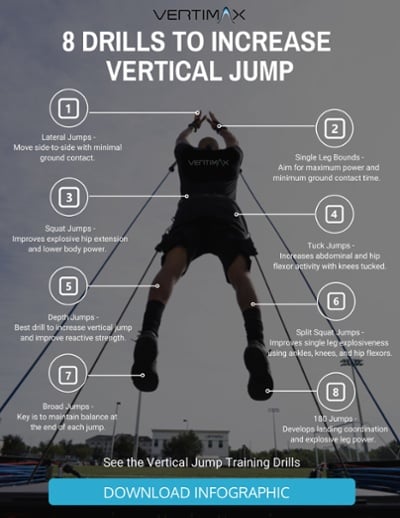
Image Source: f.hubspotusercontent20.net
Building the Foundation: Strength for Explosiveness
Before you can jump higher, you need a solid base of strength. Without strong muscles, especially in your legs and core, you won’t have the power to propel yourself upwards. Think of it like building a house: you need a strong foundation before you can add the upper floors.
The Power of Squats: Mastering Squat Technique
The squat is a king among exercises for building lower body strength. It works your quadriceps, hamstrings, glutes, and even your core. Proper squat technique is paramount to avoid injury and maximize results.
Key Aspects of Proper Squat Technique:
- Foot Placement: Stand with your feet shoulder-width apart, toes pointing slightly outward.
- The Descent: Keep your chest up and your back straight. Lower your hips as if sitting into a chair, aiming to get your thighs parallel to the ground, or even lower if your mobility allows. Ensure your knees track over your toes and don’t cave inward.
- The Ascent: Drive through your heels to return to the starting position, squeezing your glutes at the top.
- Breathing: Take a deep breath before descending and exhale as you ascend.
Variations to Consider:
- Barbell Back Squats: The classic for overall leg strength.
- Front Squats: Emphasize quadriceps development and core strength.
- Goblet Squats: Excellent for learning proper form and engaging the core.
Deadlifts: The King of Posterior Chain Strength
The deadlift is another fundamental exercise that builds incredible strength throughout your entire body, with a particular focus on the posterior chain – your hamstrings, glutes, and lower back. Strong hamstrings are vital for explosive movements. Deadlift form is critical due to the heavy loads often involved.
Essential Deadlift Form Considerations:
- Starting Position: Stand with your mid-foot under the barbell. Your shins should be close to the bar. Hinge at your hips, keeping your back straight, and grip the bar just outside your legs.
- The Pull: Before lifting, take a deep breath and brace your core. Initiate the pull by pushing the ground away with your feet, keeping the bar close to your shins.
- Lockout: As the bar passes your knees, drive your hips forward, squeezing your glutes at the top. Avoid hyperextending your back.
- Controlled Lowering: Lower the bar by hinging at your hips first, then bending your knees.
Deadlift Variations for Jumpers:
- Conventional Deadlifts: Builds overall posterior chain strength.
- Romanian Deadlifts (RDLs): Specifically targets the hamstrings and glutes, crucial for hip extension in jumping.
- Sumo Deadlifts: Can allow for slightly better leverage for some individuals.
Calf Raises: The Unsung Heroes
Don’t neglect your calves! While often overlooked, strong calves contribute significantly to your final push-off and ankle stability.
Performing Effective Calf Raises:
- Standing Calf Raises: Stand on a raised surface (like a weight plate or step) with the balls of your feet. Drop your heels below the level of the surface to get a good stretch. Rise up onto the balls of your feet, squeezing your calves at the top.
- Seated Calf Raises: Sit on a bench with your feet flat on the ground, a weight plate or dumbbell resting on your thighs just above your knees. Lift your heels as high as possible.
Frequency: Aim for 2-3 sets of 15-20 repetitions, 2-3 times per week.
Unleashing Power: Plyometrics for Explosiveness
Once you have a solid strength foundation, it’s time to translate that strength into explosive power. This is where plyometrics shines. Plyometric training involves exercises that stretch muscles quickly and then shorten them explosively. This stretch-shortening cycle is the essence of jumping.
Mastering Box Jumps
Box jumps are a cornerstone of plyometric training for basketball players. They teach your body to absorb force and then immediately generate it upwards.
How to Perform Box Jumps Safely and Effectively:
- Choose the Right Height: Start with a box height that allows you to jump up comfortably without overreaching or straining. Gradually increase the height as you get stronger.
- The Approach: Stand a comfortable distance from the box. Bend your knees and swing your arms back.
- The Jump: Explode upwards, driving your hips forward and swinging your arms overhead. Land softly on top of the box, absorbing the impact by bending your knees.
- Step Down: Always step down from the box. Do not jump down, as this increases the risk of ankle injury.
Progression:
- Increase Box Height: As your vertical improves, use higher boxes.
- Increase Repetitions: Perform more reps per set.
- Add a Depth Jump: Step off a low box and immediately jump as high as possible upon landing. This is a more advanced variation.
Other Effective Plyometric Drills:
- Jump Squats: Stand with feet shoulder-width apart. Lower into a squat position and then explosively jump upwards, reaching your arms overhead. Land softly and immediately go into the next jump.
- Broad Jumps: Stand with feet shoulder-width apart. Swing your arms back and bend your knees. Explosively jump forward, driving your hips and extending your legs. Land with knees bent.
- Sprinting: High-intensity sprints improve your ability to generate horizontal and vertical force.
- Depth Jumps: As mentioned above, stepping off a box and immediately jumping is highly effective for reactive strength.
- Skipping: Various forms of skipping, like power skipping and high-knee skipping, engage the stretch-shortening cycle.
Plyometric Training Guidelines:
- Frequency: Limit plyometric sessions to 2-3 times per week, allowing adequate recovery between sessions.
- Volume: Start with low volume (e.g., 3-4 sets of 5-8 reps) and gradually increase.
- Quality over Quantity: Focus on performing each rep with maximum effort and perfect technique.
- Warm-up: Always perform a thorough warm-up that includes dynamic stretching and light cardio.
- Listen to Your Body: If you feel pain, stop. Overtraining can lead to injuries that set back your progress.
The Importance of Core Strength and Ankle Stability
A strong core and stable ankles are foundational for efficient and powerful jumping. Without them, you’re essentially trying to launch a rocket with a weak frame.
Core Conditioning for Jumping Power
Your core is the link between your lower and upper body. A strong core allows you to transfer force efficiently from your legs through your trunk and into your jump. Good core conditioning stabilizes your body during the entire jumping motion.
Core Exercises to Integrate:
- Planks: Classic for building isometric core strength.
- Standard Plank: Hold for time.
- Side Planks: Target obliques.
- Plank with Hip Dips: Adds a dynamic element.
- Russian Twists: Works the obliques and rotational strength. Use a weight for added resistance.
- Leg Raises: Targets the lower abdominal muscles.
- Bird Dog: Improves core stability and balance.
- Dead Bug: Another excellent exercise for core control without stressing the back.
- Medicine Ball Slams: Explosive exercise that engages the entire core.
Enhancing Ankle Stability
Proper ankle stability is crucial for preventing injuries and maximizing the power transfer from your feet to the ground. Weak or unstable ankles can lead to wasted energy and increased risk of sprains.
Exercises to Improve Ankle Stability:
- Single-Leg Balance: Stand on one leg for 30-60 seconds, then switch. Progress to closing your eyes or standing on an unstable surface.
- Calf Raises (as mentioned earlier): Strengthens the muscles supporting the ankle.
- Toe Raises: Sit with your feet flat. Lift your toes off the ground while keeping your heels down.
- Ankle Circles: Gently rotate your ankles in both directions.
- Resistance Band Exercises: Use a resistance band to perform dorsiflexion (pulling toes up), plantarflexion (pointing toes down), inversion (turning foot inward), and eversion (turning foot outward).
Fueling the Jump: Hamstring Strength and Flexibility
Your hamstrings play a critical role in hip extension, which is a key component of jumping. Weak or tight hamstrings can limit your power.
Targeting Hamstring Strength
Building hamstring strength is essential for generating explosive power during the jump. Exercises that focus on hip extension are particularly beneficial.
Key Hamstring Strengthening Exercises:
- Romanian Deadlifts (RDLs): As mentioned in the strength section, RDLs are excellent for hamstring and glute development.
- Glute-Ham Raises (GHRs): A highly effective, albeit challenging, exercise for isolating the hamstrings.
- Kettlebell Swings: Engages the hamstrings and glutes in a dynamic, explosive movement.
- Good Mornings: Similar to RDLs but with a different loading pattern.
The Role of Stretching Exercises
While building strength is paramount, maintaining good flexibility through regular stretching exercises is also important. Flexibility allows for a greater range of motion, which can contribute to a more powerful jump and help prevent muscle strains.
Beneficial Stretches for Jumpers:
- Dynamic Stretches (Pre-Workout):
- Leg Swings (forward/backward and side-to-side)
- Walking Lunges with a Twist
- High Knees
- Butt Kicks
- Arm Circles
- Static Stretches (Post-Workout):
- Hamstring Stretch (seated or standing)
- Quadriceps Stretch
- Calf Stretch (gastroc and soleus)
- Hip Flexor Stretch
- Glute Stretch (figure-four stretch)
Hold static stretches for 20-30 seconds, focusing on feeling a gentle pull, not pain.
Putting It All Together: A Sample Training Plan Structure
Here’s a basic framework you can adapt. Remember to consult with a coach or trainer for personalized advice.
Weekly Training Schedule Example
| Day | Focus | Key Exercises |
|---|---|---|
| Monday | Lower Body Strength (Quad Dominant) | Barbell Back Squats, Lunges, Calf Raises, Core Work (Planks, Leg Raises) |
| Tuesday | Plyometrics & Explosive Power | Box Jumps, Jump Squats, Medicine Ball Slams, Ankle Stability Drills |
| Wednesday | Active Recovery / Rest | Light cardio (swimming, cycling), foam rolling, light stretching |
| Thursday | Lower Body Strength (Hamstring/Glute Dom.) | Deadlifts (or RDLs), Glute-Ham Raises, Kettlebell Swings, Calf Raises, Core Work (Russian Twists, Bird Dog) |
| Friday | Plyometrics & Agility | Depth Jumps, Broad Jumps, Lateral Bounds, Agility Ladder Drills |
| Saturday | Skill Work / Light Basketball Practice | Focus on game-specific movements, shooting, ball handling. Avoid heavy jumping if possible. |
| Sunday | Rest | Complete rest or very light activity like walking. |
Important Notes:
- Warm-up: Always start each session with a 10-15 minute dynamic warm-up.
- Cool-down: Finish each session with 5-10 minutes of static stretching.
- Progression: Gradually increase weight, reps, sets, or difficulty of exercises as you get stronger.
- Listen to your body: Adjust the schedule based on how you feel. Recovery is as important as training.
Frequently Asked Questions (FAQ)
Q1: How long does it take to increase vertical leap?
A1: The time it takes to see significant improvements varies greatly depending on your starting point, training consistency, genetics, and dedication. With a consistent and well-designed program, you might start noticing improvements in 4-8 weeks, with more substantial gains over 3-6 months.
Q2: Can I improve my vertical leap without weights?
A2: Yes, you can absolutely improve your vertical leap with bodyweight exercises, plyometrics, and proper technique. However, adding resistance through weightlifting can significantly accelerate your progress by building greater foundational strength.
Q3: What is the most important muscle for jumping?
A3: While jumping is a full-body movement, the primary muscles responsible for generating vertical force are in your legs: the quadriceps, hamstrings, glutes, and calves. The core also plays a crucial role in transferring force.
Q4: Should I jump every day?
A4: No, jumping every day is generally not recommended. Jumping exercises, especially plyometrics, place a high demand on your muscles and nervous system. Adequate rest and recovery are essential for muscle repair and growth, and to prevent injuries.
Q5: How do I avoid injuries while training for a higher vertical?
A5: Proper warm-up, correct exercise technique, gradual progression, listening to your body, and adequate rest and recovery are key to preventing injuries. Don’t push through sharp pain.
By diligently following a structured training plan that incorporates strength, plyometrics, core conditioning, and proper recovery, you can unlock your potential and achieve a higher, more explosive vertical leap on the basketball court.