
Can you increase your vertical jump for basketball? Yes, absolutely! With the right training and dedication, anyone can improve their vertical leap, which is crucial for reaching higher for rebounds, blocking shots, and elevating for dunks. This guide will dive deep into the methods and principles behind building explosive power for a higher jump.
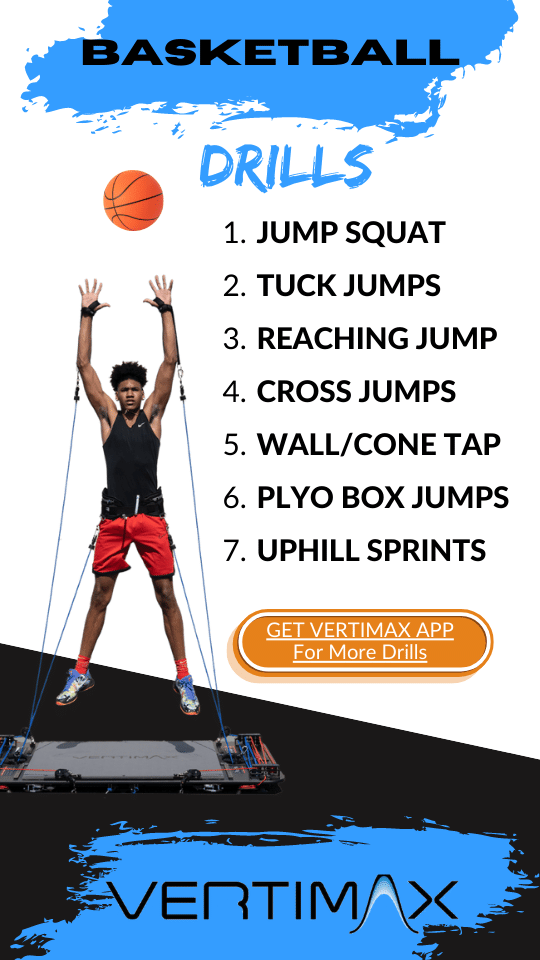
Image Source: f.hubspotusercontent20.net
Deciphering the Science of a Higher Jump
Your vertical jump is a complex biomechanical movement. It relies on the coordinated effort of multiple muscle groups, your nervous system’s ability to recruit those muscles quickly, and your technique. To jump higher, you need to generate more force and do it faster. This means building both strength and speed.
The Key Muscle Groups Involved
Several muscle groups work together to propel you upwards:
- Quadriceps: These are the primary muscles at the front of your thighs. They extend your knees during the upward phase of the jump.
- Hamstrings: Located at the back of your thighs, these muscles help to extend your hips.
- Gluteals (Glutes): These are your buttock muscles. They are powerful hip extensors and play a vital role in generating force.
- Calves: The gastrocnemius and soleus muscles in your lower legs are responsible for plantarflexion – pointing your toes downwards – which provides the final push off the ground.
- Core Muscles: Your abdominal and lower back muscles stabilize your body and transfer force efficiently from your lower body to your upper body.
Force Production and Rate of Force Development (RFD)
A higher jump isn’t just about how much force you can produce, but how quickly you can produce it. This is known as the Rate of Force Development (RFD). Strength training builds the foundation of raw force, while plyometrics trains your muscles to exert that force rapidly.
Building the Foundation: Strength Training for a Powerful Jump
Before you can jump higher, you need a strong base. Strength training is essential for increasing the force your muscles can generate. Focusing on compound movements that work multiple muscle groups simultaneously will yield the best results.
Essential Strength Exercises
Here are key exercises to incorporate into your routine:
Squats and Their Variations
The squat is king for lower body strength. It works your quads, hamstrings, glutes, and core.
- Back Squats: The classic squat, performed with a barbell across your upper back. This builds overall lower body strength.
- Front Squats: With the barbell resting on your front shoulders, this variation emphasizes the quadriceps more and requires greater core stability.
- Goblet Squats: Holding a dumbbell or kettlebell at your chest, this is a great accessible option for building squatting strength and improving form.
Deadlifts: The Powerhouse Exercise
The deadlift is a full-body exercise that heavily engages your hamstrings, glutes, and back. It’s phenomenal for building posterior chain strength, which is critical for hip extension and thus, jumping.
- Conventional Deadlifts: Lifting a barbell from the floor to a standing position.
- Romanian Deadlifts (RDLs): Focusing on hip hinge, RDLs primarily target the hamstrings and glutes, improving flexibility and strength in these crucial areas.
Lunges: Unilateral Strength for Balance
Lunges improve balance and target one leg at a time, addressing any strength imbalances.
- Forward Lunges: Stepping forward and lowering your hips until both knees are bent at approximately 90 degrees.
- Reverse Lunges: Stepping backward. This can be easier on the knees for some.
- Walking Lunges: Performing lunges while moving forward.
Hamstring Curls: Isolating Hamstring Power
While compound movements are great, directly targeting the hamstrings with hamstring curls can further enhance their strength and ability to contribute to hip extension.
- Lying Hamstring Curls: Performed on a machine where you lie face down and curl your heels towards your glutes.
- Seated Hamstring Curls: Done on a seated machine.
Calf Raises: The Final Push
Strong calves are vital for the explosive push-off at the end of your jump.
- Standing Calf Raises: With or without weight, lifting up onto the balls of your feet.
- Seated Calf Raises: Performed on a machine, this variation targets the soleus muscle more.
Sample Strength Training Schedule (2-3 times per week)
| Exercise | Sets | Reps | Rest (seconds) | Notes |
|---|---|---|---|---|
| Back Squats | 3-4 | 5-8 | 90-120 | Focus on controlled descent and powerful ascent. |
| Deadlifts | 1-2 | 3-5 | 120-180 | Use proper form, prioritize safety. |
| Walking Lunges | 3 | 10-12 per leg | 60-90 | Keep torso upright. |
| Romanian Deadlifts | 3 | 8-10 | 60-90 | Feel the stretch in your hamstrings. |
| Calf Raises | 3 | 15-20 | 45-60 | Full range of motion. |
Important Note on Strength Training: Progressively overload your muscles. This means gradually increasing the weight, reps, or sets over time to continue challenging your body. Always prioritize proper form to prevent injuries.
Harnessing Speed and Reactivity: Plyometric Training
Plyometrics, also known as jump training, is about using the stretch-shortening cycle to improve your jump height. It involves quick, explosive movements designed to increase the rate at which your muscles can contract. Think of it like a rubber band: the faster you stretch it, the faster it snaps back.
The Stretch-Shortening Cycle
The stretch-shortening cycle has three phases:
- Eccentric Phase: The muscle lengthens under tension (e.g., the dip before a jump).
- Amortization Phase: The brief transition between the eccentric and concentric phases. This is the crucial phase where speed is paramount.
- Concentric Phase: The muscle shortens, generating force (e.g., the upward drive of the jump).
A shorter amortization phase means more efficient energy transfer and a higher jump. Plyometrics trains your nervous system to shorten this phase.
Key Plyometric Exercises
These exercises should be performed with maximal effort and focus on quick ground contact time.
Squat Jumps
A fundamental plyometric exercise that builds explosive power from a squatting position.
- How to: Start in a squat position. Explode upwards, extending your hips, knees, and ankles. Land softly, absorbing the impact by immediately returning to the squat position for the next jump.
Box Jumps
This exercise focuses on explosive power and the ability to absorb landing impact.
- How to: Stand in front of a sturdy box. Perform a countermovement (dip down) and then jump explosively onto the box, landing softly. Step down to reset. Choose a box height that challenges you but allows for good form.
Depth Jumps
These are advanced plyometrics that maximize the stretch-shortening cycle by dropping from a height.
- How to: Step off a box (start with a low height, around 12-18 inches). As soon as your feet hit the ground, jump as high as possible. Land softly and absorb the impact. The key is to minimize ground contact time.
Broad Jumps
Focuses on horizontal power, which translates to vertical power.
- How to: Stand with feet shoulder-width apart. Swing your arms back and dip into a squat. Explode forward and upward, extending your hips, knees, and ankles. Land as far as possible, absorbing the impact.
Skater Hops
Unilateral plyometrics for balance and explosive lateral power.
- How to: Hop from one leg to the other, mimicking a speed skater. Focus on explosive push-off and controlled landing.
Tuck Jumps
Enhances explosive power and teaches you to bring your knees up during a jump.
- How to: Jump as high as you can, bringing your knees towards your chest. Land softly and repeat.
Sample Plyometric Training Schedule (1-2 times per week, on separate days from heavy lifting)
| Exercise | Sets | Reps (per set) | Rest (seconds) | Notes |
|---|---|---|---|---|
| Squat Jumps | 3-4 | 8-10 | 60-90 | Focus on height and quick landing. |
| Box Jumps | 3-4 | 5-8 | 60-90 | Land softly, step down. |
| Depth Jumps | 3 | 5-6 | 90-120 | Start with low boxes, focus on minimal ground contact. |
| Skater Hops | 3 | 10-12 per leg | 60-90 | Quick and controlled. |
| Tuck Jumps | 3 | 8-10 | 60-90 | Bring knees high. |
Important Note on Plyometric Training: Quality over quantity is key. Perform plyometrics when you are well-rested and focused. If your form deteriorates, stop. Allow adequate rest between sessions to prevent overtraining and injury.
Integrating Jump Training: A Holistic Approach
A successful vertical jump program combines both strength and plyometrics. The sequencing of these training types is important for optimal results.
Periodization: Planning Your Training
Periodization involves structuring your training into distinct phases to manage fatigue, promote adaptation, and prevent plateaus.
- Phase 1: Strength Foundation (4-6 weeks): Focus on building general strength and muscular endurance with moderate weights and higher reps. This phase prepares your body for the more intense demands of explosive training.
- Phase 2: Strength & Power (6-8 weeks): Increase the intensity of your strength training (heavier weights, lower reps) and begin introducing basic plyometrics. This phase focuses on converting strength into power.
- Phase 3: Power & Speed (4-6 weeks): The focus shifts to higher intensity plyometrics and maintaining strength. This is where you’ll see the most significant gains in jump height. Reduce overall training volume to allow for peak performance.
- Phase 4: Tapering & Maintenance (1-2 weeks): Reduce training volume and intensity to allow your body to recover and prepare for competition or testing.
Sample Weekly Schedule (During Phase 2: Strength & Power)
- Monday: Strength Training (Lower Body Focus: Squats, Deadlifts, Lunges)
- Tuesday: Rest or Active Recovery (light cardio, stretching)
- Wednesday: Plyometric Training (Squat Jumps, Box Jumps, Depth Jumps)
- Thursday: Strength Training (Upper Body & Core)
- Friday: Rest or Active Recovery
- Saturday: Light Basketball Drills or Skill Work (focus on jumping technique)
- Sunday: Rest
Nutrition and Recovery: Fueling Your Gains
Training is only half the battle. Proper nutrition and recovery are vital for muscle repair, growth, and preventing injuries.
Nutrition for Explosive Power
- Protein: Essential for muscle repair and growth. Aim for lean protein sources like chicken, fish, lean beef, eggs, dairy, and plant-based proteins.
- Carbohydrates: Your primary energy source. Focus on complex carbohydrates like whole grains, fruits, and vegetables for sustained energy.
- Healthy Fats: Important for hormone production and overall health. Include sources like avocados, nuts, seeds, and olive oil.
- Hydration: Dehydration can significantly impair performance. Drink plenty of water throughout the day.
The Importance of Recovery
- Sleep: Aim for 7-9 hours of quality sleep per night. This is when your body repairs and rebuilds muscle tissue.
- Stretching and Mobility: Regular stretching, foam rolling, and dynamic warm-ups improve flexibility and range of motion, reducing the risk of injury and improving movement efficiency.
- Active Recovery: Light activities like walking, swimming, or cycling can help improve blood flow and reduce muscle soreness.
- Listen to Your Body: Don’t push through significant pain. Rest days are crucial for adaptation.
Maximizing Your Jump Technique
Even with incredible strength and explosive power, poor technique can limit your vertical.
The Approach (for a running jump)
- Gather Speed: Build controlled momentum.
- Penultimate Step: The second-to-last step is usually longer and deeper, allowing you to transition momentum from horizontal to vertical.
- Last Step: A quick, sharp plant with the takeoff foot.
- Arm Swing: A powerful, coordinated arm swing is crucial. Swing your arms back and then forcefully forward and upward as you jump. This momentum contributes significantly to your jump height.
The Takeoff
- Dip: A quick, controlled dip (countermovement) before exploding upward.
- Triple Extension: Simultaneously extending your ankles, knees, and hips.
- Drive: Push off the ground with maximum force.
Landing
- Soft Landings: Always aim to land softly, absorbing the impact through your legs. This reduces stress on your joints and prepares you for immediate rebound or movement.
Frequently Asked Questions (FAQ)
Q1: How quickly can I increase my vertical jump?
A1: This varies greatly depending on your starting point, genetics, training consistency, and program design. However, with dedicated training, you could see noticeable improvements in as little as 4-8 weeks, with significant gains over several months.
Q2: Do I need to lift heavy weights to jump higher?
A2: While heavy lifting builds a strong foundation, it’s not the only factor. Plyometrics and speed training are equally important for translating strength into explosive power. A balanced approach is best.
Q3: Can I do plyometrics and strength training on the same day?
A3: It’s generally recommended to separate them. Performing heavy strength training before plyometrics can compromise the quality and explosiveness of your jumps. Ideally, have at least a day or two of rest between intense strength and plyometric sessions.
Q4: What is the best exercise for increasing vertical jump?
A4: There isn’t one single “best” exercise. A combination of compound strength exercises like squats and deadlifts, along with explosive plyometrics like box jumps and depth jumps, is most effective for developing explosive power.
Q5: How important are calf raises for vertical jump?
A5: Calf raises are important for the final push-off phase of the jump. While not the primary driver of vertical leap, strong calves contribute to overall power and can help maximize your jump height.
Q6: How do I avoid injuries while doing jump training?
A6: Proper warm-up, focus on technique, gradual progression, adequate rest, and listening to your body are crucial. Start with lower intensity and volume and gradually increase as you get stronger and more conditioned.
By implementing a well-structured program that includes strength training, plyometrics, and proper recovery, you can significantly boost your explosive power and elevate your game on the basketball court!